
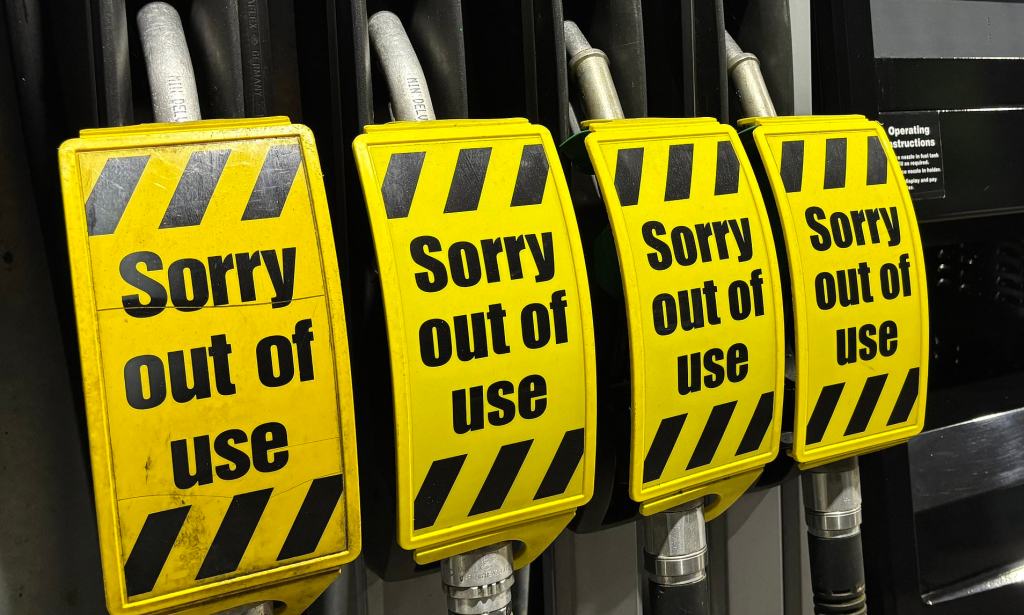
Petrolstations seem to be running low on fuel as Brits rush to refuel their cars ahead of oil price increases reaching ‘historic highs’.
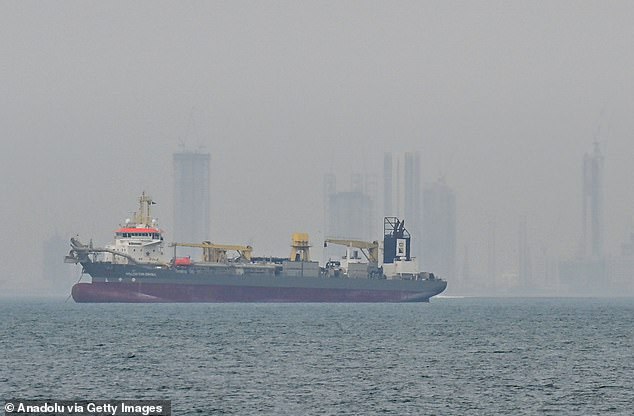
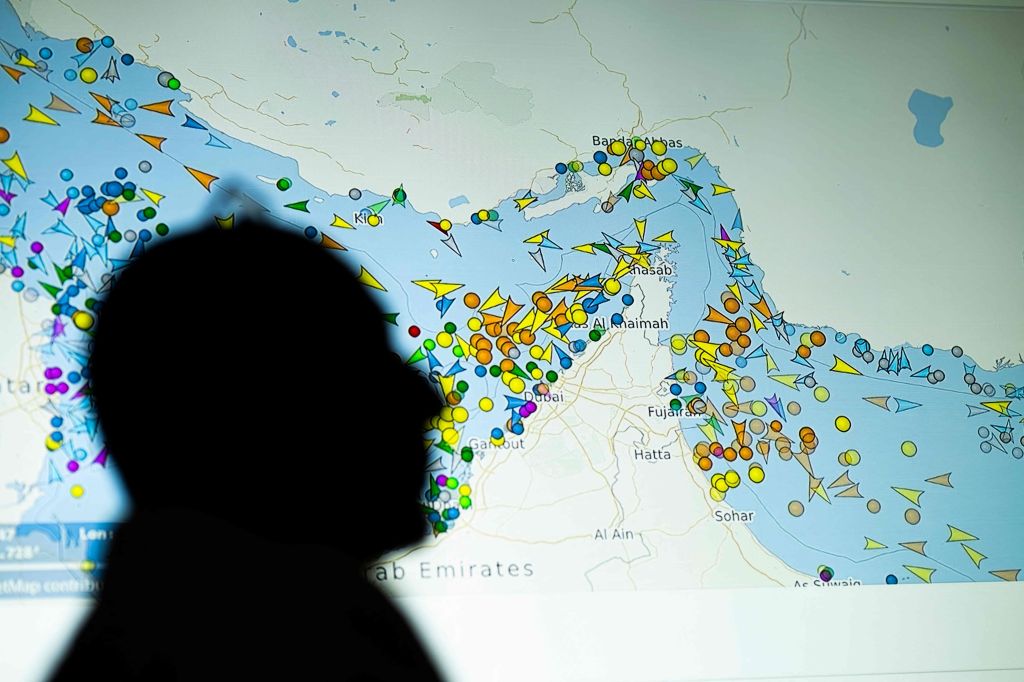
The ongoing conflict in the Middle East has disrupted fuel transportation to the West, as companies have halted voyages through the Strait of Hormuz due to Iranian attacks on vessels and port facilities.
Oil prices have since surged dramatically, with the global benchmark Brent crude increasingincreased by about 13 percent to the highest point seen since July 2024.
However, the AA advised drivers on Monday not to rush and purchase petrol and diesel, in anticipation of potential price hikes.– advice that many Brits seem to have overlooked.
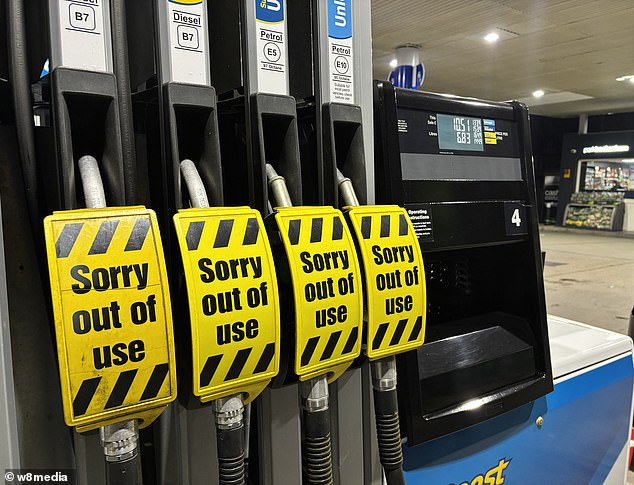
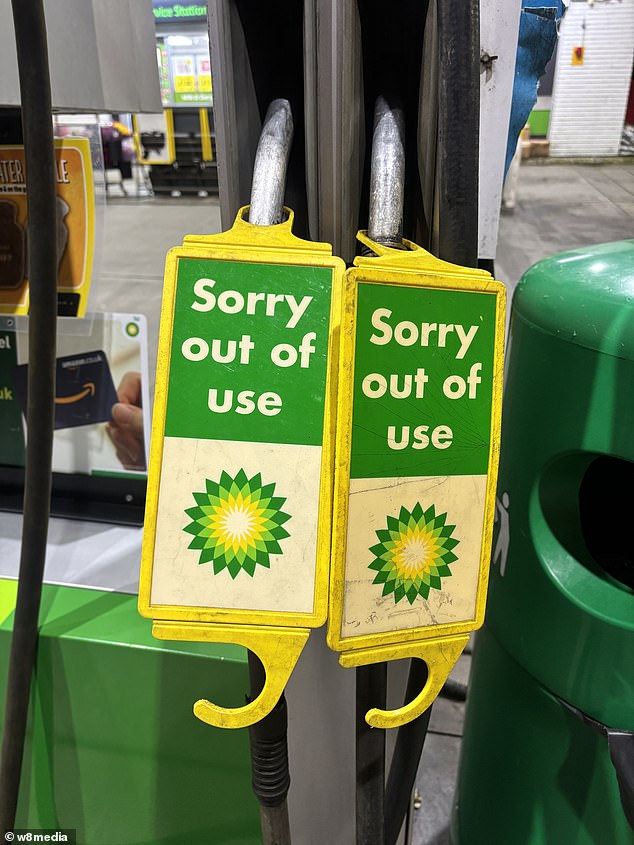
Valero Garage located in Beckenham, southern areaLondon, completely ran out of petrol on Monday evening after dozens of locals rushed to fill their tanks up.
A laborer stated that certain residents came with gasoline containers in an attempt to enhance their long-term fuel reserves.
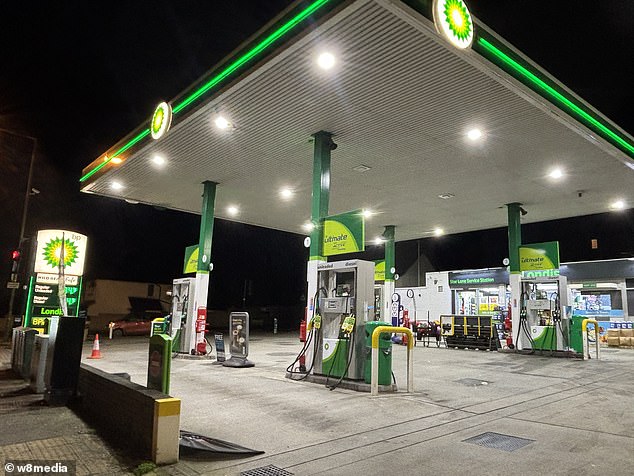
Signs that said, “Sorry out of use,” were also seen at the nearby BP gas station in Croydon.
In other areas, images from stations throughout the country revealed thousands of Britons filling up their tanks ahead of anticipated price increases.
At Costco Vauxhall and Go 24 Hour Express in Kirkdale, Liverpool, lines for the fuel pumps extended past the stations onto adjacent roads.
Meanwhile, 35 miles away in Greater Manchester, many vehicles were observed waiting to refuel at the Trafford Centre.
The US-Israeli dispute with Iran reached its third day on Monday, with the Gulf country maintaining its counterattacks against countries including Bahrain, Kuwait, the United Arab Emirates, and Cyprus.
Two vessels in the Strait of Hormuz were attacked on Sunday morning, resulting in one vessel catching fire and four sailors being injured. The crew of a ship called Skylight was subsequently evacuated.
A third incident took place 35 miles off the coast of the UAE in the afternoon, as reported by the United Kingdom Maritime Trade Operations (UKMTO), stating that ‘an unidentified projectile detonated very near to a ship’. It also mentioned that all crew members were unharmed.
The danger of additional attacks was deemed too high by many shipping firms, with companies such as Maersk and CMA CGM choosing not to enter the 100-mile Strait – which is only 24 miles wide at its narrowest section – where the Persian Gulf meets the Arabian Sea.
Approximately 20 percent of global oil production—around 20 million barrels daily—and 25 percent of liquefied natural gas move through this route, which Iran temporarily shut down during live military exercises.
The Organization of Petroleum Exporting Countries (OPEC) was criticized for profiting from the crisis in the Middle East, with prices having already increased by 20 percent this year as markets expected the attack on Iran.
Insurance companies are reportedly refusing to provide coverage for vessels traveling through the Strait, where the UK Maritime Trade Operations unit mentioned it has knowledge of ‘substantial military activity’. The United States stated it cannot ensure the safety of ships, and specialists anticipate the disruption may continue for several days.
Ali Vaez, head of the Iran Project, stated yesterday: ‘Closing the Strait of Hormuz would interrupt approximately one-fifth of oil traded worldwide in a single day – and prices wouldn’t merely rise, they would jump sharply due to fear. The impact would extend well beyond energy markets, tightening financial conditions, increasing inflation, and bringing vulnerable economies nearer to recession within weeks.’
It is believed that European gas prices have surged by 40 percent since the conflict began on Friday, while stock markets have declined globally today. Analysts are worried about a new wave of inflation caused by disturbances in energy markets.
Neil Wilson from Saxo Markets stated, “We are still far from 2022 levels in terms of pricing, but if LNG supplies to Europe are significantly disrupted through Hormuz for an extended time, we might face major issues. I am more worried about European natural gas prices than oil prices.”
Iran launched retaliatory missiles following the killing of the nation’s Supreme Leader, Ayatollah Ali Khamenei, on Saturday.
Drones have continued to be deployed across many countries in the Gulf, and Cyprus eventually also came under attack.
Sardar Jabbari, a high-ranking military official, stated on Monday: ‘The Americans have relocated most of their planes to Cyprus. We will strike Cyprus with such power that the Americans will be compelled to depart from the island.’
President Donald Trump, however, has exhibited no indications of retreating, and he did not exclude the possibility of sending American forces into Iran ‘if it became necessary’.
The U.S. leader also stated that the fighting might continue for as long as four weeks.
He stated: “I don’t experience the yips when it comes to having troops on the ground – like every president claims, ‘There will be no troops on the ground.’ I say, ‘Probably not needed,’ or ‘If they were necessary.’”
Trump also adopted a strong and resistant attitude regarding the potential political effects of this move, stating to the outlet, “I don’t care about polls.”
“Look, whether the polls are low or not, I believe the polls are likely okay. But it’s not about the polls. You can’t allow Iran, a country led by unstable individuals, to possess a nuclear weapon,” the President explained.
In a different interview, Trump hinted at significant upcoming actions regarding Iran.
We’ve barely begun to strike them. The major wave is yet to come. The significant one is approaching soon.
BP has been reached out to for a response by the Daily Mail.



 jasdooit
Leave a comment