
The U.S. military’s targeted restriction on vessels entering or leaving Iranian ports through the Strait of Hormuz will start at 10 a.m. Eastern Time on the 13th. This action was declared right after high-level U.S.-Iran talks in Islamabad, Pakistan, on the 12th ended following 21 hours of discussions. Nevertheless, opponents suggest that the blockade might turn into a challenging “test of endurance” for the U.S., considering President Donald Trump’s recent approval last month to “suspend sanctions on Iranian crude oil for 30 days” to keep oil prices stable, which has already given Iran a significant flow of money.
President Trump announced on social media on the 12th, “Starting immediately, the world’s most powerful navy, the U.S. Navy, will start procedures to block all vessels trying to enter or leave the Strait of Hormuz.” The main goal of this blockade is to stop Iran’s military funding by stopping its oil exports and compel it to return to talks, instead of escalating into full-scale conflict. Nevertheless, experts believe recent actions taken by the Trump administration might interfere with this operation.
The U.S. Treasury issued temporary permits on the 20th of the previous month, enabling the sale of Iranian crude oil that was stranded at sea until the 19th of this month, in an effort to curb rising global oil prices following the start of the conflict. As reported by the U.S. Energy Information Administration (EIA), this action introduced about 140 million barrels of oil into the market—equal to 1.5 days of worldwide consumption.
However, via this channel created by the U.S., Iran quickly obtained significant war funds. According to analysis from the commodity data company Keppler, Iran’s average daily crude oil exports in March amounted to 1.85 million barrels, representing an increase of 100,000 barrels per day compared to the previous three months. Notably, during the period of sanctions relief, Iran managed to sell its oil at a price several dollars higher than Brent crude. Around 90% of Iran’s exports—equivalent to 1.7 million barrels per day—were bought by China, its main buyer. Taking into account Iran’s annual defense budget of 8–10 billion U.S. dollars, the revenue generated from the U.S. sanctions suspension is estimated to be around 4–5 billion U.S. dollars, nearly half of its annual defense expenditure.
In essence, Iran has accumulated sufficient cash reserves via the one-month temporary channel established by the U.S., enabling it to endure the current naval embargo. Additionally, the longer this “test of endurance” continues, the more significant the immediate strain on the U.S. The Iranian government, which has survived years of severe Western sanctions, is skilled at leveraging external pressure to enhance internal unity rather than succumbing quickly to economic hardship.
On the other hand, the U.S. is very responsive to short-term economic fluctuations and often finds it challenging to maintain long-term conflicts. As per the American Automobile Association (AAA), the average U.S. gasoline cost hit $4.12 per gallon on the 12th, the highest point since October 2022, at the beginning of the Ukraine conflict. National inflation also rose again to 3.3%. Considering the U.S. political system, increasing oil prices directly lead to public criticism of the Trump administration and declining election support, making the party applying pressure the one that is actually under time pressure. Even among Republicans, some openly caution, “If this continues, there will be a ‘bloodbath’ in the November midterm elections.”
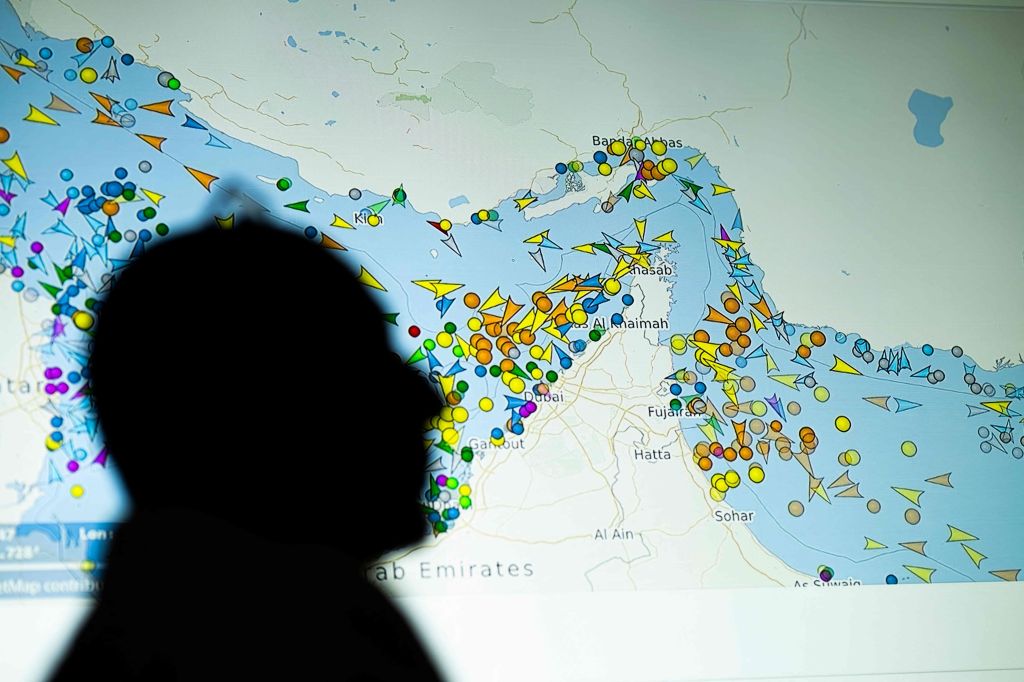
The U.S. military’s “selective blockade” initiative presents real-world military difficulties and dangers. The Strait of Hormuz is just a few kilometers wide at its tightest point, and Iran has control over the shoreline, making a total and secure naval blockade extremely difficult. Although the U.S. Navy can examine and confiscate vessels traveling to and from Iranian ports, the Iranian Islamic Revolutionary Guard Corps (IRGC) can utilize a variety of small, fast boats, drones, mines, and land-based anti-ship missiles—unconventional forces that have the potential to endanger U.S. destroyers at any moment. The New York Times (NYT) noted, “The Trump administration is confronted with unattractive options: engaging in prolonged negotiations or restarting a conflict that has already led to the most significant energy disruption in modern times.”
In the end, if the blockade of Hormuz continues, the downfall of Iran’s sanctions-resistant government might happen later than the noticeable consequences of increasing oil prices, inflation, and growing military threats in U.S. public sentiment. Opponents are now questioning whether the administration’s decision made a month ago—relaxing sanctions temporarily to stabilize global oil prices—has backfired, contradicting its present approach to weaken Iran through higher oil prices and inadvertently causing self-inflicted problems.



 jasdooit
Leave a comment