
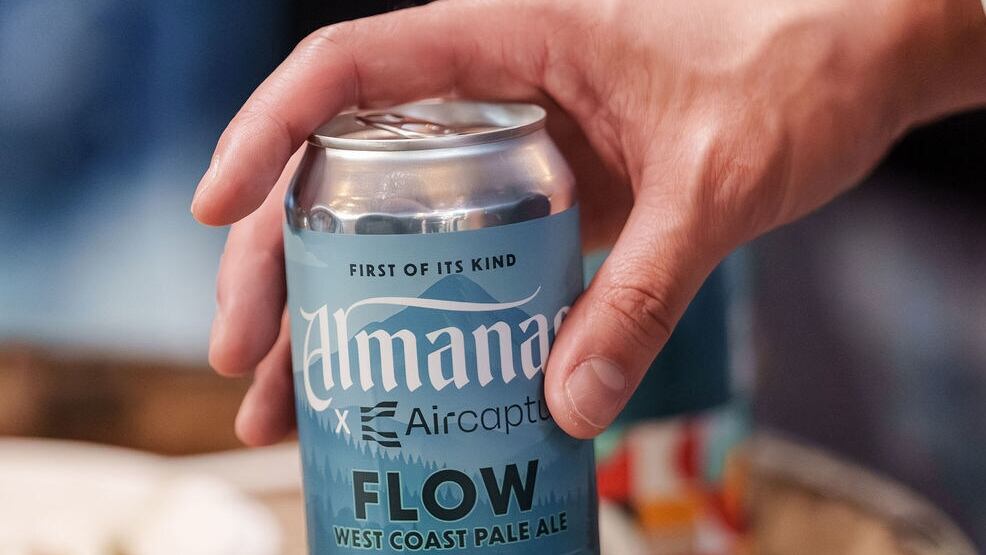
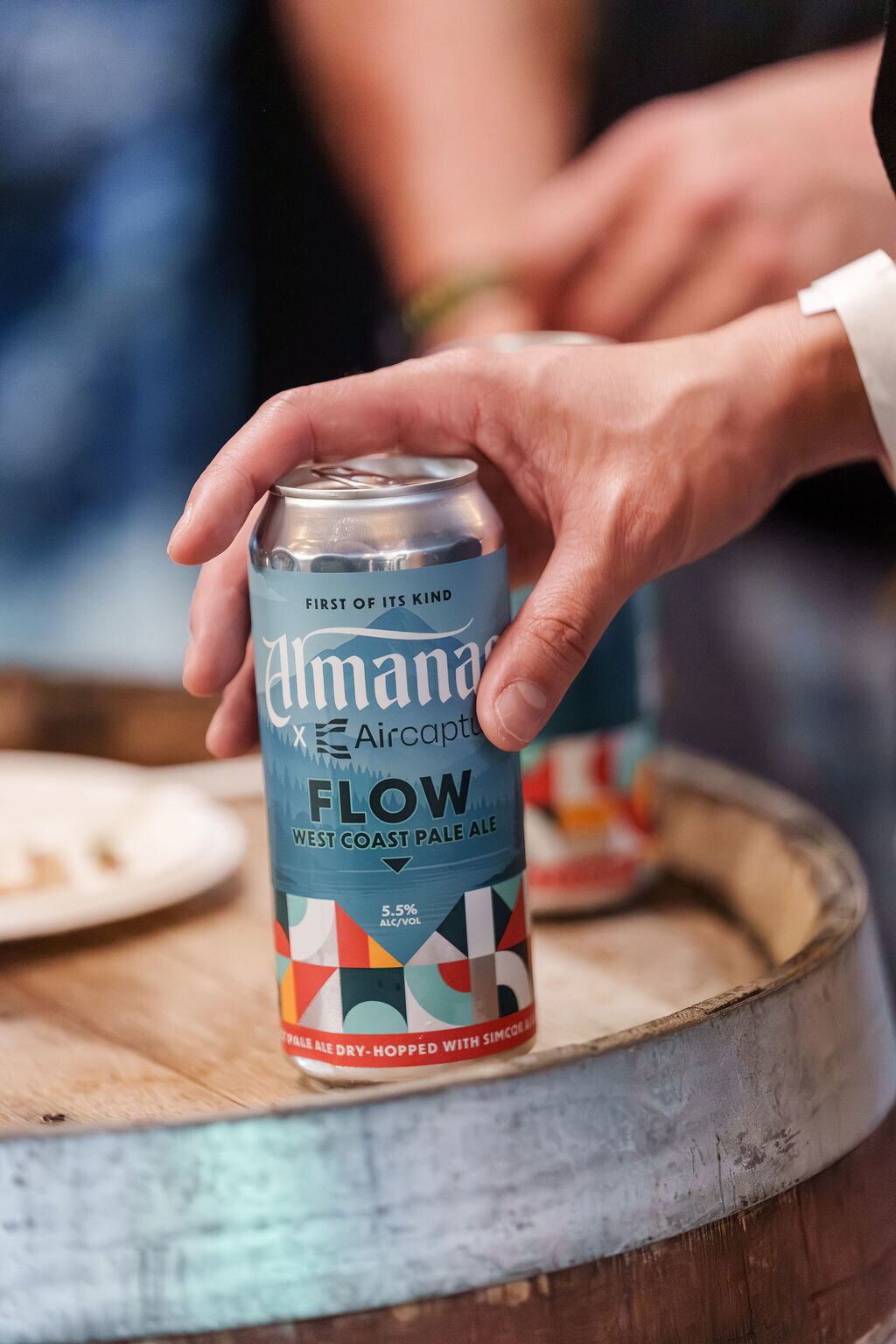
A brewery parking lot in Alameda, California. A big metal machine positioned beside a beer tank draws air in via tubes. The carbon dioxide collected this way is quickly cleaned and turns into bubbles in the beer. It signifies the age of brewing beer using carbon dioxide captured from the atmosphere.
The brewery, Almanac, has implemented technology to directly extract carbon dioxide from the atmosphere and is using it in the brewing process. The collected carbon dioxide is converted into a liquid form and refined on-site to meet food-safe specifications, then employed to carbonate the beer. At present, this method is used for about 20% of overall production, with plans to increase it to 100% in the future.
◇Carbon dioxide from the atmosphere turns into beer bubbles
This innovation is referred to as ‘Direct Air Capture (DAC)’, which chemically captures and isolates carbon dioxide present at a low level of 0.04% in the atmosphere. Although the initial emphasis was on underground storage of the captured carbon dioxide, there has been a swift shift toward using it directly as an industrial raw material.
The use of the application in the food and beverage sector holds significant importance. Carbon dioxide plays a crucial role in the production of beer and fizzy drinks, yet it is currently obtained by capturing carbon dioxide that is produced as a secondary outcome from fertilizer and ethanol manufacturing. This method results in an unreliable supply and considerable variations in pricing. On the other hand, employing carbon dioxide that is captured directly at the location can minimize supply chain vulnerabilities and lower expenses by 15–20%, as per the study.
Aircapture, a DAC company, introduced a method for generating and delivering carbon dioxide on-site through small-scale capture devices. This initiative was made possible due to aligned interests with Almanac Brewery, which required a consistent supply of carbon dioxide. This method is significant because it facilitates ‘on-site production and usage’ by placing the equipment directly where it’s needed, in contrast to traditional large-scale facilities. As a ‘distributed DAC’ model that utilizes identical units across various locations rather than expanding equipment size, it helps lower transportation expenses and address supply chain issues. The world’s leading beer company, AB InBev, also intends to implement Aircapture’s carbon dioxide capture technology at several of its breweries this year.
◇Conversion of greenhouse gases… Diamonds and sneakers also used
The range of applications for carbon capture and utilization technology is growing quickly. The U.S.-based diamond company Eider transforms captured carbon dioxide into methane and then creates diamonds using a deposition method. LanzaTech has created a process that converts carbon dioxide into ethanol, which is then used to make plastic raw materials for products like sneakers. Carbon Engineering is developing a technique to produce synthetic fuel by combining captured carbon dioxide with hydrogen. The approach of injecting carbon dioxide into concrete to improve its durability has already reached the commercial stage.
The technology, which was previously restricted to capturing and storing carbon, is now symbolically evolving into an industrial raw material that is promptly used and marketed. Whereas the past emphasized the removal or storage of greenhouse gases, the industrial framework is now moving towards employing them as fresh resources.
The impact is especially notable in sectors such as beer and fizzy drinks, which depend on constant use of carbon dioxide. The sector thinks this brewing approach might expand into different areas like food production, farming, and greenhouse growing in the future.
◇High expenses and poor efficiency… Numerous difficulties still exist
Nevertheless, challenges remain. The low level of carbon dioxide in the atmosphere results in reduced capture effectiveness, and considerable energy is needed to extract and refine it. As per the World Economic Forum (WEF), the expense of capturing carbon dioxide via DAC ranges from approximately US$600 to US$1,000 per ton, with analysis indicating that costs must fall under US$200 for substantial market growth.
Large carbon capture plants face challenges such as high building and running expenses, along with vulnerability to policy shifts. Certain recent initiatives have faced delays or reductions due to these issues. As a result, the sector is trying to grow the market by using smaller equipment in various places rather than relying on big facilities. Almanac Brewery serves as a key example. Critics suggest that even decentralized models like Almanac’s might find it difficult to be financially sustainable unless energy use and device efficiency are enhanced. Nevertheless, the industry sees this as an important change, as carbon capture technology transitions from large-scale infrastructure to smaller, on-site solutions. There is hope that carbon dioxide, which was previously only seen as a pollutant to cut down, will now be recognized as a ‘useable resource’.



 jasdooit
Leave a comment