
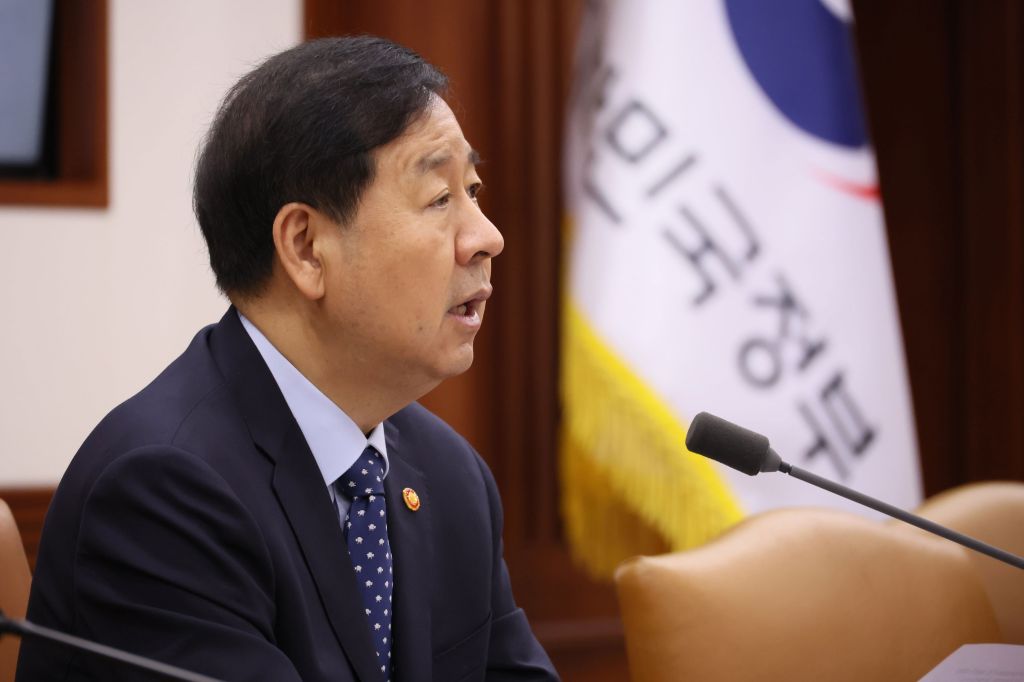
Deputy Prime Minister and Minister of Finance and Economy Koo Yun-cheol mentioned on the 13th, “We plan to significantly broaden the future Free Trade Agreement (FTA) map, focusing on emerging markets like the New Southern Region, Latin America, and Africa, in order to diversify the global supply chain.” During the day’s Ministerial Meeting on External Economic Affairs, Deputy Prime Minister Koo noted, “The government will not limit its efforts to addressing trade issues but will extend the FTA network to boost exports,” as reported.
He stated that even with the growing trend of protectionism, South Korea’s exports hit a record high of 86.4 billion dollars last month, representing a 48.3% rise compared to the same period last year, and added, “This is due to the FTA network established over the past two decades acting as a strong foundation for our economy.” He unveiled plans to broaden the FTA network and mentioned, “Strategically, we will also improve our trade approach by adapting the FTA model into modular trade agreements such as digital, green, and supply chain agreements, along with industry and investment-related agreements.”
Deputy Prime Minister Koo also mentioned, “We will take a strategic approach in responding to the U.S. Section 301 investigation,” and added, “We will maintain close communication and coordination with the U.S. government to do everything possible to avoid harm to our companies’ interests.” The U.S. administration initiated a Section 301 investigation last month, focusing on 16 countries such as India, South Korea, China, and Japan, citing ‘excessive production’ as the justification. Section 301 of the Trade Act allows the executive branch to impose tariffs and other actions in response to unfair, unreasonable, or discriminatory measures, policies, or practices by foreign governments that hinder or restrict U.S. trade.
Deputy Prime Minister Koo stated, “In contrast to the U.S. assertions, we will strongly emphasize that South Korea’s manufacturing sector is operating at a suitable capacity utilization rate and that our exports of capital goods are aiding in the recovery of U.S. manufacturing. We will highlight that South Korea has a strong foundation grounded in International Labour Organization (ILO) conventions and national laws that ban forced labor and that we are strictly adhering to these standards.”
Deputy Prime Minister Koo also revealed on the same day a strategy to advance a ‘Korean-style development finance’ approach aimed at aiding the South Korean economy’s access to new markets. He mentioned, “Although we have supported the economic growth of developing nations and the international expansion of our companies through concessional aid like the Economic Development Cooperation Fund (EDCF), it is challenging to keep increasing the Official Development Assistance (ODA) budget.” He further noted, “Hence, similar to other developed nations, we intend to implement a new development finance system that assists developing countries through diverse financial mechanisms such as loans, guarantees/insurance, and equity investments by leveraging private resources including market borrowing and investment funds.” He mentioned that a cross-ministerial task force (T/F) will be set up within the first half of this year to develop detailed plans for the new development finance initiative.
 jasdooit
Leave a comment