
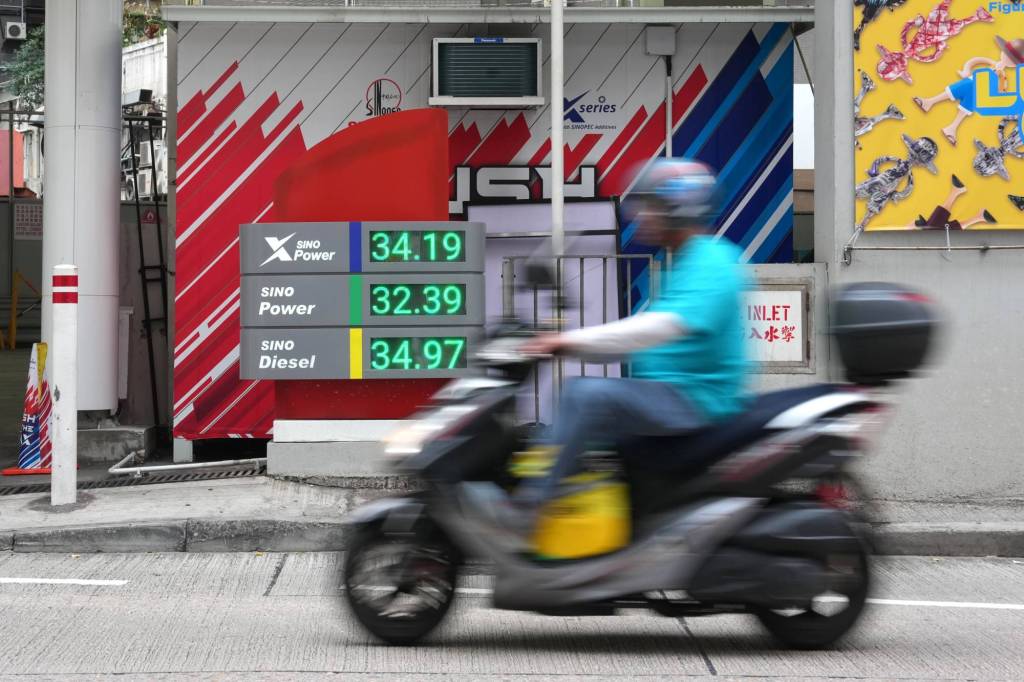
Ongoing uncertainty due to the oil crisis connected to the Middle East conflict is expected to increase inflationary pressures, according to experts.
With various Hong Kong industries battereddue to the world’s highest gasoline and diesel costs, economists and business executives anticipate an oil crisis resulting from theMiddle East warwill cause a surge in imported inflation, increasing the prices of goods such as toilet paper and laundry services, as well as asphalt.
Experts have cautioned that the negative effect on inflation will be felt sooner than the impact on economic growth, with certain individuals suggesting the consequences will appear in the third and fourth quarters.
The ghost of rising inflation might still linger over theNorthern MetropolisMegaprojects are pushing more Hongkongers to spend on the mainland, they said.
Are you curious about the major issues and developments happening globally? Find the answers withSCMP Knowledge, our latest platform featuring curated content including explainers, FAQs, analyses, and infographics, presented by our acclaimed team.
Adrienne Lui, an economist specializing in Greater China and Mongolia and head of Asia-Pacific Economics Research at Citigroup Global Markets Asia, kept her 2026 real gross domestic product (GDP) projection for Hong Kong unchanged at 3.2 percent, stating that the energy disruption was “expected to be inflationary rather than overly harmful” to economic growth.
The team of Lui has increased its average consumer price index (CPI) projection for 2026 by 0.3 percentage points, now standing at 1.9 percent annually, to account for approximately three months of higher energy expenses.
Electricity made up 2.8 percent of the CPI basket in Hong Kong, she mentioned.
“Monthly adjustments to fuel costs, despite a delay of several months, will be included in residential electricity bills to account for the increased energy burden caused by the disruption in the Middle East,” Lui added.
The government stated last week that the effect of the Middle East situation on Hong Kong’s overall economy mainly relied on whether the conflict persisted, spread, or intensified. Its economic outlook for 2025 was published three days prior to the initial attacks by the US and Israel on Iran on February 28.
After rolling out short-term measuresfor instance, diesel subsidies and lower tunnel charges introduced last week for the commercial transportation industry, a newly established government committee tasked with tracking fuel price changes will keep performing ongoing evaluations, facilitate collaboration among agencies to develop emergency preparations, and create proactive approaches.
Retail and wholesale politician Peter Shiu Ka-fai cautioned that the crisis would soon affect everyday consumer products, especially large items like toilet paper, which are very responsive to transportation expenses, as well as petroleum-based products such as waterproof materials, membranes, and asphalt.
“Both big and small businesses are encountering rising expenses, but naturally, larger companies possess more robust financial resources and various strategies to handle challenges, meaning they may not be affected as severely,” Shiu stated.
However, for smaller businesses, their ability to adjust is somewhat restricted, and the probability of them being forced to bear the expenses is somewhat greater.
In his budget unveiled just days prior to the Middle East crisis in February, Financial Secretary Paul Chan Mo-po stated that as the local economy keeps growing, inflation this year was anticipated to be somewhat higher than in 2025.
The government projected the core inflation rate and the overall inflation rate for this year to stand at 1.7 percent and 1.8 percent, respectively. Chan also predicted that GDP would increase by 2.5 to 3.5 percent compared to the previous year.
A survey by Bloomberg involving 29 analysts carried out in early March also estimated the median real GDP growth at 2.9 percent for 2026, which is very close to the government’s official forecast.
He, however, cautioned that ongoing uncertainty would increase inflationary pressures.
“Despite generally limited pricing control, inflation linked to energy costs will likely become more apparent in consumer goods and services as the ongoing energy instability continues,” Lui stated.
Additional fees imposed by shipping companies serve as an example, whereas demands for higher public transportation costs can be expected.
The sudden increase in jet fuel costs leading to steeply rising fuel surcharges on airline tickets, combined with a greater likelihood of travel interruptions, will affect air travel decisions, particularly for long-distance flights.
He mentioned that safe-haven capital flows might even be drawn to the city as a secure financial center during times of geopolitical uncertainty, benefiting assets related to China.
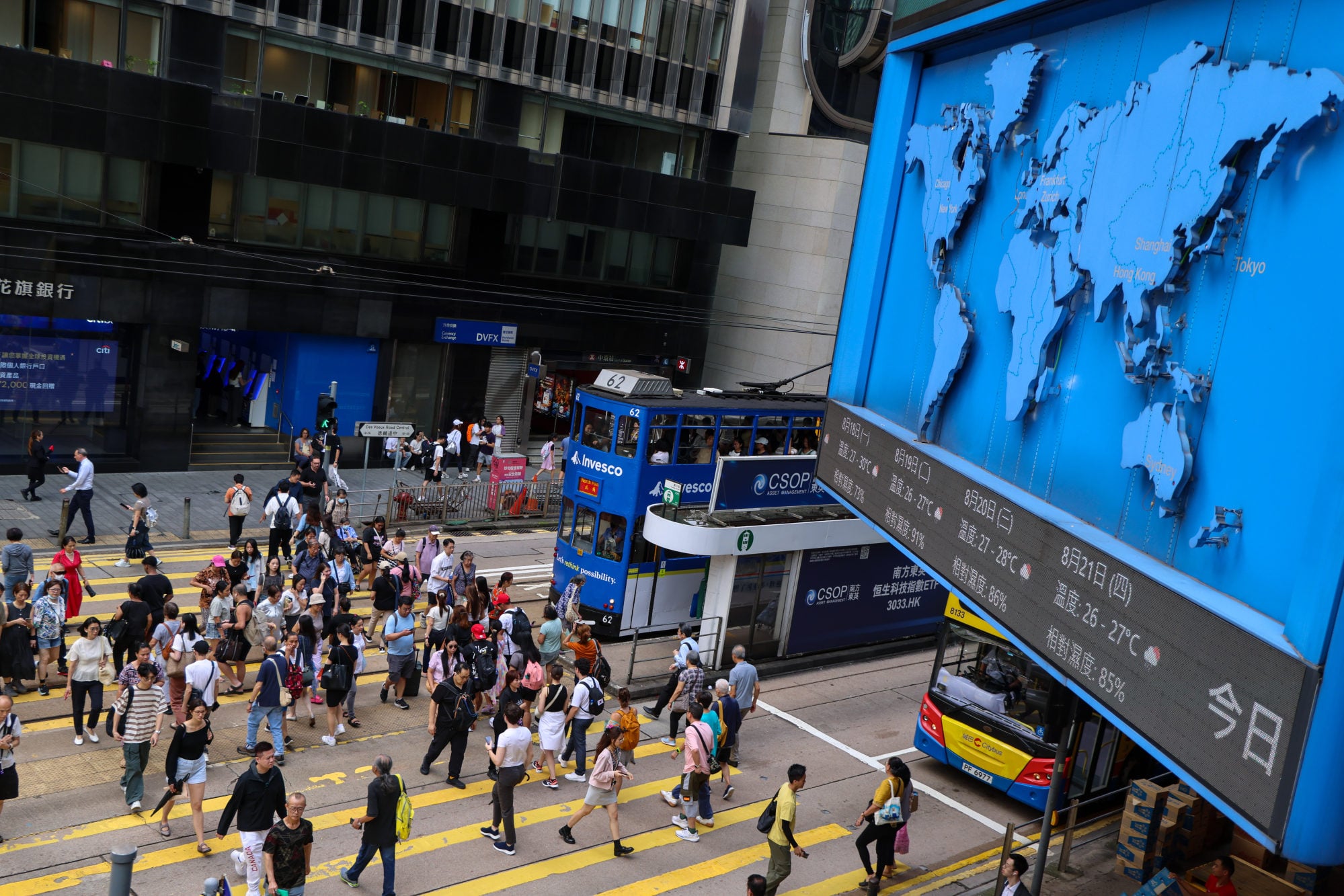
Nevertheless, the positive economic outlook hides significant operational challenges throughout.
Industrial representative Ray Wong Wing-wai pointed out that rising industrial diesel prices have increased energy costs for commercial laundries from 8 percent to approximately 15 percent of their overall expenses, eroding profit margins that typically remained under 10 percent.
Wong highlighted the presence of structural challenges, mentioning that local laundry businesses were unable to move their energy-heavy operations overseas because of a mainland Chinese restriction on cross-border laundry processing implemented following the Covid-19 pandemic.
Joseph Chan, the associate director of the Centre for Innovation and Entrepreneurship at the University of Hong Kong, cautioned that rising expenses might encourage more locals to seek more affordable options beyond the border.
Chan cautioned that this change would drench the city’s retail and hospitality industries with “more cold water,” as residents increasingly headed to Shenzhen for dining and shopping or traveled to Japan to take advantage of better exchange rates.
Although heavily dependent on imports, experts noted that Hong Kong was somewhat protected from the physical shortages affecting other countries.
Both Lui and Chan observed that the city gained advantages from a consistent availability of consumer products, petroleum, and natural gas from the mainland.
While Lui stated she was convinced that the megaproject and the five-year plan for theGreater Bay Areawere less likely to be interrupted, the crisis emphasized the importance of unified strategic contingency plans across the region.
On the other hand, Chan cautioned that should the crisis persist, public expenditure might be reduced further, possibly impacting the Northern Metropolis because of increased expenses.
Chan proposed that the large-scale development might be accelerated to capitalize on the opportunities presented by green innovation and foreign investments.
The extraordinary fuel crisis has acted as a wake-up call for Hong Kong’s shift towards sustainability.
He pointed out that with imported liquefied natural gas supplying 50 to 60 per cent of the city’s electricity, officials should thoroughly reassess their 2035 targets of increasing renewable sources to 7.5 to 10 per cent of the energy mix in order to enhance energy self-sufficiency.
Chan advocated for an active local energy plan that matches the national structure, promoting electric vehicle initiatives and eco-friendly aviation fuel.
More Articles from SCMP
Extending subsidized after-school programs can benefit more households
What an old Chinese map uncovers about world history and current power dynamics: Sheng-Wei Wang
This piece was first published in the South China Morning Post (www.scmp.com), a top news outlet covering China and Asia.
Copyright (c) 2026. South China Morning Post Publishers Ltd. All rights reserved.



 jasdooit
Leave a comment