
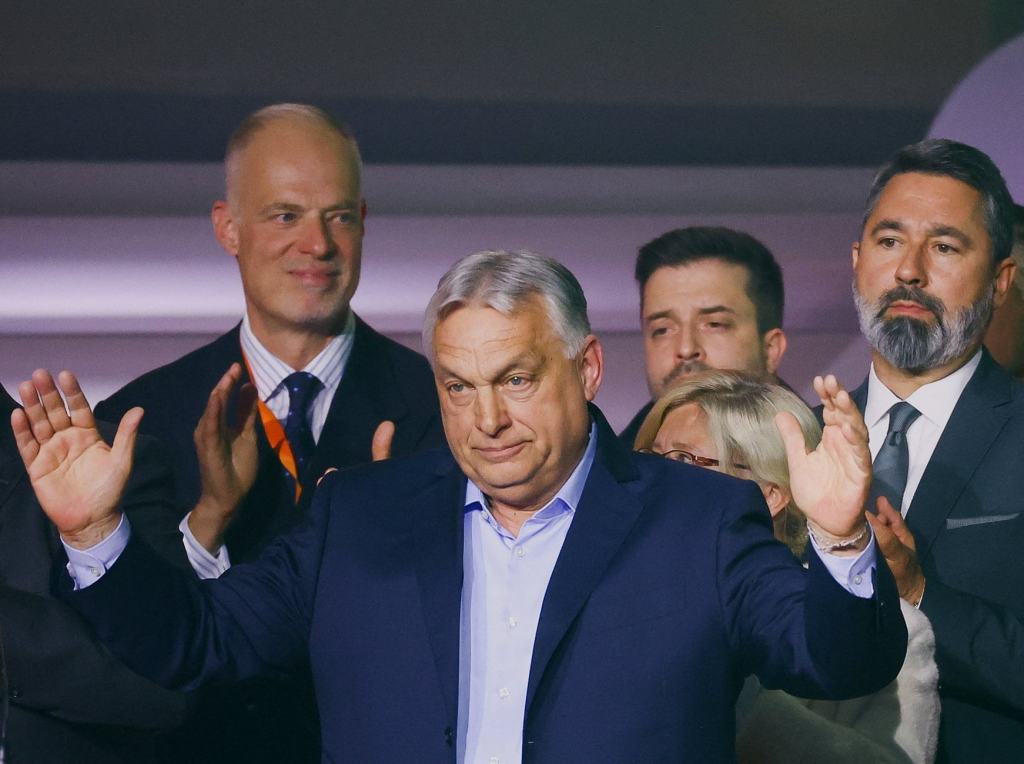
After 16 years, Hungary’s political scene has experienced a major shift. Prime Minister Orbán Viktor, frequently referred to as the “European Trump,” lost the general election, signaling the conclusion of his extended leadership that started in 2010. This election is seen not just as a routine government transition but also as a pivotal moment that could shape the future of populist movements across Europe and affect the dynamics between the United States, Russia, and the European Union (EU).
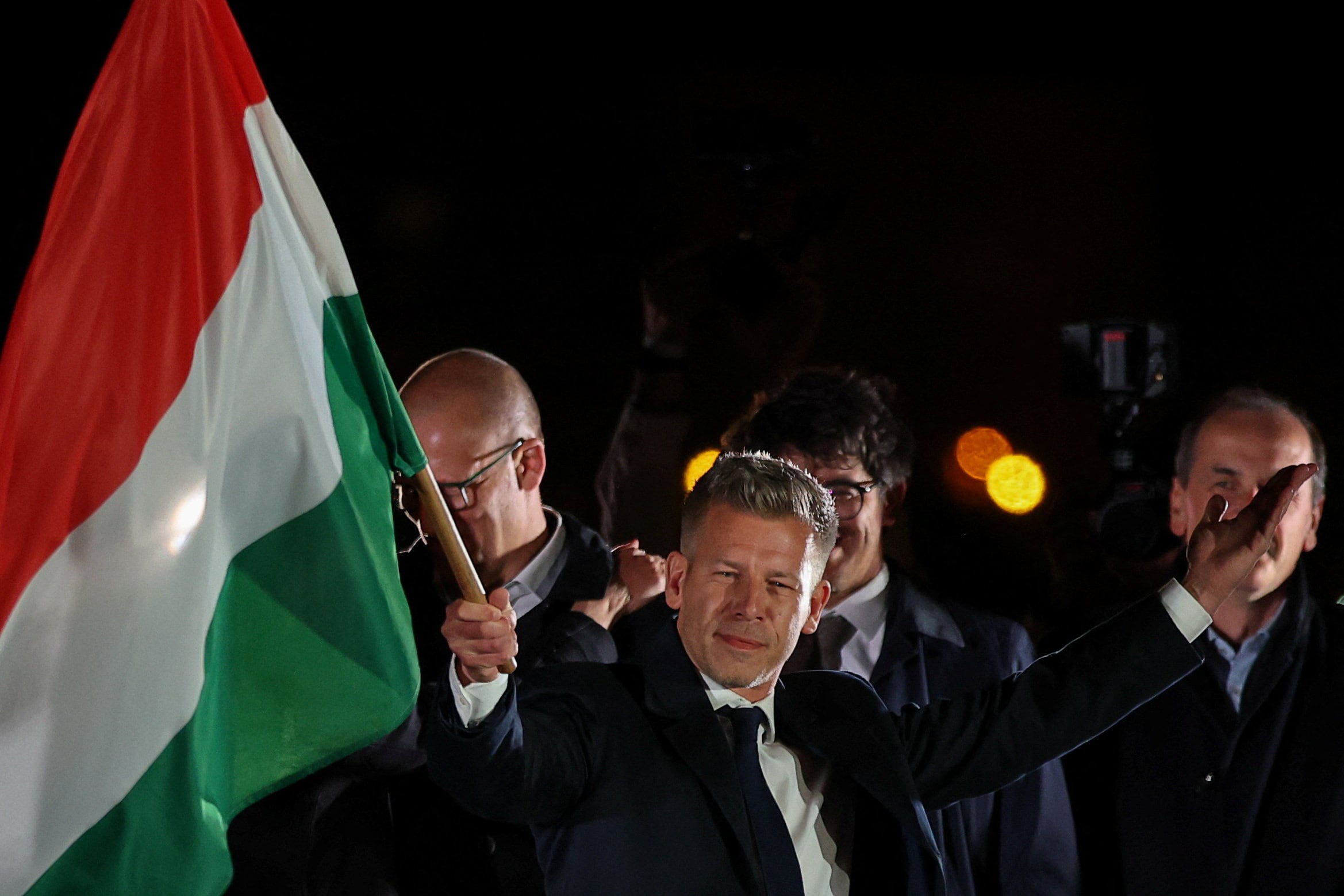
In the general election that took place on the 12th (local time), the opposition Tisza won 138 of the 199 total seats, securing a major win. The governing party Fidesz managed to obtain only 55 seats. Tisza’s number of seats surpasses the constitutional amendment requirement of two-thirds (133 seats). Péter Márkár, head of Tisza, said, “The Hungarian people have once again created history exactly 23 years after the referendum regarding joining the European Union (EU). Hungary will become a strong partner of the EU and the North Atlantic Treaty Organization (NATO).” Prime Minister Orbán admitted his loss, stating, “The election outcome is painful but evident. I offer my congratulations to the winning party.”
◇ Shift in Public Opinion Caused by ‘Corruption and Financial Struggles’
The main topics in this election were corruption and the economy. Locally, voters continued to express their views with statements such as, “Corruption has become completely intolerable.” The Orbán administration has been criticized for consolidating power by controlling the judiciary and media. There were also ongoing criticisms that the government incorporated provisions advantageous to the ruling party within the constitution and institutions to sustain its authority. According to the British weekly *The Economist*, the constitution contains many ‘poison clauses’ that hinder the implementation of policies even after a government change, leading to analyses that achieving the constitutional amendment threshold is crucial for the new government to operate effectively. Indeed, Tisza sought the ‘magic number’ of two-thirds of all seats, 133 seats, for this reason. The economic situation also deteriorated. Increasing prices and declining public services fueled public frustration, which, combined with corruption issues, led to a rejection of the regime. In particular, dismantling the previously fragmented opposition structure and uniting under the leadership of Péter Márkár was also mentioned as a contributing factor to the victory.
◇ Verdict regarding Pro-American and Pro-Russian Policies
Hungary’s foreign policy played a significant role in this election. Specifically, the election attracted global attention as a conflict between ‘strongmen’ such as Trump and Putin and European Union leaders. Trump, who shares anti-immigration and Christian identity views with Orbán, sent Vice President JD Vance to Hungary on the 7th to assist in the election campaign. During the ‘Hungary-U.S. Friendship Day’ event in Budapest that day, Vance made a live call with Trump, who commended, “Orbán is someone who achieves great things,” and added, “He has stopped immigrants from invading and ruining your country (Hungary) as has happened in other countries.” Vance also directly asked for support, stating, “If you want to protect sovereignty, democracy, and truth, go to the polls and stand with Orbán.” However, it is believed that this effort had limited impact due to negative public opinion related to the Iran conflict. Prime Minister Orbán has also obstructed EU policies, such as sanctions against Russia and aid to Ukraine, by continuing energy cooperation with Russia. In contrast, Péter Márkár, leader of Tisza, promised to restore cooperation with NATO and emphasized ‘returning to Europe’ as a central policy. Therefore, the election outcome is also seen as a verdict on the pro-Russia approach.
After learning about the opposition’s success, leading European figures all expressed approval. Ursula von der Leyen, head of the European Commission, said, “Hungary has selected Europe. A nation has found its way back to Europe.” French President Emmanuel Macron noted, “This outcome demonstrates how much the Hungarian people appreciate the EU’s principles and Hungary’s position in Europe.” British Prime Minister Keir Starmer also remarked, “This marks a significant moment for European democracy.”
◇ A ‘Warning Light’ for European Populism
This election is anticipated to have major effects on the broader political scene in Europe. For the past 16 years, Orbán has emerged as a representation of populist conservative politics and has been regarded as a ‘model’ for the MAGA movement in the United States and far-right groups across Europe. Nevertheless, this loss is seen as an indication that such trends might not continue indefinitely. On the night of the election, residents flooded the streets of the capital, Budapest, to commemorate the win, with some shouting, “Russia, go away!” As the ‘Orbán era,’ which spanned 16 years, draws to a close, Hungary is viewed as standing at a crucial turning point, ready to re-emerge as a central player in Europe.

 jasdooit
Leave a comment