
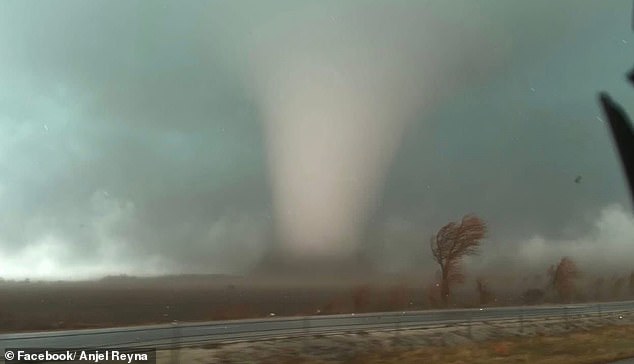
A devastating storm is expected to move through the Midwest, issuing tornado alerts to tens of millions acrossMinnesota to Texas.
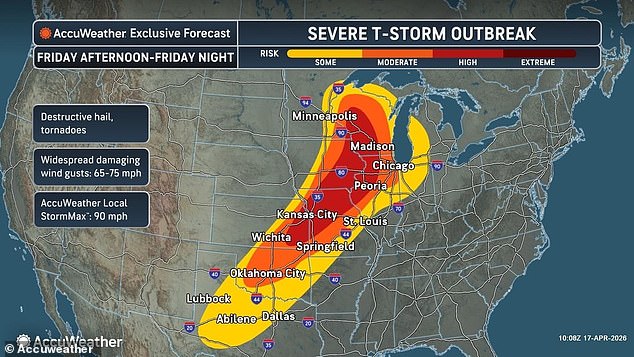
The enormous system is anticipated to generate thunderstorms, powerful wind gusts exceeding 70mph, and destructive hail andthe danger of lethal tornadoesstarting on Friday afternoon and continuing throughout the night across 11 states.
Meteorologists from AccuWeather have cautioned that the greatest likelihood of a powerful thunderstorm will be observed inWisconsin, Iowa, Illinois, Missouri and Kansas.
Minnesota, Michigan, Indiana, Oklahoma, ArkansasTexas and other areas are also in the storm’s path, exposing about 50 million people to the possibility of experiencing a severe thunderstorm and possible tornado on Friday.
Large cities such as Chicago, Minneapolis, St. Louis, Kansas City, Madison, Wichita, Oklahoma City, and Dallas are anticipated to face intense thunderstorms within a few hours.
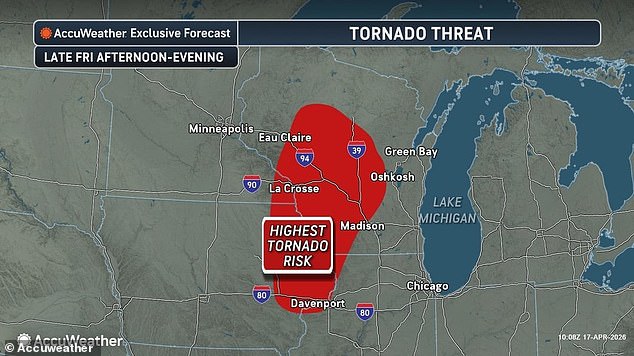
Meteorologists also anticipated that portions of Wisconsin, Minnesota, Iowa, and Illinoisface the greatest danger of witnessing a tornado develop on Friday evening,As the multi-day storm brings hazardous conditions to additional states in the Northeast this weekend.
Senior Meteorologist Dan Pydynowski from AccuWeather stated: ‘Individuals located in the area affected by these storms need to remain vigilant and be prepared to take action.’
“Ensure your phone is fully charged, alerts are enabled, and your storm shelter or safe area is prepared and equipped with essential emergency supplies. Avoid driving through flooded roads, particularly during nighttime,” the expert mentioned.
Violent spinning columns of air that descend to the earth, often occurring within intense thunderstorms known as supercells.
They may differ in intensity and harmfulness, ranging from mild ones that result in slight roof damage to intense forces capable of utterly destroying sturdy houses, flipping vehicles, and tearing out trees within moments.
Around three dozen tornadoes have already beenreported from Monday to Thursday throughout the Plains states and Upper Midwest.Massive, destructive hailstones and severe weather have been observed as far east as Vermont and New Hampshire.
A seven-day storm system has caused more than 10,000 residents in Tennessee to lose electricity following intense thunderstorms that hit Nashville on Thursday.
The harsh conditions have been driven by a massive, slow-moving weather pattern situated over the central United States. It has been drawing in warm, moist air from the south, while a cold front and strong winds in the upper atmosphere have combined to create ideal circumstances for intense weather.
“The extended period of severe weather is expected to reach its peak this afternoon and continue through the night. The conditions are favorable for damaging storms throughout the central United States,” Pydynowski added.
In addition to thunderstorms, hail, and potential tornado effects, Pydynowski cautioned that regions which have already experienced significant flooding this week, such as Wisconsin and Michigan, are expected to face further water damage on Friday.
“Additional storms will only exacerbate the situation. Certain roads have remained submerged for several days. More regions might experience flooding tonight through the weekend,” he said.
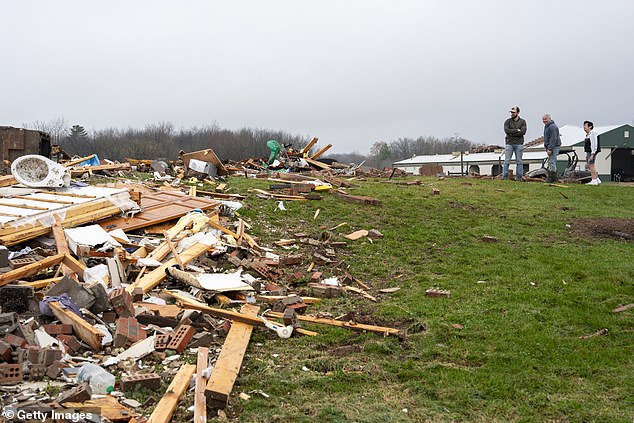
Governors in Michigan and Wisconsin announced a state of emergency on April 15 when storms arrived, leading to isolated tornadoes and rising rivers.overflow.
The National Weather Service released updated flood alerts in both states on Friday.
Hundreds of miles east of Friday’s tornado danger are anticipated to face threats on Saturday, as western New York, Pennsylvania, Ohio, West Virginia, Kentucky, Tennessee, and Mississippi face a moderate risk of severe thunderstorms.
The AccuWeather team stated in a release:By Sunday, the intense weather conditions are expected to have reached their highest point, although strong thunderstorms could still spread from the northern Gulf Coast to the Atlantic Coast.
Meteorologists cautioned that the weekend storm might significantly affect millions of Americans, hindering transportation, leading to additional power failures, and isolating supply lines in the Plains, Midwest, and Northeast for several days.
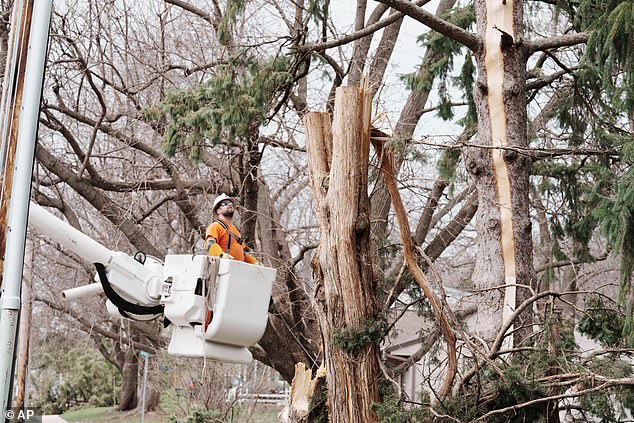

Tornado season in the United States usuallyextends from March to June,reaching its highest point in May.
Thousands of tornadoes occur annually, according to AccuWeather, which noted more than 900 were documented between March and May 2025.
Currently, the weather agency’s latest forecasts for April 2026 indicate the greatest likelihood of tornado activity shifting towards Iowa, Illinois, Missouri, Kentucky, Tennessee, Mississippi, Alabama, and Arkansas.
For many years, the area referred to as ‘Tornado Alley,’ famous for severe weather conditions in the United States, has primarily been located in Texas, Oklahoma, Kansas, and Nebraska.
Nevertheless, research has shown that evolving weather patterns and rising temperatures across the nation have moved this tornado region further east, covering more states than previously.
This encompasses additional effects in Mississippi, Alabama, Tennessee, Kentucky, Arkansas, Illinois, Indiana, Missouri, and Iowa.



 jasdooit
Leave a comment