
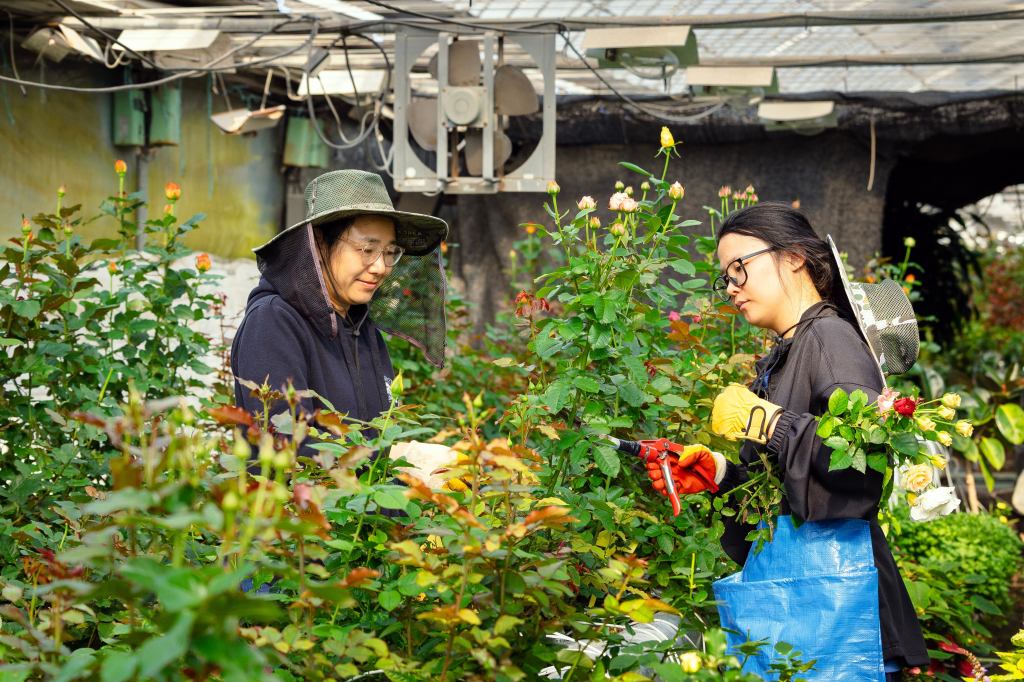
The saying goes, ‘Those who wish to pick roses must respect their thorns.’ However, respecting the thorns while being injured by them seemed almost unattainable.
Ow, it hurts. Ow, it hurts. Ow!
I cried out without meaning to. Farmer Lee Soo-jung (46) remarked, “It would be preferable if there were no thorns,” and continued, “I’ve been doing this for 16 years, and I still get poked.” He has cultivated roses for two generations, carrying on his father’s legacy. Reddish, small scars were visible on the back of his hand and fingers—evidence of past thorn injuries. These marks were an unavoidable part of his life.
May, a month often linked with family, is typically a busy time for the floriculture sector. This is because of events such as Parents’ Day, Teachers’ Day, Rose Day (May 14), and Coming of Age Day (May 18). Out of the roughly 379 million cut flowers sold each year, roses make up around 30%, the largest portion. Nevertheless, farmers are not smiling. With rising inflation, flowers are seen as “luxury goods,” and expenses on fertilizers and heating have increased due to the ongoing effects of the Middle East conflict. On the 7th, I visited the rose farm “Hael Roses” in Goyang-si, Gyeonggi Province, to listen to farmers’ experiences and observe the process of growing and harvesting flowers.
◇The Grueling Challenge of Removing Unwanted Plants
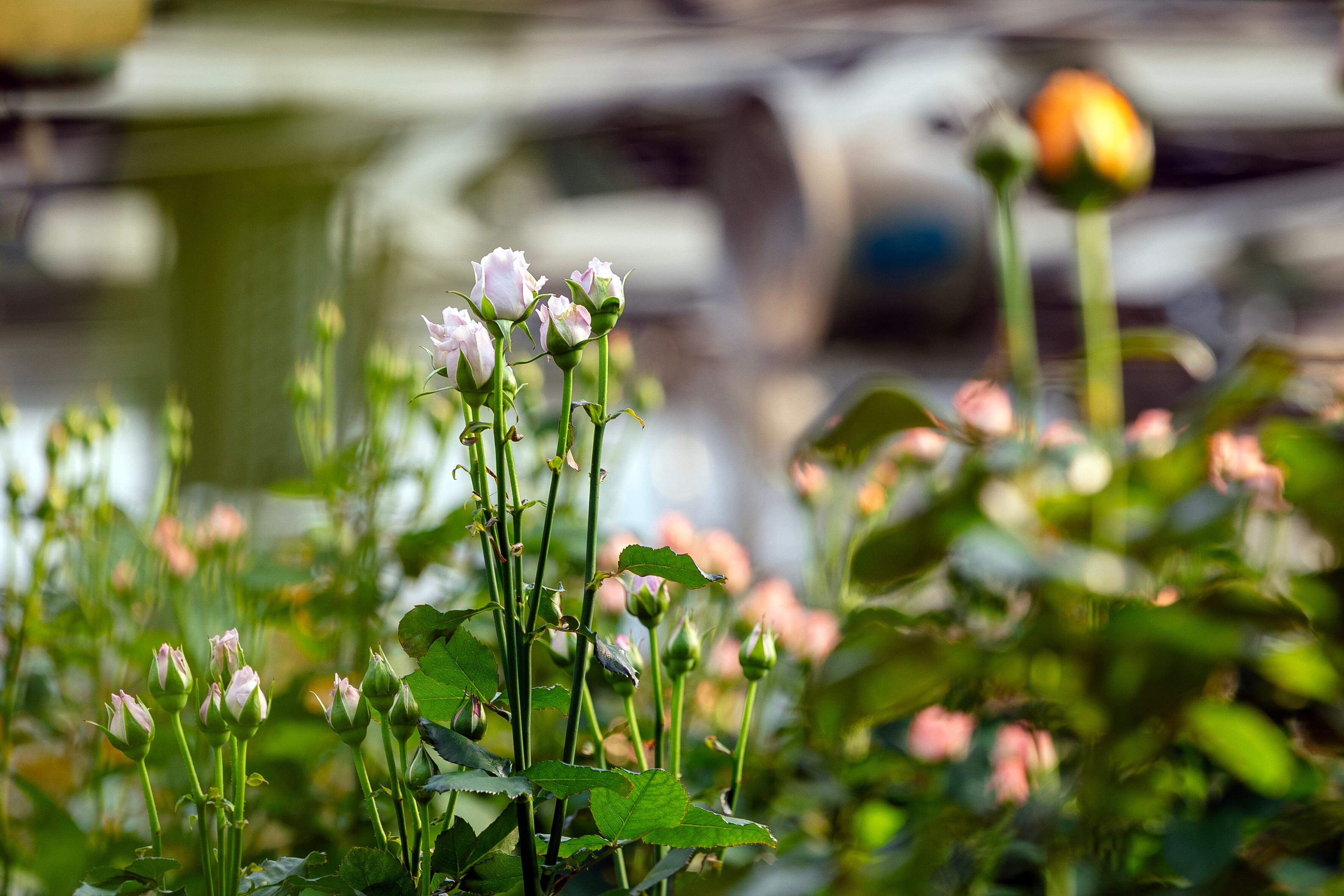
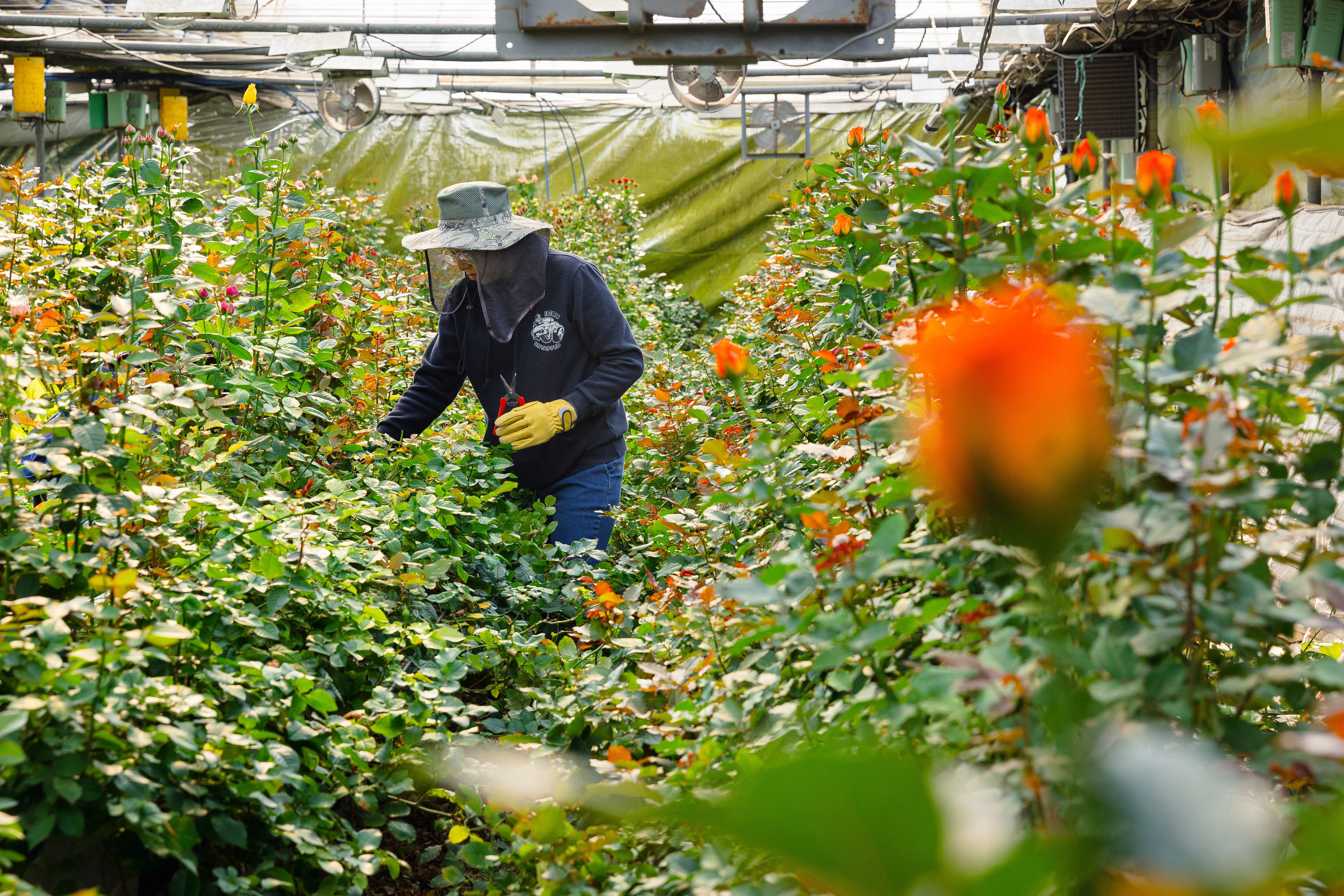
Stepping into the 1,000 pyeong (around 3,305 square meters) vinyl greenhouse, the fragrance of roses fills the air. The farm grows roughly 50 types, such as Clarins and Christine. Yellow, pink, white… They pick about 100 bouquets, or 1,000 stems, each day.
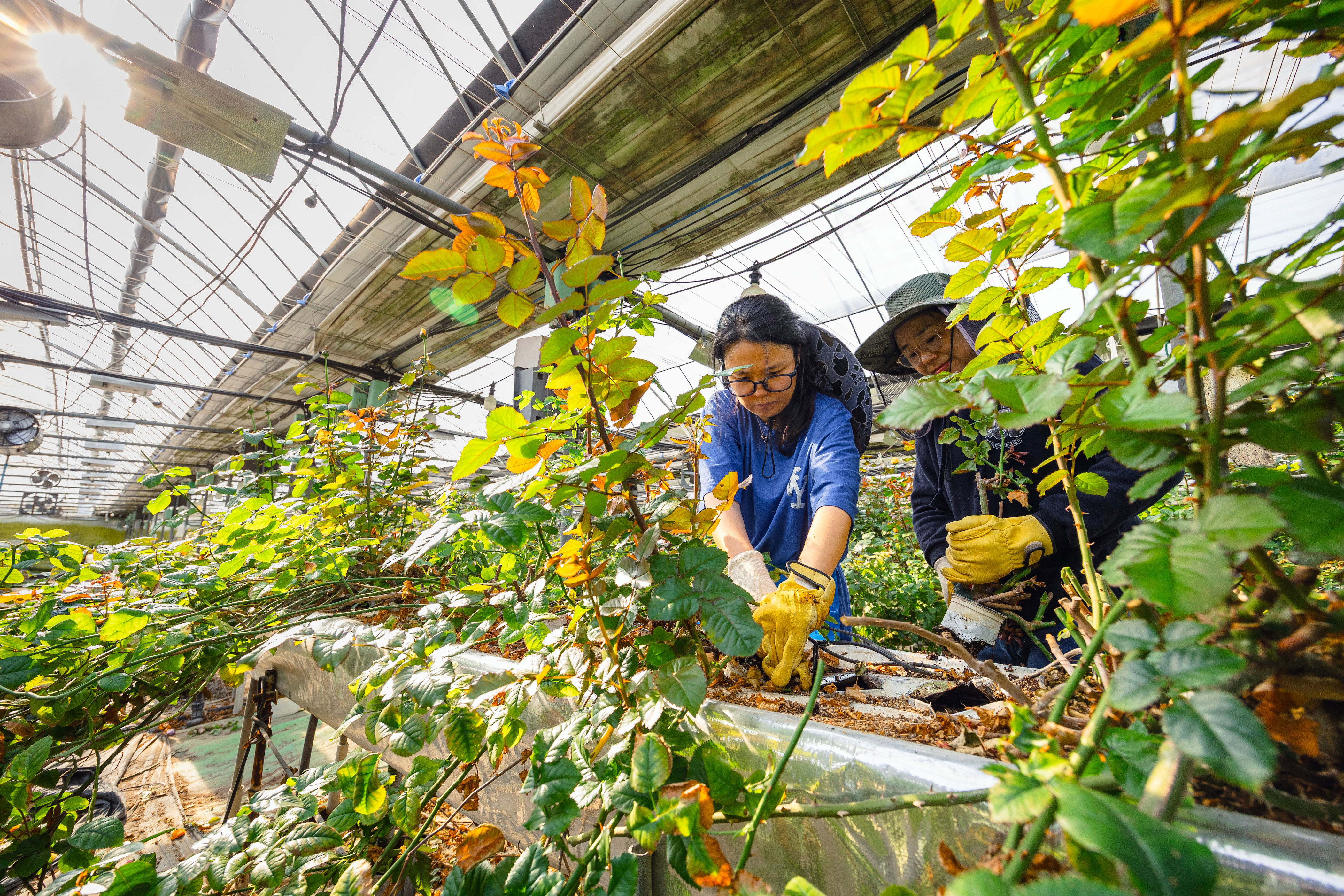
Initially, we began by weeding. This included eliminating shoots such as Oxalis (woodsorrel) that were growing between the rose bushes. I was surprised, having anticipated only the task of picking flowers. Lee smiled and remarked, “You mentioned you wanted hard work. Harvesting isn’t difficult; it’s the care that’s challenging.”
Lee stated, “Weeds can spread deadly fungal infections to roses and hinder airflow around the roots, leading to decay.” He mentioned, “They grow back within three days even after being removed.” “A full day is spent just on weeding,” he said.
My neck and lower back hurt from being hunched over. Putting my fingers between the thick rose stems kept causing me pain. Lee gave me heavy welding gloves. Although the stings decreased, some thorns still managed to get through. The rigid gloves made my finger joints feel tight. Lee said that rose growers often experience joint problems.
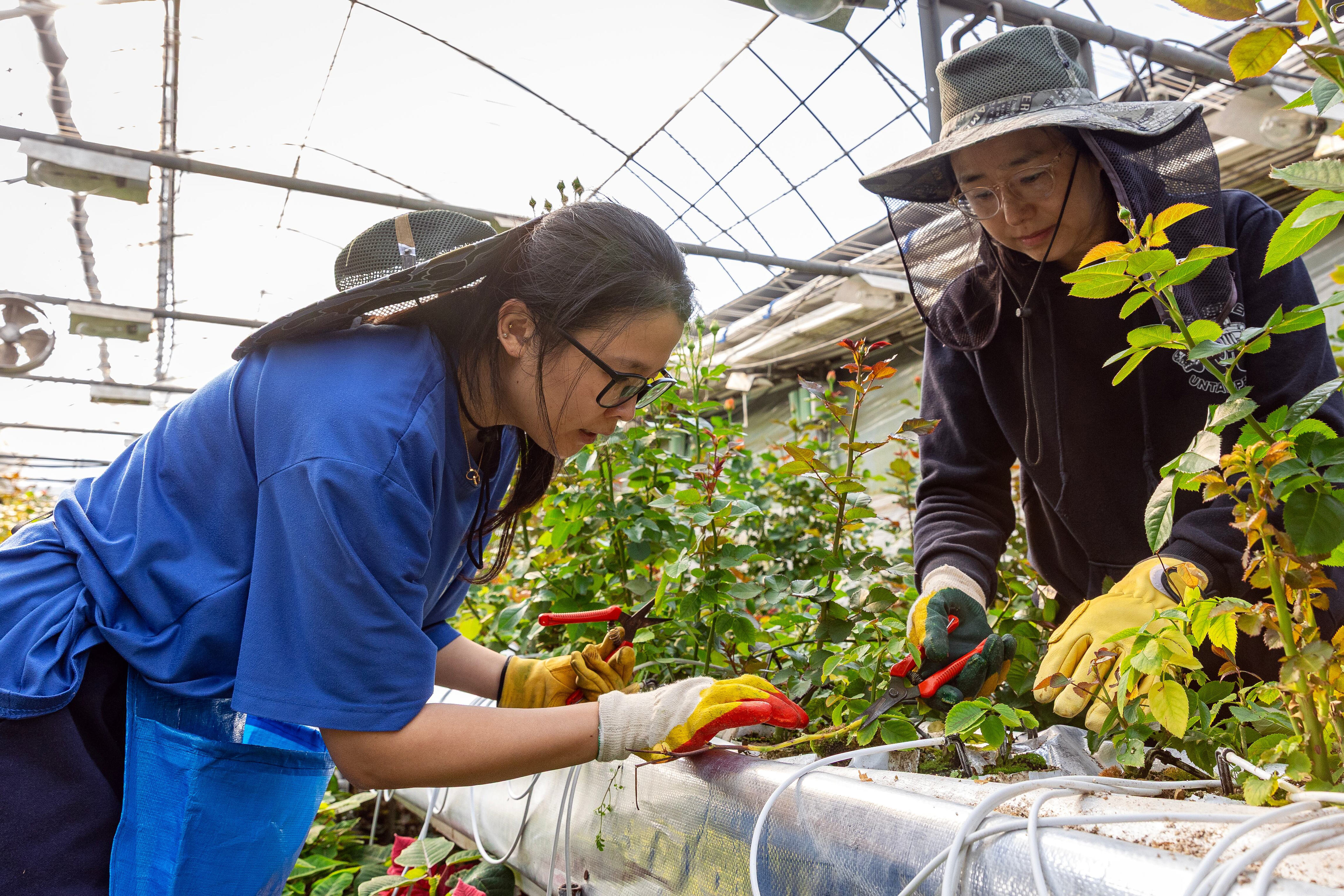
Thin tubes that provide water and nutrient mixtures were placed throughout the greenhouse. Lee Soo-jung prepares the nutrient solution every five months, utilizing approximately 10 different types of fertilizers. A crucial component, nitrogen fertilizer, depends on urea, which has experienced supply issues because of the crisis in the Middle East. The continuously blooming roses require significant amounts of nitrogen. Lee mentioned, “Our nutrient solution will be depleted in two months, and increasing fertilizer costs are a major issue.”
◇Gathering: The Real Measure of Ability
It was the moment to pick the roses. Lee gave me the garden shears.
“Positioning is crucial. It influences the next flower stem,” he said. A worker’s expertise is evident here. Thicker stems command better prices as they absorb water and nutrients more effectively. Cutting too high leads to thin, fragile stems; cutting too low slows down new growth. Depending on the season, it takes 35–60 days for the same stem to produce another bloom.
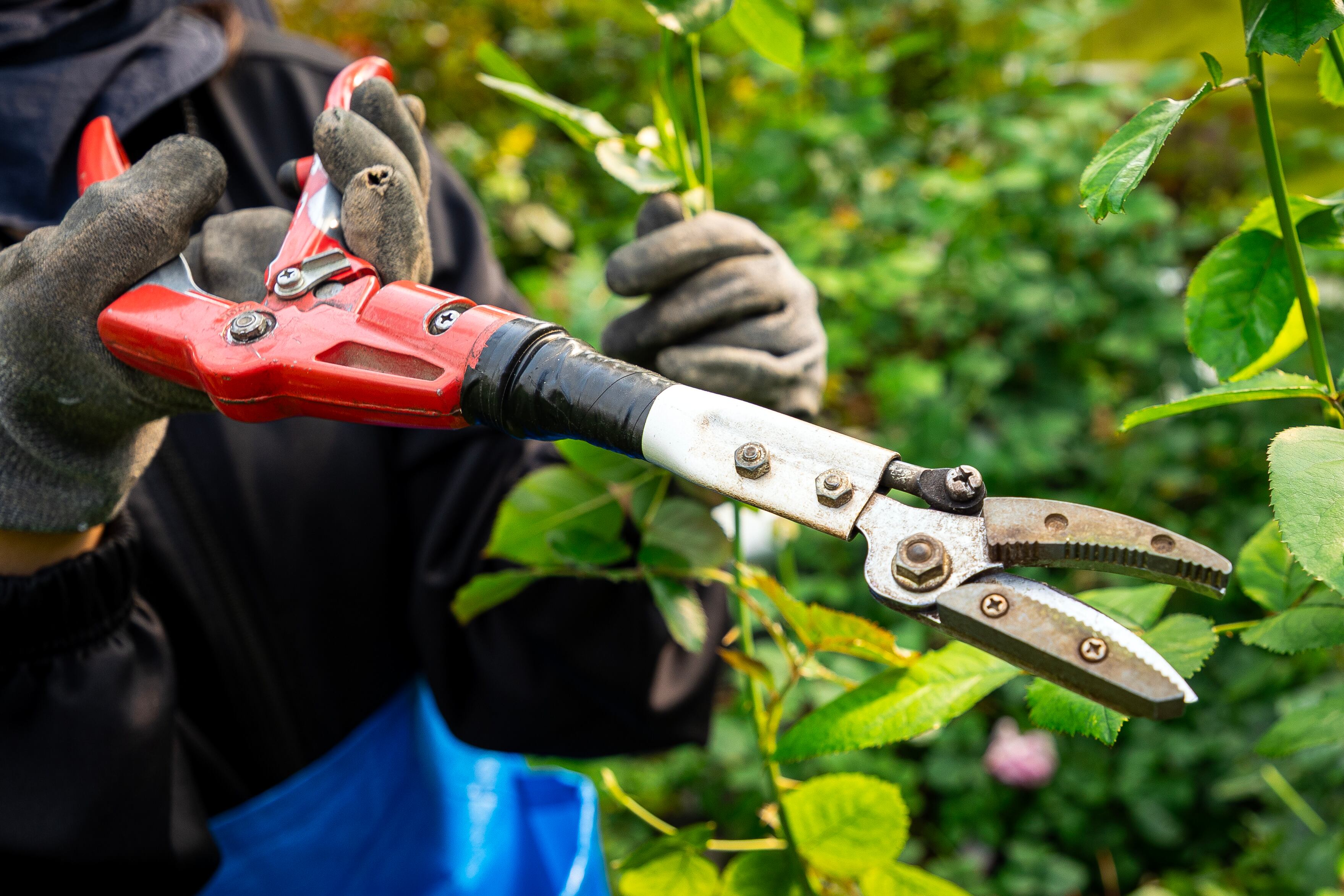
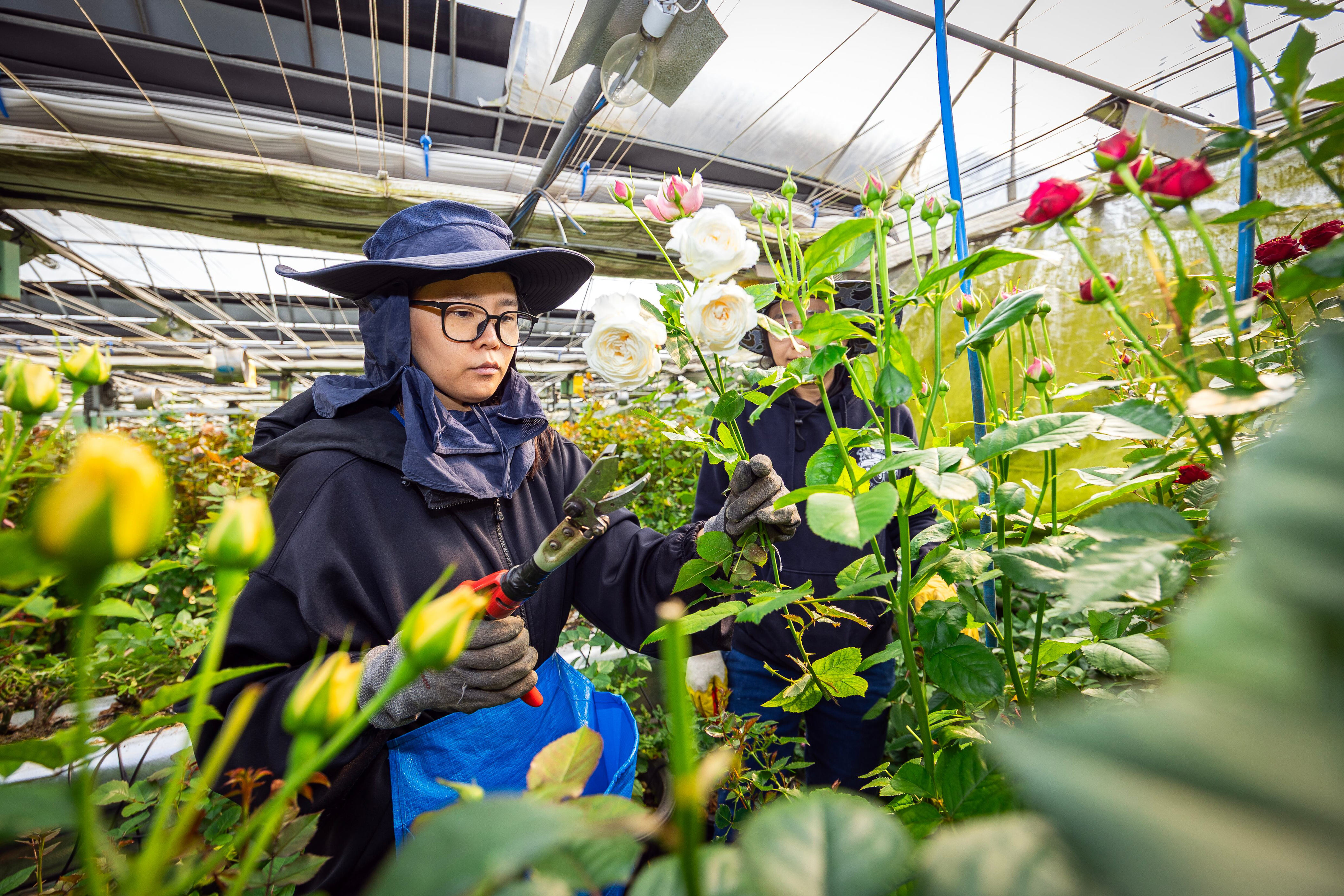
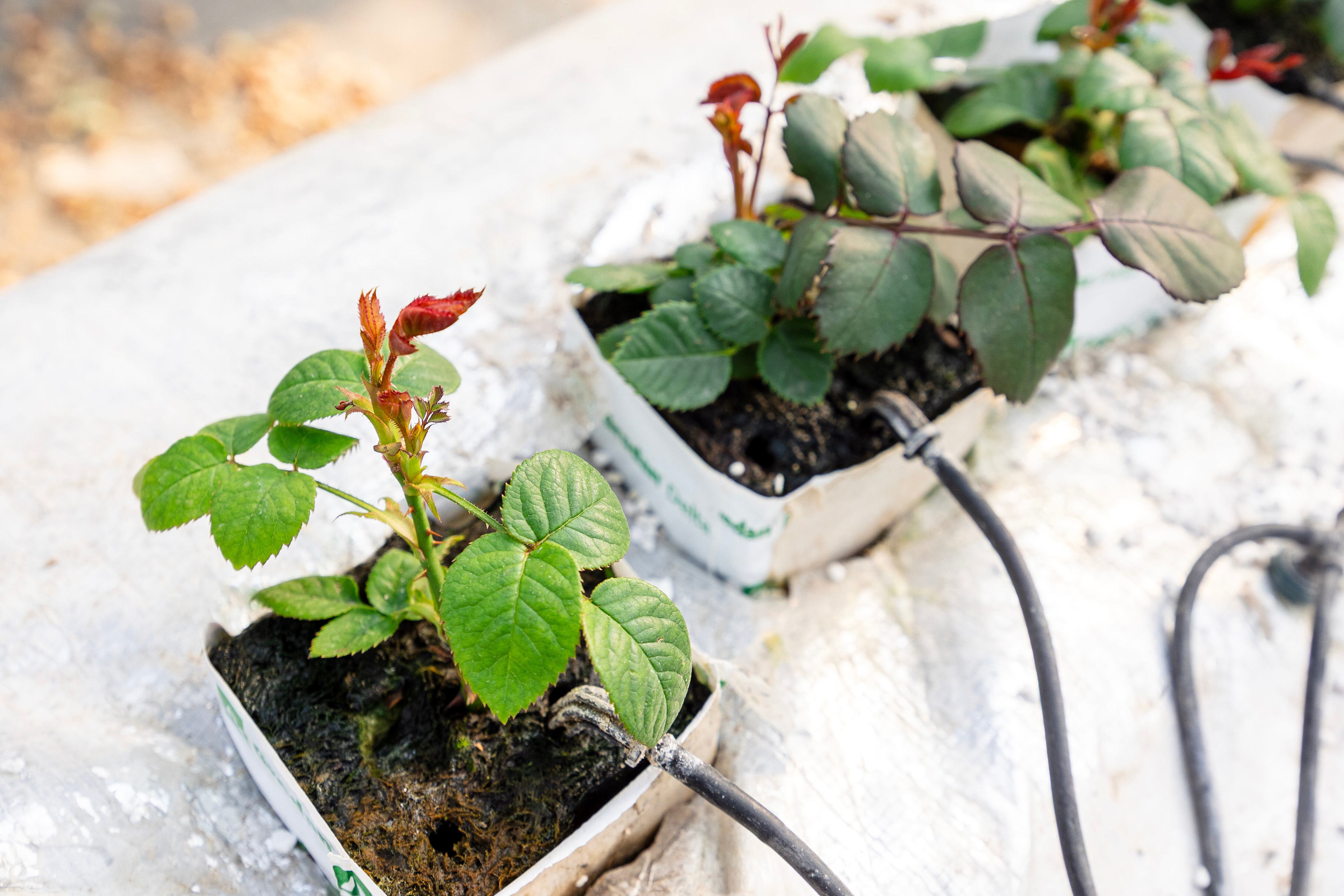
A fear of damaging the crop emerged. “Cutting the rose’s eye (growth point) means no new stem,” Lee warned. My hands were shaking. He suggested, “Picture cutting 2 centimeters above the ground.” Still trembling, he encouraged, “It’s fine, just cut!” I shut my eyes and made the cut.
During the harvesting process, Lee frequently pressed specific stems downwards—referred to as “parent stems”—to channel nutrients towards “child stems” (which are responsible for flowering). He mentioned, “Based on the plant’s condition, 6 stems per root indicates effective farming. 10? That’s financially rewarding.”
◇Declining Flower Consumption…
The greenhouse felt hot and uncomfortable. The optimal temperature for growing roses is between 22 to 27 degrees Celsius. Therefore, heating is employed from September through May. On that particular day, the greenhouse temperature was 26 degrees. Lee mentioned, “We use electric heating, which is easy to control, but farms that rely on oil are facing higher fuel costs since the conflict in the Middle East.” Out of South Korea’s 1,994 hectares of floriculture greenhouses (as of 2024), more than half (1,037 hectares) depend on kerosene or diesel. An industry expert stated, “Many farms utilize both kerosene heaters and electric heating systems.”
I’m worn out,” I said quietly. Perspiration flowed, and I had a dry mouth. Lee and her husband run the farm by themselves. When asked how she manages farming along with raising two kids, she paused, “Hard work is manageable if it brings results, but the shifting climate…
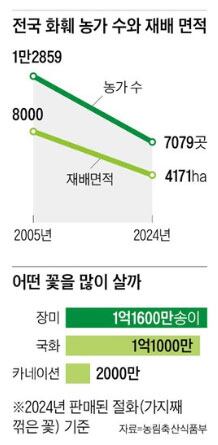
Inflation increases, but the consumption of flowers decreases. A 2023 report from the Ministry of Agriculture, Food and Rural Affairs states that annual per capita spending on floriculture has decreased to 13,432 South Korean won, representing a 35.6% decline from the 2005 high of 20,870 won. At the same time, expenses for materials and electricity have risen sharply. This particular farm’s monthly electricity bill amounts to 10 million South Korean won during busy seasons. These circumstances have affected motivation. The total number of floriculture farms across the country has fallen from 12,859 in 2005 to 7,079 in 2024.
Another problem is imported roses. Domestic and imported roses make up a 7:3 ratio. The upcoming approval of the Strategic Economic Cooperation Agreement (SECA) with Ecuador is causing concern among cut-flower growers. Once implemented, Ecuadorian roses, chrysanthemums, and carnations will see gradual removal of the current 25% tariffs. Seo Yong-il, head of the Korea Floriculture Mutual Aid Association, stated, “When the Colombia FTA was signed ten years ago, people were skeptical about long-distance flower imports, but last year’s rose imports increased more than 50 times compared to 2015.”
◇Heat Exhaustion: My Vision Turned White
Suddenly, a wave of dizziness hit while removing the roses. New types would be planted in that spot. This method, known as “root replacement,” requires cutting the thick main roots and pulling with full force. The roots broke with a crackling noise.
I linked the dizziness to excessive sweating. Soon after, I felt sick. “I’ll go outside,” I said, moving 50 meters toward the door. My vision became narrow, then turned white. I fell just before reaching the entrance. Lee remarked, “It’s heat exhaustion.” Unlike heatstroke (which occurs above 40°C), heat exhaustion or fainting takes place at lower temperatures, accompanied by heavy sweating, leading to dehydration and decreased blood flow to the brain.
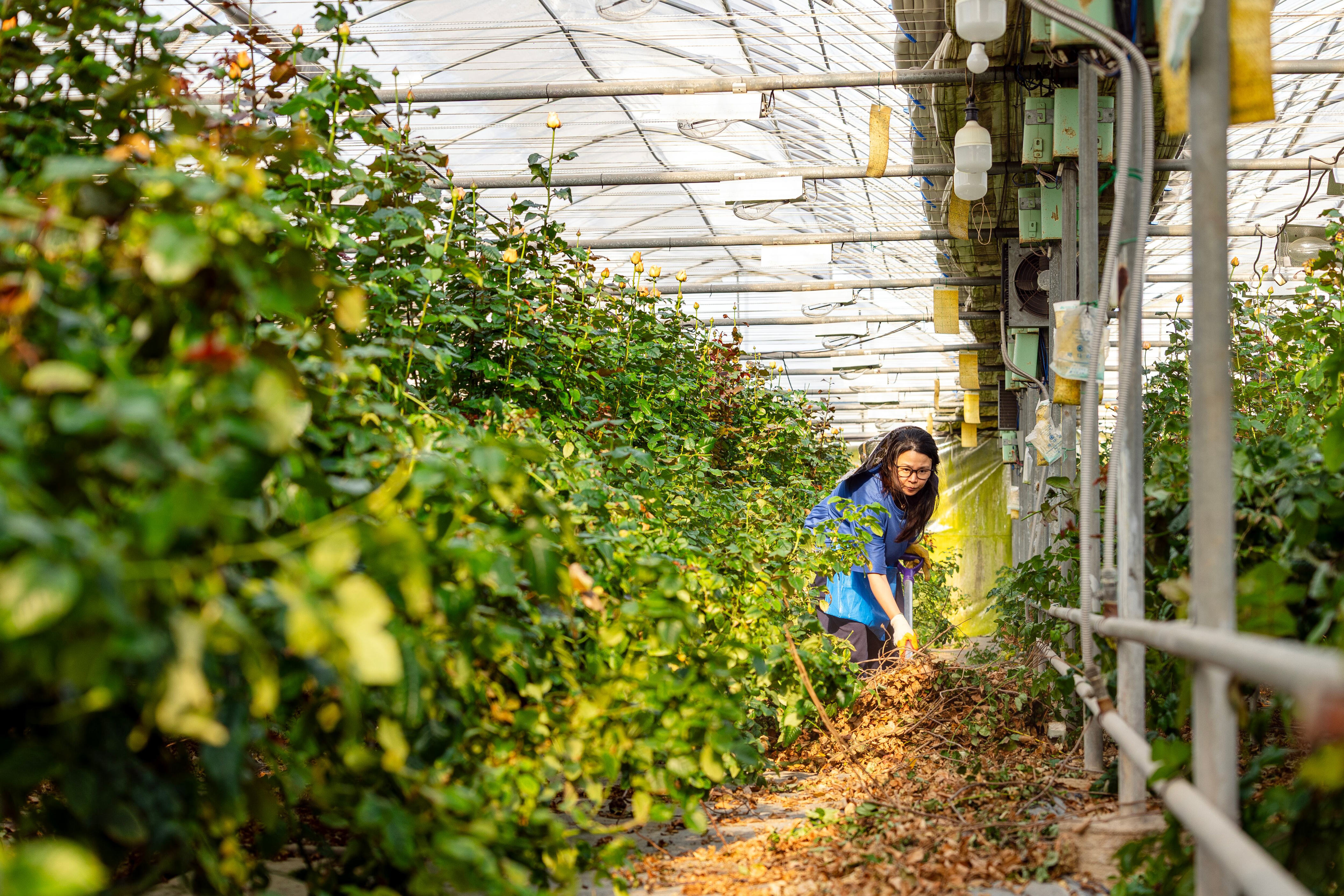
Lee said, “High humidity and lack of experience led to this. Stay hydrated and take breaks in the shade.” The greenhouse, covered in vinyl, retains heat. Employees face “heat battles” all year except during winter. Last year, 53 individuals were hospitalized after fainting in greenhouses; two lost their lives. Many others, like myself, probably experienced issues without receiving medical attention.
Clearing the debris from the greenhouse floor as I prepared to go, I said, “Make sure to take care of your health.” Lee was more concerned about the roses: “Intense heat leads to many ‘crinkled flowers’—they become thin and wrinkled.” He continued, “For us, flowers represent time that builds up day by day. Although challenging, they bloom to bring a smile to someone’s face. That is what keeps us motivated.”



 jasdooit
Leave a comment