

Precious Anga
Lagos — Nigeria’s revenue from Production Sharing Contract activities dropped by ₦78.71bn in March 2026, despite rising global oil prices exceeding $100 per barrel, highlighting new vulnerabilities in the nation’s oil income system.
Documents submitted during Federation Account Allocation Committee meetings indicate that the overall PSC allocation to the Federation Account fell significantly from ₦121.34bn in February to ₦42.64bn in March, representing a 64.9 per cent decrease compared to the previous month.
The decline was more significant on an annual basis. Earnings for March 2026 were much lower than the ₦204.96bn seen in March 2025, indicating a decrease of ₦162.33bn.
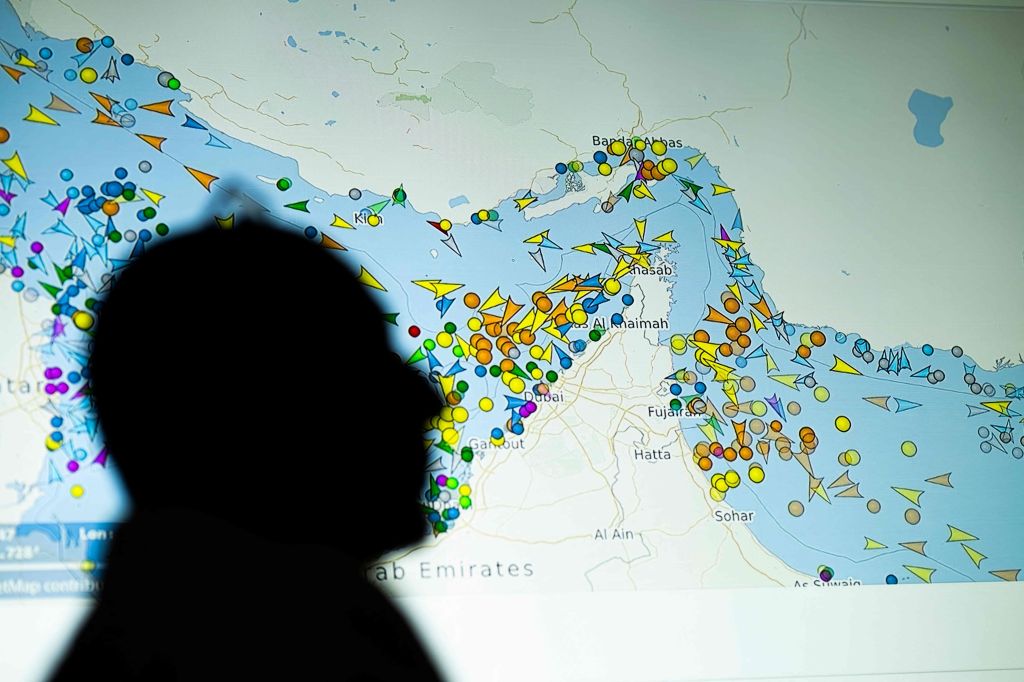
The underwhelming results occurred amid a time of high global oil prices. As per information from the U.S. Energy Information Administration, Brent crude exceeded $100 per barrel in March and ended the first quarter near $118 per barrel, fueled by increased tensions in the Middle East and concerns about potential supply interruptions through the Strait of Hormuz.
Although there was a rise in oil prices, Nigeria’s PSC revenues declined considerably.
A review of initial quarter data revealed that overall PSC revenues reached ₦180.05bn in Q1 2026, a decrease from ₦438.54bn during the same period in 2025. This drop indicates a revenue gap of ₦258.49bn compared to the previous year.
The revenue also significantly dropped below the 2026 budget estimate of ₦592.10bn, falling short of the goal by over ₦412bn.
The monthly performance showed a comparable trend. Receipts in January 2026 fell to ₦16.07bn, down from ₦105.91bn in January 2025. February income decreased from ₦127.67bn in 2025 to ₦121.34bn, then saw a sharper decline in March.
The documents pointed out a significant shift in the oil revenue system after Executive Order 9 was issued by President Bola Tinubu in February 2026.
Under the previous Petroleum Industry Act framework, profits from PSCs were distributed according to a 30:30:40 ratio. In Q1 2025, ₦131.56bn was allocated to NNPC management fees, another ₦131.56bn supported frontier exploration, while only ₦175.42bn, equivalent to 40 per cent, was directly credited to the Federation Account.
The latest regulation eliminated both deductions and required the complete transfer of federal oil revenues.
Starting in February 2026, PSC payments were changed to a 100 per cent federation share, removing the 30 per cent Frontier Exploration Fund and the 30 per cent administrative charge that was previously kept by NNPC.
President Tinubu stated that the action was required to prevent revenue losses.
“for far too long, excessive deductions, overlapping funds, and structural imbalances within the oil and gas industry have undermined transfers to the federation account,” he said.
However, the new structure has not resulted in improved profits.
Even though the federation currently gets the full PSC allocation, the total proceeds for Q1 2026 amounted to just ₦180.05bn, which is only ₦4.63bn more than the ₦175.42bn direct federation share observed under the previous formula in Q1 2025.
The data highlights a more fundamental issue than deductions: a decreasing base of revenue.
The reports also highlighted an increasing difference in dividend transfers. For Q1 2025, NNPC estimated ₦230.88bn in interim dividends to be sent to the Federation Account but did not make any transfer. In Q1 2026, the estimated interim dividends increased significantly to ₦813.55bn, but actual transfers were still nonexistent.
In total, the estimated oil and gas revenues from NNPC for the first quarter of 2026 were ₦1.41tn. Nevertheless, the actual inflows reached only ₦180.05bn, resulting in a significant gap of approximately ₦1.23tn.
The data highlights new worries about the effectiveness of oil production, the timing of shipments, financial recovery obligations, and the efficiency of revenue distribution in Nigeria’s petroleum industry.
The Chief Executive Officer of the Centre for the Promotion of Private Enterprise, Dr Muda Yusuf, stated that the complete impact of increased oil prices might not yet be evident in government finances due to extended transaction and settlement periods.
“It is still early since export transactions, payment processing, and remittances into the Federation Account may require more than two months,” he stated.
Yusuf emphasized that oil income is influenced not solely by price fluctuations but also by the volume of production.
“Revenue performance isn’t solely dependent on oil prices. Production levels are also important. It’s only in recent times that Nigeria’s output has started to approach 1.8 million barrels per day,” he stated.
He also highlighted current forward crude sales agreements that are utilized to fund refinery renovation initiatives, mentioning that a portion of Nigeria’s crude oil revenues is already linked to debt commitments.
“We have forward sales valued at billions of dollars. This indicates that a portion of future crude revenue has already been secured. Not all profits from increased oil prices will immediately reach government accounts,” Yusuf added.
Provided by SyndiGate Media Inc.Syndigate.info).



 jasdooit
Leave a comment