
- Do you have a tale? Send suggestions to tips@.au
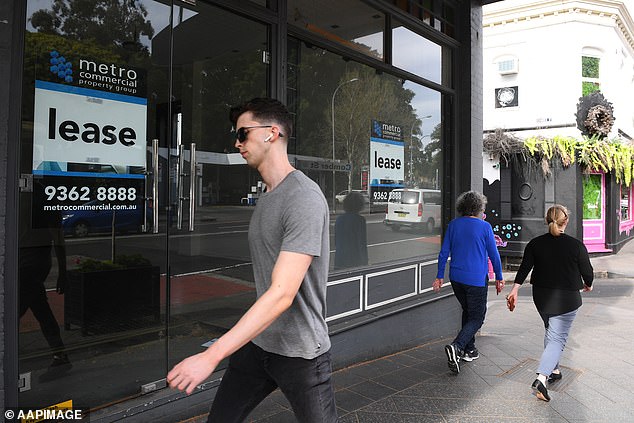
Australia during the early 1990s was a nation marked by empty shop windows, real estate signs that remained for extended periods, and long lines of unemployed individuals holding their resumes outside Centrelink buildings.
Home loan payments increased sharply due to 17 percent interest rates, companies failed, and joblessness rose past 11 percent as households saw their savings vanish and hopes for buying a house or having stable employment fade away.
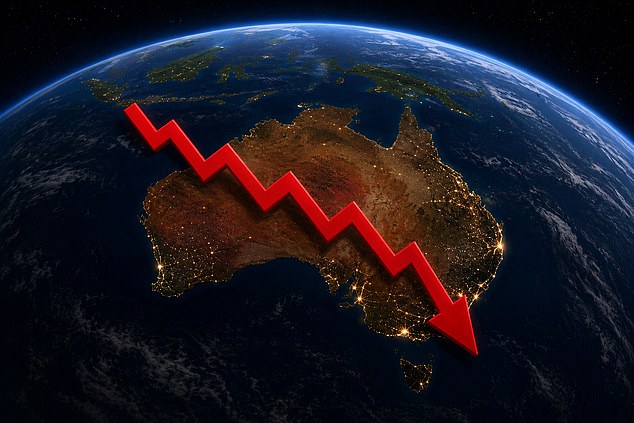
For the first time in over three decades, Australia is confronted with the potential for an economic shock that might be equally socially damaging—and in certain aspects even more severe.
Assistant governor of the Reserve Bank, Sarah Hunter, has cautioned that if conditions exceed optimal levelsinflationbecomes the standard, managing to restore it to control might necessitate “a more significant reduction in economic activity,” similar to the slowdown Australia experienced during the early 1990s recession.
That could awaken anyone who recalls how that era truly was. The early 1990s recession was more than a line on a chart or a somber section in an economics book. It was a real-life catastrophe for thousands of families.
Youth unemployment neared 30 percent, companies collapsed, and households faced displacement. Young individuals stepped into the job market at exactly the worst time.
The economy eventually bounced back, as it typically does. However, the signs of recovery in the data appeared much earlier than the actual improvement in everyday life.
Many Australians currently working have no recollection of experiencing a significant economic downturn.

People younger than approximately 53 years old were not adults during the previous major economic crisis.
Anyone younger than 40 has minimal or no recollection of it whatsoever.
Many younger Australians view recession as an event that occurred abroad during the global financial crisis, or as a short-lived experience during COVID, after which JobKeeper, extremely low interest rates, and emergency spending masked the effects.
A recession resembling those of the 1990s would be significantly different, lacking all the support systems.
A significant decline today would not merely indicate a few additional individuals seeking employment.
Entire sectors of jobs could quickly become unstable. Office employees who have never considered themselves at risk will realize they are, particularly as the growth of artificial intelligence increases the challenges.
The current job market is more adaptable than it was in the early 1990s, which seems effective until the situation changes.
Being adaptable is beneficial when companies are looking to hire, but it becomes much less reassuring when businesses are reducing working hours, halting contracts, dismissing temporary staff, and informing those in the gig economy that there’s simply not enough work available.


Next, there’s the issue of housing to consider. The simplistic comparison is to claim that interest rates were significantly higher in the early 1990s compared to what they may reach today. However, this overlooks the main issue completely.
Current household debt is significantly higher compared to incomes due to the substantial increase in housing prices relative to wages. The typical borrower today does not require a 17 percent mortgage rate, like those seen before the 1990 recession, to face serious financial difficulties.
A contemporary economic downturn would impact the real estate sector in two ways simultaneously: homeowners would face pressure from rising interest rates, uncertainty about employment, and declining confidence, while renters would also experience difficulties. Property owners dealing with increased borrowing costs might attempt to transfer these expenses wherever possible. Some might be compelled to sell their properties at a loss if they cannot manage the financial burden.
For younger Australians, the situation could take a harsh turn. Many already sense they are excluded from buying a home.
A downturn could temporarily reduce certain asset values, yet it would also lead to banks being more cautious, job stability decreasing, and saving money becoming more challenging. Affordable housing holds little benefit if you’re out of work.
A recession reminiscent of the 1990s would particularly affect small businesses, including cafes, restaurants, fitness centers, shops, tradespeople, construction workers, and other non-essential services.
The current economic system includes a large number of companies that operate under the belief that customers will continue to spend, despite expressing concerns about the rising cost of living.
That belief falls apart rapidly in a recession.

Building projects would be particularly at risk during a period when supply is already limited, and labor has introduced further uncertainty through its CGT and negative gearing reforms.
The Reserve Bank of Australia has already indicated that increasing fuel and raw material expenses are anticipated to drive inflation higher, with core inflation projected to stay above three percent until at least mid-2027.
During an economic downturn, the situation transcends mere pricing concerns. Initiatives are postponed, developers retreat, and construction companies operating on narrow profit margins collapse. Subcontractors remain unpaid, trainees are released, and the housing stock, already insufficient, deteriorates further.
And a budget adjustment that many overlooked resulted in Labor increasing the annual audit requirement from businesses with a $50m revenue to those with a $100m revenue.
That would appear extremely irresponsible during a recession as these businesses begin to fail and they had not been reviewed.
Anyone who suffers financial loss would like to understand why the Labor party decreased transparency, which could have alerted investors to potential issues beforehand.
The Albanese administration is not accountable for all the challenges currently affecting the economy. However, governments are not judged solely on what they create. They are evaluated based on whether their policy decisions improve or worsen the situation. At present, Labor is complicating the RBA’s task more than necessary.
The monetary authority is working to bring inflation expectations back in alignment.
This demands self-control and an understanding that the entire economic policy system is aligned. However, fiscal policy continues to send conflicting messages. The government claims to be combating inflation while still making large expenditures, as well as interfering in ways that could keep demand alive at a time when it should be decreasing.
Economists have stated that the budget offers little relief from short-term inflation, leaving the battle against inflation mainly in the hands of the RBA. Labor spent significantly more than it saved, by billions, in the budget, including over four years of forward estimates. It’s no surprise the RBA is becoming anxious.
This is the significant deception in contemporary economic policy. Authorities assert they are alleviating the burden of living costs, yet if they stimulate inflation or postpone its resolution, they run the risk of prolonging the very hardship they claim to be addressing, and potentially intensifying it further if they trigger a recession.
A downturn triggered by external factors is one scenario. A recession resulting from a lack of fiscal discipline is entirely different.
The pandemic era led many Australians to believe that the government can easily intervene whenever issues arise.
It may be possible in an emergency, but it becomes significantly more challenging when inflation is already an issue. If the RBA is aiming to reduce demand while the government is simultaneously attempting to protect people from this reduction, the policies begin to contradict each other.
A recession resembling those from the 1990s would not appear identical to the previous one.
There would be an increase in online work, greater challenges in the service sector, increased mortgage difficulties (even with lower stated rates), higher rental pressures, more unstable casual employment, and growing political frustration spread via social media, which has the potential to reinforce itself.
If a recession occurs, Labor will not be able to claim they weren’t informed.



 jasdooit
Leave a comment