
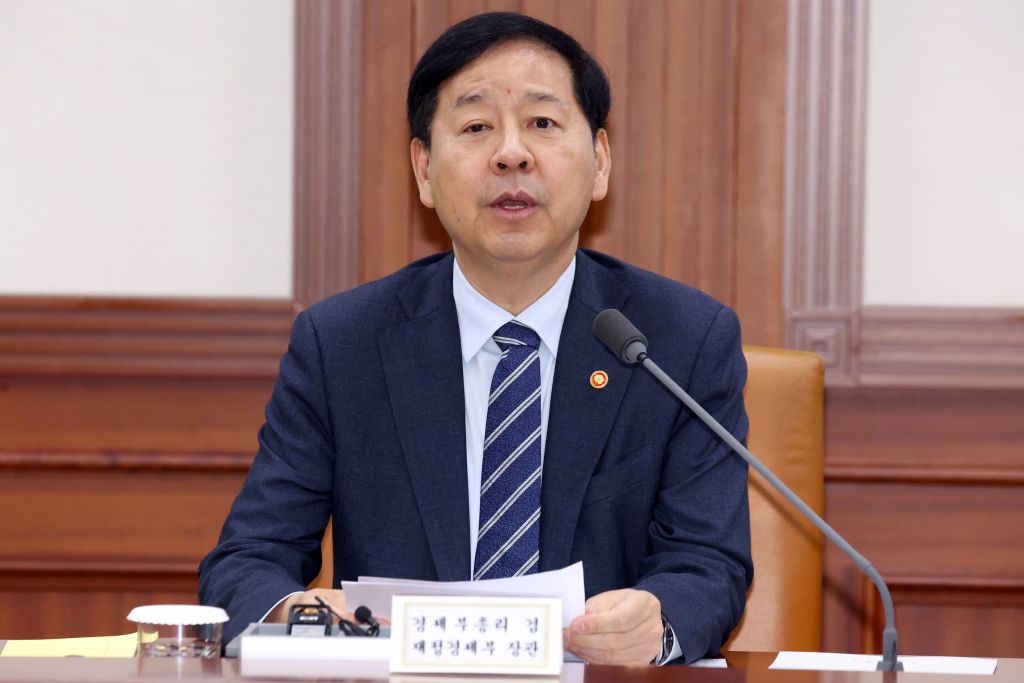
The authorities declared on the 21st that they will offer monetary assistance to Middle Eastern nations facing short-term cash flow issues as a result of conflict.
Deputy Prime Minister and Minister of Finance and Economy Koo Yun-cheol mentioned during a session of the Ministerial Council on External Economic Affairs held at the Seoul Government Complex that day, “A friend in need is a friend indeed,” and emphasized that the government will provide targeted assistance to nations that have been closely connected to South Korea’s economic growth.
The Korea Exim Bank and the Korea Trade Insurance Corporation will offer emergency operational funds amounting to 6 billion dollars—3 billion dollars each—to key Middle Eastern clients as advance financing. Furthermore, the government will work with policy financial institutions, foreign export credit agencies (ECAs), and multilateral development banks (MDBs) to enhance assistance.
The gathering also covered strategies for reorganizing the supply chain, talks and approaches concerning the European Union’s (EU) latest steel regulations, updates and future steps on trade pacts, and preparations for direct discussions with the U.S. regarding Section 301 of the Trade Act.
Deputy Prime Minister Koo pointed out that as international circumstances continue to evolve quickly, weaknesses in global supply chains have re-emerged. He said, “By examining the features and composition of supply chains for each item, we will focus on promoting local manufacturing through production incentives, tax measures, and financial support, and assess the need for additional stockpiling of industrial and critical goods.”
He mentioned that for goods where local production and stockpiling pose challenges, the government will lessen reliance on particular countries by establishing foreign production facilities or broadening import sources, with the goal of bringing dependence on specific nations for economic security items under 50% by 2030.
In response to the EU’s latest decision to greatly cut steel quotas and apply increased tariffs on surplus shipments, Deputy Prime Minister Koo stated that the government will proactively engage in discussions with the EU, focusing on the country’s interests, and keep constant contact with business representatives.
Regarding the U.S. Section 301 investigation, he said, “We will calmly address it by actively conveying our position during future bilateral talks with the U.S. government to maintain the previously established balance of interests.” The government has provided written statements and taken part in public hearings to clarify South Korea’s position in response to the U.S. inquiry into forced labor and overproduction under Section 301, which targets major trading partners including South Korea.
At the same day’s special task force (TF) meeting focused on stabilizing the costs of essential items, Deputy Prime Minister Koo remarked, “Ongoing uncertainty stemming from the Middle East conflict has caused sustained increases in producer prices and increasing upward pressure on consumer prices. The government will stay closely watchful, maintain market stability, and make every effort to keep prices steady and reduce the impact on people’s lives.”
To reduce the effects of the Middle East conflict, the government chose to prolong the fuel tax cut, which was initially set to expire in May, for an additional two months until July. The sixth petroleum price cap will be revealed at 7 p.m. on the same day following discussions among the relevant ministries.
 jasdooit
Leave a comment