
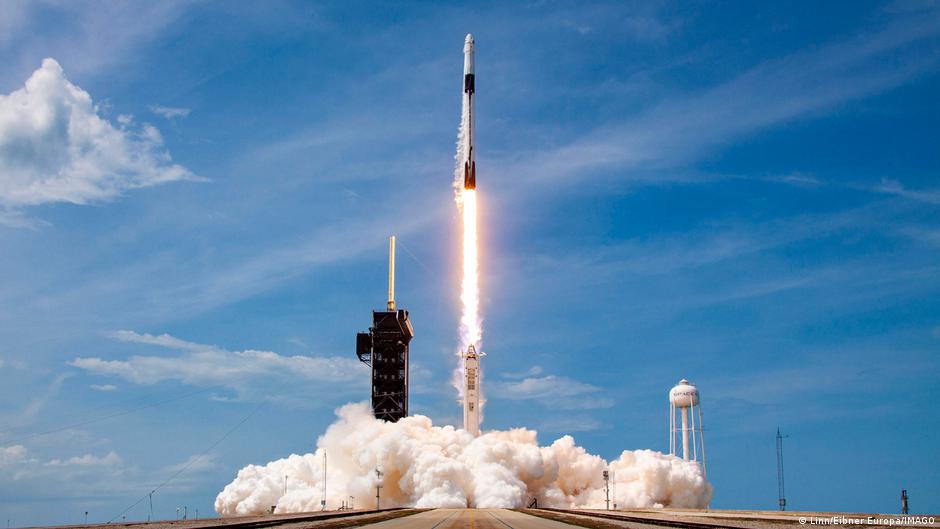
The massive rocket company might aim to secure $75 billion through the initial public offering, which could be the largest market launch ever. Musk, appointed as SpaceX’s CEO, CTO, and Board Chairman, would have majority voting control.
Elon Musk’s SpaceX officially announced its intention to go public on Wednesday, revealing details about the company that hasrevolutionized rocket technology.
A private rocket manufacturer, along with a satellite and artificial intelligence company, intends to list under the ticker symbol SPCX on the Nasdaq stock exchange, as stated in the IPO prospectus. It is reportedly targeting a June listing.
A prospectus is a formal document that all private companies must submit to the U.S. Securities and Exchange Commission when they go public, enabling prospective investors to understand the associated risks and potential benefits of the company.
The regulatory submission did not specify the financial value Musk aims to collect through the IPO, although various media outlets reported this figure as $75 billion (approximately €64.5 billion).
If the company exceeds a valuation of approximately $1.7 trillion, Musk’s wealth would cross into the 13-digit range, positioning him as the world’s first billionaire.
This will vary based on the enthusiasm of investors when SpaceX officially goes public.
SpaceX’s Initial Public Offering Documentation: Key Information
The document indicates that Musk’s SpaceX earned approximately $18.7 billion in revenue but experienced an operational loss of $2.6 billion ($4.9 billion in total loss) due to significant investments in AI and the development of a larger rocket.
The primary source of SpaceX’s financial strength was its Starlink satellite service, which brought in over $11.4 billion in income during 2025, marking a nearly 50% increase compared to the previous year.
Other divisions of SpaceX are facing challenges.
Its social media platform X and artificial intelligence company xAI, both of which werepurchased by SpaceX in February, generated $3.2 billion in sales for the entire 2025 year but reported an operational loss of $6.4 billion.
Musk is the only one capable of firing himself.
The organization has implemented many clauses that, when considered as a whole, significantly restrict shareholder privileges and shield Musk from being removed by anyone except the billionaire himself.
This also presents a difficulty given worries about the influence Musk holds within the company and whether there are sufficient measures to ensure he remains accountable.
Under the existing framework, Musk would have control over approximately 85% of voting power while owning roughly 42% of the shares.
SpaceX admitted that this might present dangers for external investors. It mentioned that theworld’s richest person,poised to assume the roles of CEO, CTO, and Chairman of the Board following the IPO, “will hold the authority to influence decisions that require shareholder approval, including the selection of all our directors.”
At Tesla, one of Musk’s businesses in which he holds the position of the company’s biggest individual investor, he has consistently encountered opposition from other shareholders.
SpaceX will be allowed to present the offering to potential investors—referred to on Wall Street as a “road show”—15 days after releasing its prospectus. In this instance, that date falls on June 4.
Edited by: Rana Taha
Writer: Roshni Majumdar (with AFP, AP, Reuters)



 jasdooit
Leave a comment