
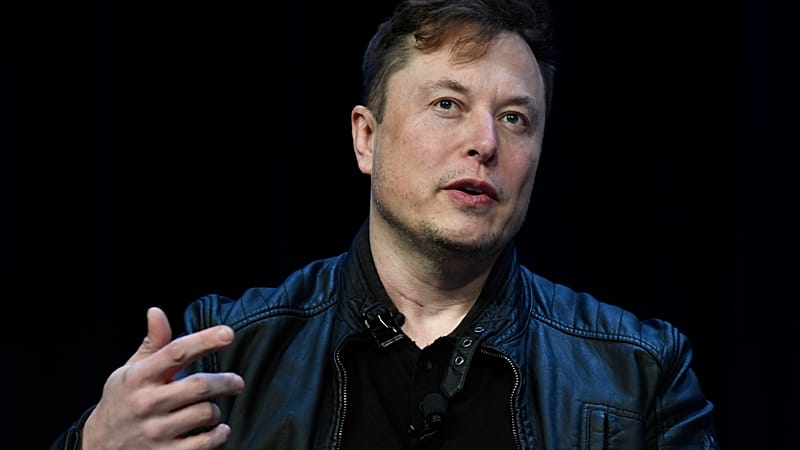
A recent study reveals that Elon Musk’s Grokipedia, an artificial intelligence-based encyclopedia, relies on conservative sources when addressing contentious issues.
The study, carried out by researchers from Trinity College Dublin and Technological University Dublin, analyzed almost 18,000 of the most-edited English-language pages on Wikipedia and contrasted them with the equivalent entries on Grokipedia, the AI-generated counterpart introduced by Elon Musk in October of last year.
Articles on Grokipedia related to religion, history, literature, and art cited more conservative sources compared to their Wikipedia equivalents, according to the research. However, in general, both Grokipedia and Wikipedia articles exhibited comparable political biases.
The research discovered that two-thirds of the Grokipedia entries examined had undergone significant reworking and utilized fewer sources compared to their Wikipedia counterparts.
The document follows a pre-print studyIn January, similar worries about Grokipedia were noted, with numerous articles reflecting a generally left-leaning perspective, although certain pieces on contentious issues tended to emphasize right-leaning viewpoints.
Meanwhile, the European Commission initiated an investigationIn January, Musk’s xAI was examined under the Digital Services Act (DSA) to determine if it spread illegal content within the EU, including altered explicit images.
The results indicate that generative AI technologies could influence public understanding in manners that are not as apparent as conventional editorial methods, according to the findings.
Contrary to Wikipedia, where biases can be seen and debated through human contributions, AI-driven systems function mostly in secrecy, saidSaeedeh Mohammadi, the primary author of the research. “This implies that changes in viewpoint or information gathering might take place without explicit responsibility or editorial control.”
The writers also caution that the swift growth of AI-created knowledge systems brings up broader regulatory concerns.
They highlight dangers comparable to those previously seen on social media, where minimal editorial control has led to the proliferation of false information with tangible effects on elections, public health, and societal harmony.
Our information environment is evolving quickly,” stated Taha Yasseri, a professor at Trinity College Dublin. “We are observing the extensive, opaque renewal of information by major language models that remain largely inaccessible to public examination.




 jasdooit
Leave a comment