
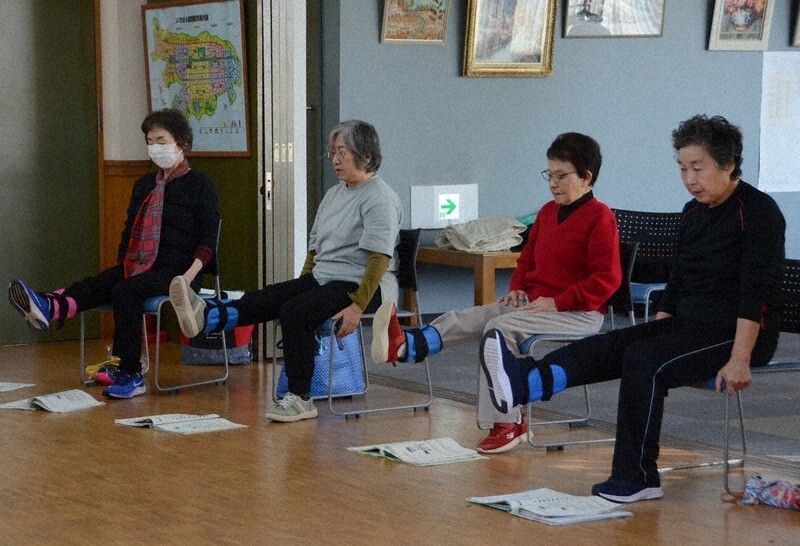
A group comprising scholars from the graduate school at Osaka Metropolitan University has discovered that involvement in “community gatherings,” where locals connect through physical activities and pastimes, can reduce the likelihood of cognitive decline in elderly individuals who do not consistently exercise.
These events are available to older adults who do not have a regular exercise habit or feel confident about their physical abilities. The group notes that even gentle physical activity holds value when done consistently while engaging with others.
Social events provide spaces where community members, particularly seniors, gather informally to interact through pastimes like physical activities and creative pursuits. These gatherings aim to function as centers for reducing the likelihood of requiring extended care and physical weakness, while promoting a feeling of significance and broadening social connections. Nevertheless, previous research has not always shown a definitive connection between involvement in these activities and the development of cognitive decline.
The research team examined survey data and long-term care insurance records from 3,511 elderly individuals in Habikino, Osaka, who had not been officially recognized as requiring long-term care, gathered in January 2020. Participants involved in city-sponsored exercise programs, usually conducted once a week, as well as those who did not join, were monitored over four years and assessed using statistical methods.
The study revealed that among senior citizens who didn’t have a regular exercise regimen—meaning they participated in intense physical activity for at least 30 minutes per session, two times a week or more, for over a year—those who attended these events were approximately 50% less prone to experience cognitive decline compared to those who didn’t participate.
Kazuki Uemura, an associate professor at the graduate school of Osaka Metropolitan University focusing on gerontology and exercise epidemiology, noted that the activities were generally low in intensity but could serve as a starting point for older adults who are physically inactive to begin engaging in physical movement. He further mentioned that these environments also offer social elements, such as conversation with others, providing and receiving support, and sharing information, which may have contributed significantly.
In contrast, among older adults who already have a consistent exercise routine, no significant variation in risk was noted between those who exercised regularly and those who did not.
The results were released on May 9 in the Journal of the American Geriatrics Society.
(Japanese original by Toshiyasu Kawachi, Lifestyle, Science and Environment News Department)




 jasdooit
Leave a comment