
Would you mind telling me a little more about any recent challenges you’ve faced or any notable experiences?
Recently, I experienced a breakup and was feeling extremely upset. School is not providing relief; rather, it’s turning into a heavier load.
This discussion was not between a psychiatrist and a patient, but rather between an artificial intelligence (AI) and a patient who was waiting for a medical appointment. Following a short conversation, the AI quickly summarized the patient’s symptoms, changes in lifestyle, and possible underlying health issues. It then recommended to the medical team, “It is important to review recent sleep habits, eating patterns, and weight fluctuations,” indicating further areas to explore.
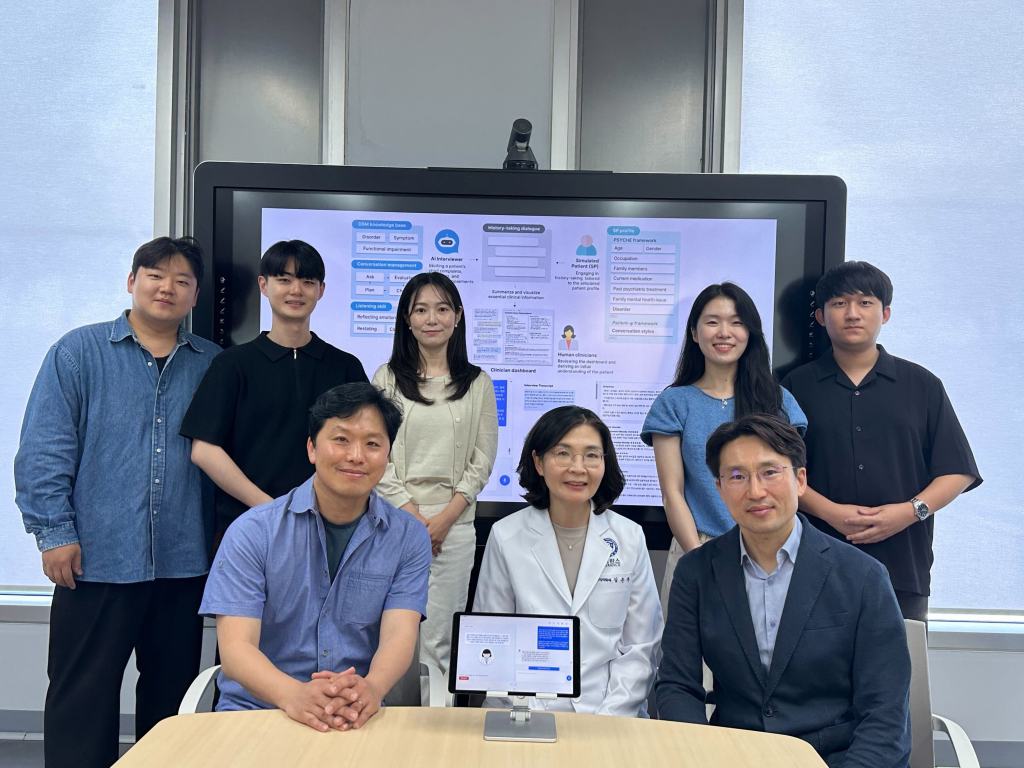
KAIST announced on the 24th that a collaborative research group—headed by Professor Lee Eui-jin from the School of Computing, Professor Lee Tak-yeon from the Industrial Design Department, and Professor Kim Eun-ju from the Department of Psychiatry at Gangnam Severance Hospital—has created an AI-powered tool designed to assist in initial psychiatric interviews. This study was showcased at the international human-computer interaction conference ‘ACM CHI 2026.’
Psychiatric initial evaluations depend significantly on patient interviews, more than in other medical specialties. Unlike objective procedures such as blood tests or imaging, psychiatrists need to swiftly determine when symptoms started, how they impact daily activities, and information regarding sleep patterns or personal relationships within a short period. Patients frequently find it difficult to share their mental health status, while healthcare professionals must ensure they do not overlook essential details during brief sessions.
The artificial intelligence created by the research group is distinct from traditional questionnaire-driven systems. It evaluates patient responses using psychiatric expertise and independently selects subsequent questions. When a patient provides unclear answers or reports important symptoms, the AI continues to explore related areas. The dialogue includes therapeutic methods like showing empathy, repeating the patient’s statements, and clarifying ambiguous information.

The AI’s gathered information is presented in a clinical dashboard for healthcare professionals, highlighting essential symptoms, functional limitations, and possible diagnoses. Physicians can review the patient’s status prior to appointments, enabling them to concentrate on detailed conversations, diagnosis, and treatment strategies during the actual meeting.
The group assessed the AI’s effectiveness through 1,440 simulated patients. In the majority of instances, essential medical details were obtained within 30 minutes. For cases involving a single condition, the AI managed to collect more than 90% of the necessary information in 10 to 15 minutes. A review conducted by 19 mental health professionals indicated that the AI showed “organized data-collection abilities similar to those of a junior doctor during initial assessments.”
Nevertheless, the practical testing with actual patients is still awaited. The group recognized the AI’s constraints in identifying nuanced emotional changes or comprehending intricate personal stories. They highlighted that the technology should function as a helper for routine data gathering, not as a substitute for medical professionals.
Professor Lee Eui-jin remarked, “Lowering the pressure of first meetings allows healthcare professionals to engage in more meaningful conversations with patients. This highlights the possibility of a novel teamwork approach in healthcare, where humans and AI collaborate.”





Leave a Reply