
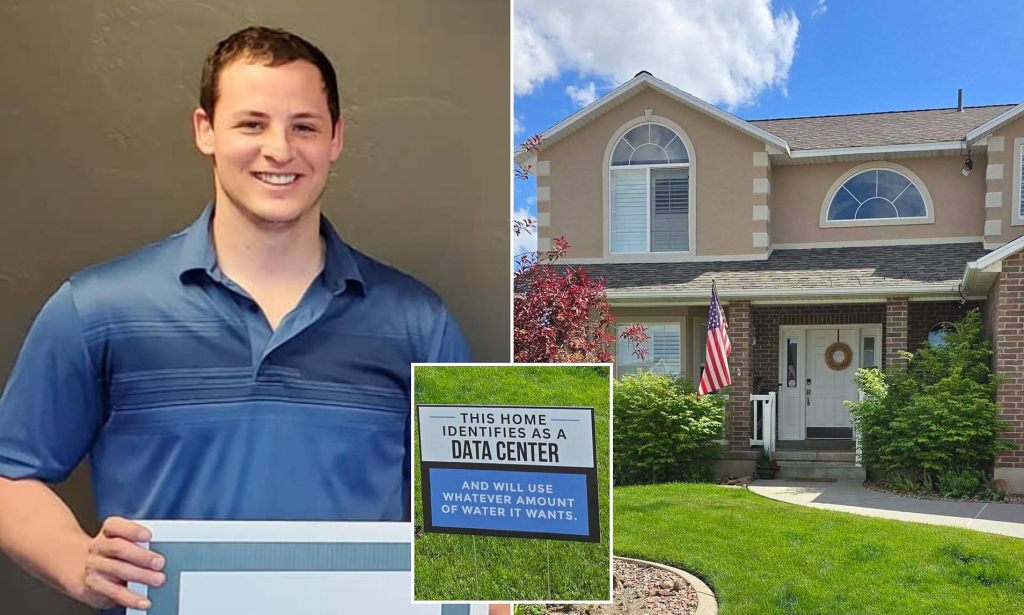
A UtahA man angry about the strict water restrictions in the state claims his house now “functions as a data center” and is allowed to use as much water as needed.
Jordan Smith,A local from Riverdale has emerged as an unexpected symbol of increasing opposition to the Stratos Project in Box Elder County, a large-scale data center initiative that has ignited intense discussion regarding water usage, expansion, and the future of Utah’s natural resources.
Smith’s objection is directly directed at state officials as they consider a significantartificial intelligencea venture that experts worry may use large amounts of one of the West’s most valuable resources.
Although residents of Riverdale have been instructed to reduce their water consumption due to deteriorating drought conditions, Smith notes that regular homeowners are being required to make concessions while legislators evaluate projects that would significantly increase the demand for water and electricity.
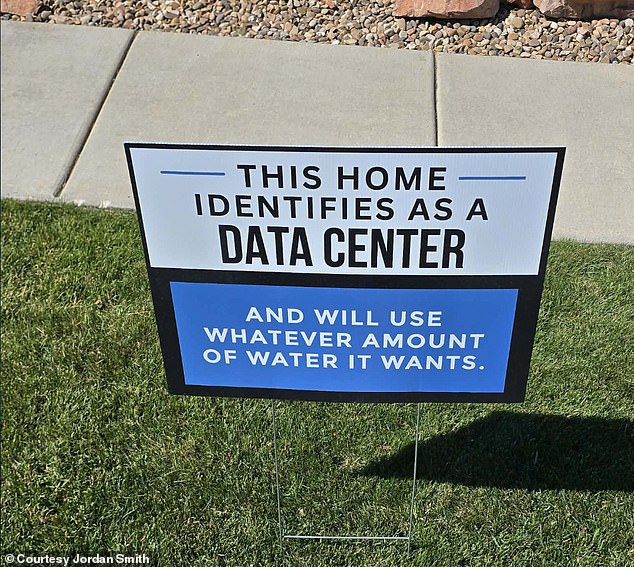
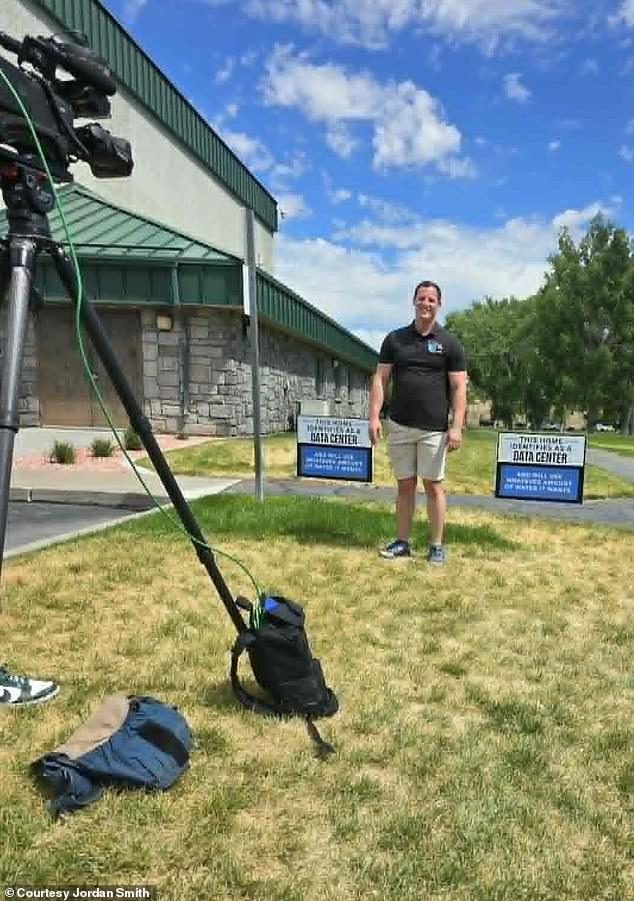
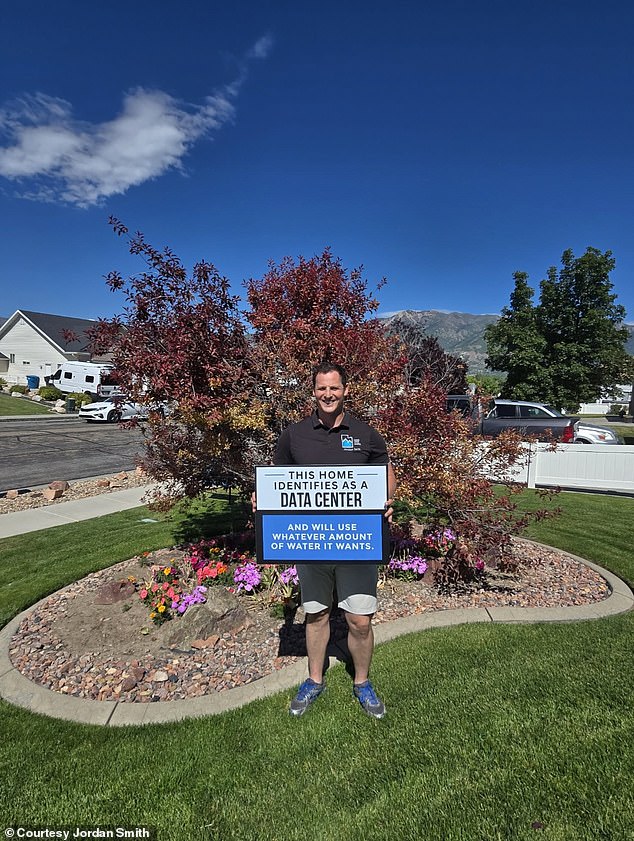
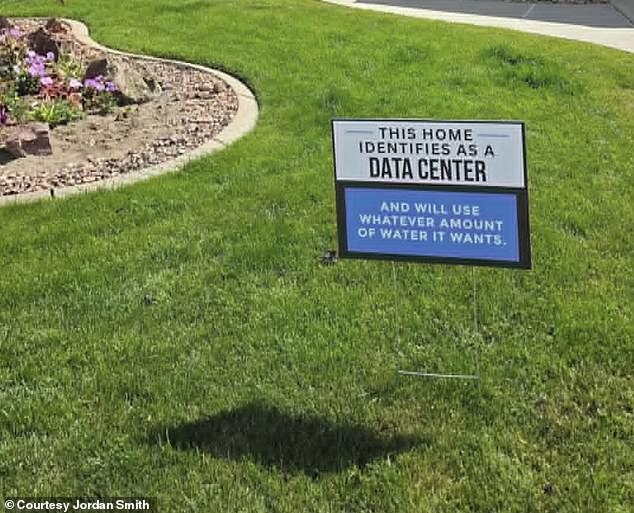
Smith, a 36-year-old man with three children,created and spread humorous yard signsdeclaring: ‘This residence considers itself a data hub and will consume the amount of water it requires.’
The symbols, which have appeared throughout neighborhoods and online platforms, aim to draw attention to what he perceives as a clear inconsistency in Utah’s water preservation efforts.
The indicators are intended to initiate discussion about what I consider a significant public policy matter for Utah citizens,Smith, employed as a real estate agent,told the Daily Mail.
For many years, regular home owners have been advised to restrict water use, cut down on consumption, and endure hardships due to worries about droughts and pressure on the infrastructure.
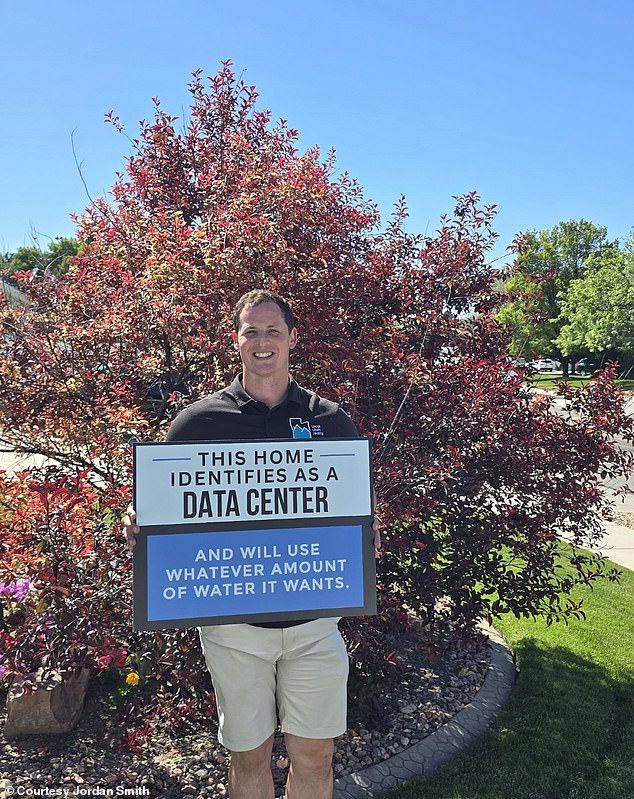
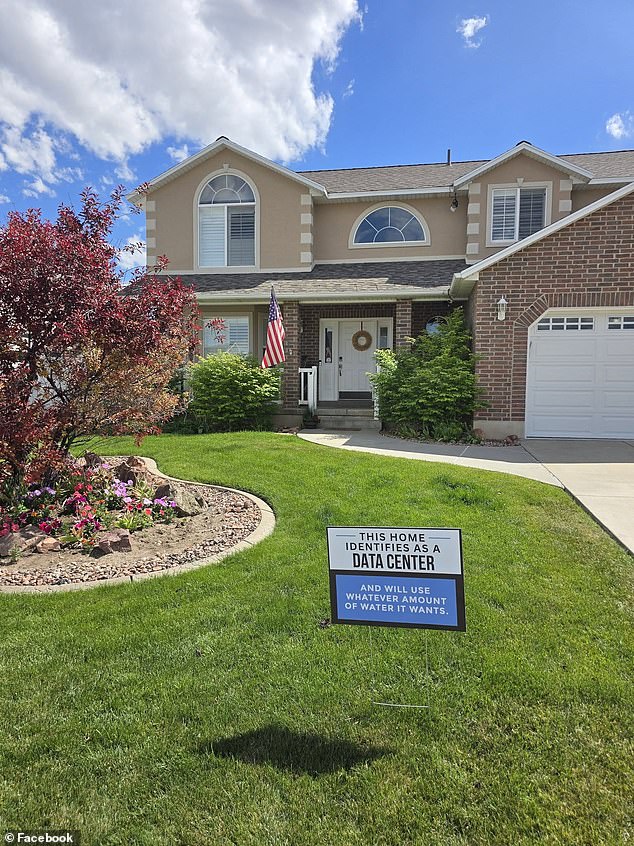
“Meanwhile, there are suggestions for massive data center projects that might demand significant quantities of water and electricity,” he explained.
His critique emerges as Riverdale City, roughly 40 miles north of Salt Lake City, faces what authorities characterize as intense dryness.
The city implemented compulsory water usage limits starting April 27, which will continue until November 1, following a notice that situations within the Weber River watershed have worsened significantly.
When introducing the limitations, municipal authorities presented a bleak scenario regarding the challenges affecting local water resources.
‘Spring snowmelt flows have already concluded, and water conditions are appearing very dire. Currently, the reservoirs that provide a large portion of the water utilized in Riverdale City during the summer months are at critically low levels,’ the city stated.
Amidst this context, the idea of a large data center project has turned into a point of contention.
The Stratos Project, as proposed, has drawn significant attention from environmental organizations and members of the public who are worried about the potential water needs across the project’s extensive 40,000-acre area.
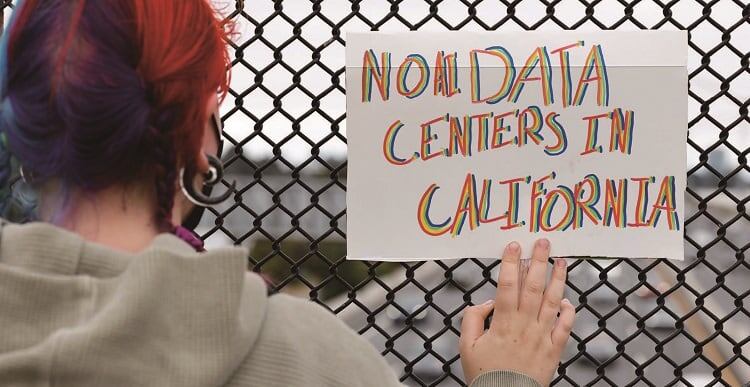
Experts worry that extensive AI systems could add more stress to already overburdened resources and make it even harder to preserve the Great Salt Lake, a significant environmental issue in recent times.

Smith maintains that his campaign is not targeting technology as a whole.
“My worry isn’t with technology per se. It’s about openness, long-term strategy, and whether locals truly grasp the magnitude of these initiatives and their possible effects on local resources and neighborhoods,” he stated.
Rather, he claims the symbols were intentionally created to employ humor and initiate a dialogue that many Utah residents might otherwise ignore.
“The indicators are deliberately humorous. Laughter and the sense of inconsistency tend to make individuals stop and take notice when they would otherwise continue scrolling,” Smith explained.
The concept emerged from irritation and an informal chat with a companion.
As with many individuals, I frequently felt unable to take any significant action regarding matters that troubled me. While having a chat with a friend, he humorously suggested, “You should just create a yard sign expressing your views.” Hence, I did.
What began as a lighthearted concept quickly evolved into something much more significant,” Smith remarked. “The reaction has genuinely been much greater than I anticipated.
Smith mentions that numerous messages have been received from individuals throughout Utah and further afield.
“Individuals from various places have contacted us because they believe there needs to be more public dialogue before initiatives of this magnitude proceed,” he stated.
Smith thinks his campaign has already met its main objective.
Regardless of whether individuals concur with me or not, the signs have fulfilled their purpose: to spark conversation.
Proponents of the Stratos Project claim that numerous concerns about AI advancement are unfounded.

Representatives from the Military Installation Development Authority and Box Elder County have consistently stated that the project will not take water from residences, agricultural areas, or the Great Salt Lake.
Supporters of the project claim the facility will use a closed-loop cooling system and existing water rights linked to the property, instead of drawing from sources currently utilized by local residents.
The Utah Department of Natural Resources has also stated that it will monitor water usage related to the project.
However, as dry conditions become more severe and communities encounter limitations on activities ranging from watering lawns to daily use, the discussion remains ongoing.




Leave a Reply