
Interactive Brokers’ presence in the city raises doubts about the legality of prediction markets, with regulators emphasizing a case-by-case evaluation.
The legal status of prediction markets in Hong Kong has faced additional scrutiny, as at least one global brokerage company offers such a platform within the city, leading the financial regulator to indicate that some operations could be classified as “financial instruments.”
Legal professionals were also divided on whether the distinction between financial instruments and unlawful betting was evident under the city’s current regulations, considering the characteristics of prediction markets, with one individual noting that the most recent case underscores a “gray zone.”
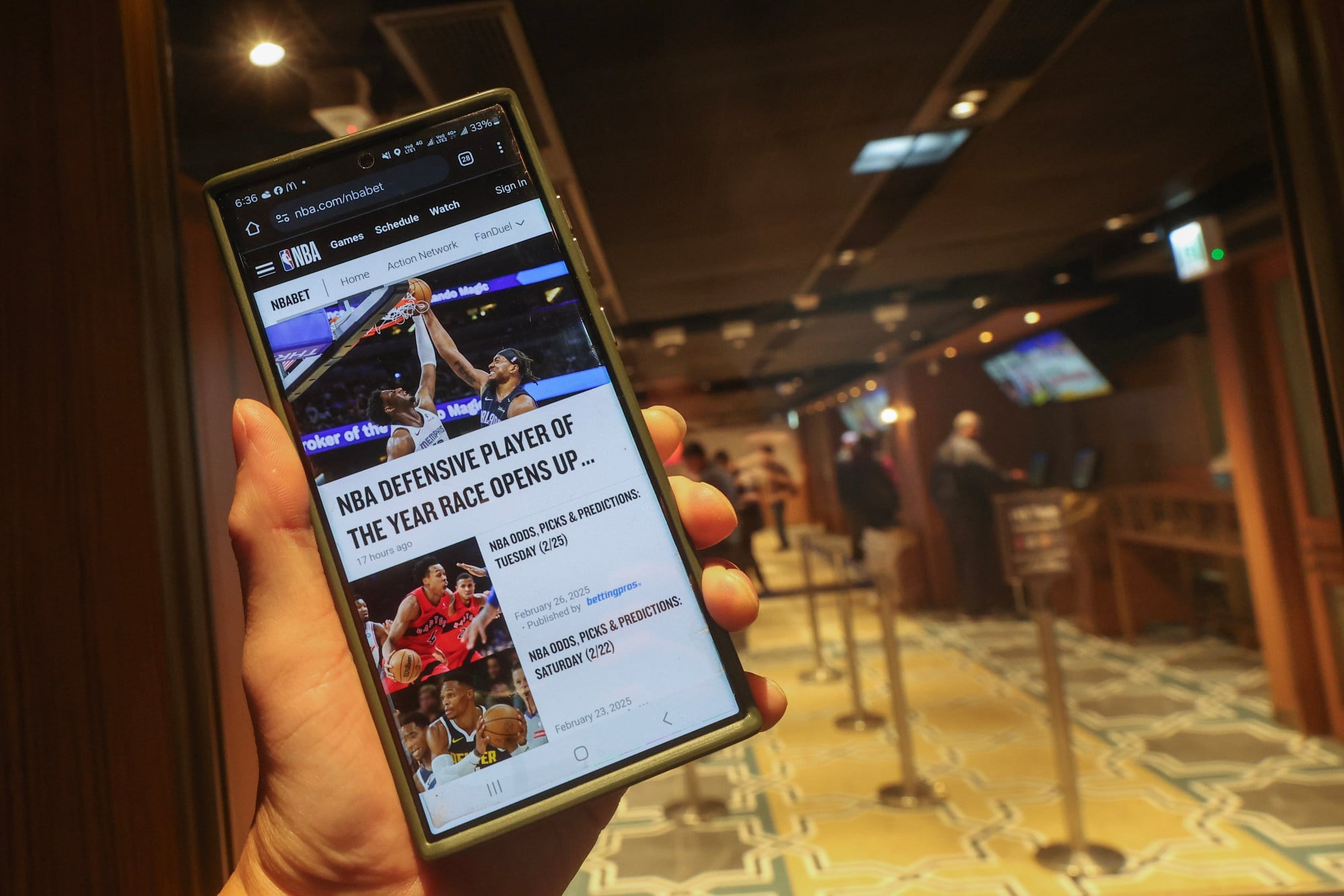
Prediction markets gained widespread attention in Hong Kong following the government’s sudden halt of basketball betting initiatives, with officials citing the swift growth of these platforms and their possible role in encouraging gambling.
Are you curious about the most significant issues and developments happening globally? Find the solutions withSCMP Knowledge, our latest platform offering carefully selected content including explainers, FAQs, analyses, and infographics, presented by our acclaimed team.
The Home and Youth Affairs Bureau has previously clearly stated that sports betting through prediction markets is against the law, while the Investor and Financial Education Council — a branch of the Securities and Futures Commission (SFC) — mentioned that individuals who bet on these platforms do not receive any safeguards under the Securities and Futures Ordinance.
The SCMP discovered that Interactive Brokers Hong Kong was operating its own prediction market platform, enabling users to make yes-no bets on topics related to Hong Kong, including the fluctuation of the Hang Seng Index, the city’s quarterly GDP growth, and the consumer price index.
The organization is a branch of the U.S.-owned Interactive Brokers LLC.
Additional agreements displayed on the website involve which nations will disclose Ebola cases, the maximum temperature documented in New York City, and if NASA plans to reach the moon.
The website is currently running a promotion that provides “$10 immediately” to customers who create a prediction market account. The currency is not mentioned.
Interactive Brokers did not provide a statement in response to an inquiry.
As per a 2024 press announcement, Interactive Brokers started offering the service as early as June of that year in the United States, Hong Kong, and Singapore. The company mentioned that the platform was managed by its fully owned subsidiary, ForecastEx LLC.
Interactive Brokers Hong Kong is supervised by the SFC. As stated on its website, Interactive Brokers LLC serves as the execution and clearing broker for its Hong Kong branch, and offers “access to specific markets beyond Hong Kong, including ForecastEx”.
It also mentions that access to ForecastEx is provided to “eligible customers” of Interactive Brokers Hong Kong.
“Interactive Brokers Hong Kong Limited and Interactive Brokers LLC do not provide suggestions regarding any products accessible through its platform, including those provided by ForecastEx,” the statement mentioned.
When questioned by the SCMP regarding the legal status of the Interactive Brokers platform, an SFC representative stated that they would not address specific instances but emphasized that the regulation of prediction markets or “forecast contracts” within the city’s framework is determined by their “particular characteristics” rather than the terminology used.
“Some ‘event-based’ agreements could qualify as ‘financial products’ under the Securities and Futures Ordinance, depending, for instance, on the particular design of the agreement, such as the basis for payment, and where and how these agreements are distributed or exchanged,” the spokesperson stated.
If intermediaries offer trading or advisory services for these products, they are required to meet the relevant standards, including holding the proper license and adhering to applicable conduct, suitability, and investor protection rules.
The spokesperson mentioned that simultaneously, actions related to betting on event results might create concerns under the city’s gambling regulations.
The spokesperson stated, ‘Companies need to adhere to all relevant laws and regulations and must not participate in enabling unlawful gambling.’
Prediction markets allow individuals to purchase and trade “shares” related to the results of upcoming events, typically presented as yes-or-no questions, covering a wide range of topics from who will win the World Cup to when the U.S. and Iran might finalize a nuclear agreement.
Well-known prediction market platforms, like Polymarket and Kalshi, have attempted to stay clear of gambling regulations by presenting their services as similar to futures contracts or financial derivatives, even though several regions have prohibited their operations.
Vincent Law, a partner at the Hong Kong-based law firm Johnson Stokes & Master, stated that regardless of whether the event being bet on is connected to the economy or not, the contract would still fall under the oversight of the SFC and the gambling ordinance.
He mentioned that prospective buyers should inquire if the agreement was exempt under the Securities and Futures Ordinance or the Gambling Ordinance.
According to Hong Kong’s Gambling Ordinance, gambling and lotteries are prohibited unless they are approved by the government, including activities like horse racing, football betting, the Mark Six lottery managed by the Hong Kong Jockey Club, licensed mahjong clubs, and social gambling.
However, section 29 of the regulation also mentions that it does not cover any contract for differences listed on a designated stock exchange, or traded on a particular futures exchange, as outlined in the Securities and Futures Ordinance.
Under the Securities and Futures Ordinance, the term “financial products” encompasses various instruments such as securities, futures agreements, collective investment arrangements, margin-based foreign exchange contracts, or customized financial instruments.
“The legislation is quite straightforward,” Law stated.
The prevalence of prediction markets, coupled with the absence of any reported regulatory measures concerning them, might indicate the existence of practical challenges and transnational issues from an enforcement standpoint.
Lawyer Gordon Chan stated that the central matter was determining if the contracts in prediction markets could be classified as “financial products” under the Securities and Futures Ordinance.
Futures and betting share certain similarities, and the tension between them is not a recent development,” he stated. “I view this as emphasizing the ambiguous zone within prediction markets.
He mentioned that certain types of contracts, like the Hang Seng Index and oil price futures, could appear similar to traditional financial instruments, while those based on the result of a sports event were more akin to betting.
“Conversely, the manner in which the application of decentralised blockchain technology and smart contracts aligns with the Gambling Ordinance is still uncertain,” he stated.
More Articles from SCMP
Top global hydropower report ranks China as the leading nation
China calls for reduction of travel restrictions as Apec tourism officials gather in Macau
Cantonese eateries in Hong Kong need to evolve and adjust to remain competitive.
This piece was first published in the South China Morning Post (www.scmp.com), a top news outlet covering China and Asia.
Copyright (c) 2026. South China Morning Post Publishers Ltd. All rights reserved.



 jasdooit
Leave a comment