
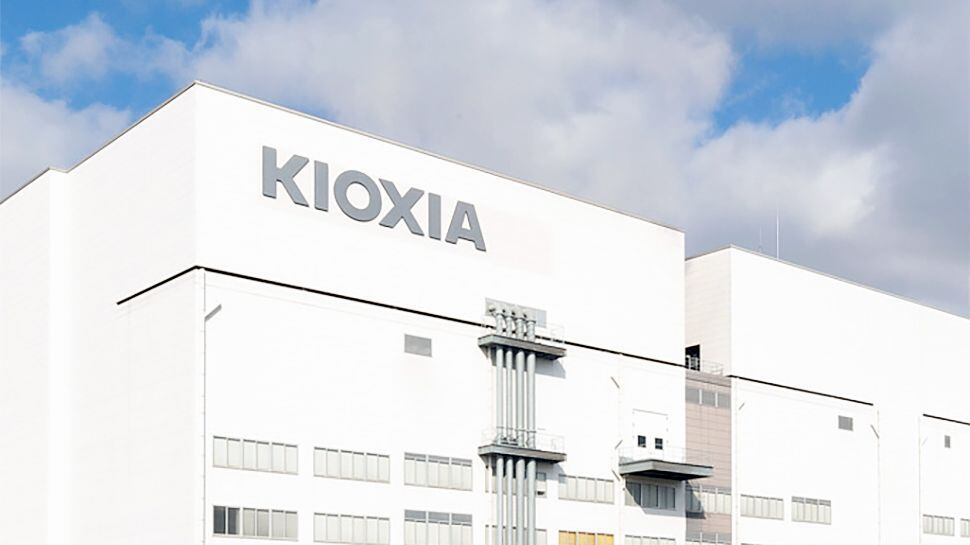
According to Nikkei, on the 28th, it was reported that hundreds of millionaires have appeared at Kioxia, a Japanese semiconductor company that has climbed to the top of Japan’s market capitalization, currently valued at 50 trillion Japanese yen. This outcome is due to section chiefs and department heads, including former employees who previously worked as welders or technicians, receiving stock options in 2018.
As the AI revolution delivers significant advantages even to parts manufacturers, a remarkable moment is taking place.
Kioxia was formed from Toshiba’s memory division, which started when the company created the world’s first ‘NAND flash memory’ capable of retaining data without power. Nevertheless, Toshiba had to divest its memory operations due to heavy losses in its nuclear power plant business. In 2018, a group headed by the U.S. investment company Bain Capital, which comprised SK Hynix, purchased Toshiba’s memory division. The Bain group invested 20 trillion South Korean won at that time and provided stock options not only to top executives but also to managers at the department head and section chief levels following the acquisition.
Usually, private equity funds provide stock options only to executives when purchasing a company. While Bain Capital’s U.S. headquarters initially resisted the concept, the firm’s Japan investment team highlighted the significance of department heads and section chiefs, who are in charge of Japan’s corporate culture and operations, and convinced stakeholders that offering financial incentives to employees is crucial for boosting corporate value. In Japan, section chiefs hold vital roles overseeing overall operations, and the country is occasionally called a ‘society of section chiefs.’
As reported by Nikkei, around 600 individuals were granted stock options at that time, with most being regular staff members instead of top management. The public offering price stood at 1,455 Japanese yen during the December 2024 listing. Investors have the option to purchase shares as the stock value increases; currently, Kioxia’s stock is being traded within the 90,000 Japanese yen range. While some have already exercised their options, considering the initial allocation of 7 million shares and using the year’s peak of 112,700 Japanese yen on the 22nd, the total value amounts to roughly 790 billion Japanese yen.
Out of this total, roughly 778 billion Japanese yen represents unrealized pre-tax profits. The 600 employees have an average asset value surpassing 1 billion Japanese yen (approximately 10 billion South Korean won) per individual in unrealized gains that remain unconverted.
Employees who joined the renowned Toshiba became part of a private equity fund, which was uncommon during that period. Nevertheless, this has provided them with compensation comparable to or even higher than that of senior executives. Some believe this outcome stems from employees sharing the company’s risks and performance with investors.





Leave a Reply