

Protein reigns supreme in today’s nutritional landscape.
During the surge of ‘proteinmaxxing’, numerous people are purchasing protein-rich ice cream, pasta, and even Doritos.
However, some Americans have taken it a step further—biting into pieces of parmesan cheese to achieve their protein targets. One social media personality is even seen carrying a 31-pound chunk of the cheese in her Prada handbag.
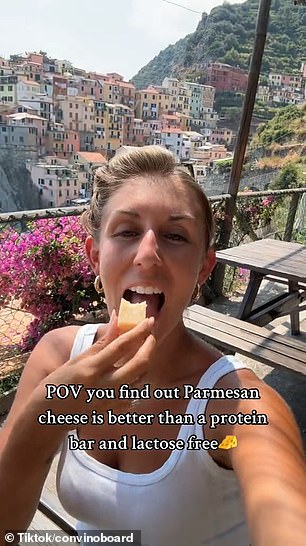
“I’ve had enough of protein bars — I’m moving to whole blocks of parmesan,” one person said onTikTok. “Parmesan is nature’s protein bar,” another person stated on X.
Usually served over pasta, salads, and blended into soups, this essential element of Italian cuisine is well-known for its deep, nutty taste and is already awelcomed addition to many diets.
Widely favored by both common people and famous individuals,Taylor Swiftstates it is a common item at home, whileMartha Stewarthas referred to it as the ‘king of cheeses’, andSydney Sweeneymentions that she has a second refrigerator at home specifically for her parmesan wheels.
But is this cheese really the answer to your protein woes? And with its high fat and calorie content, does it come with risks?
We asked experts whether it was worth the hype.

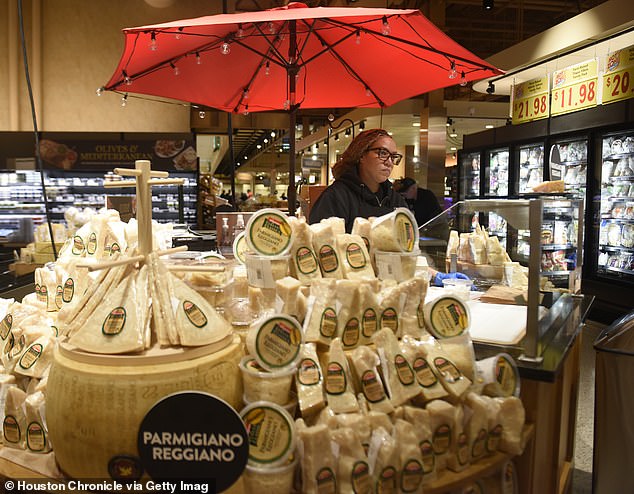
Dietitian Alexis Supan, affiliated with the Cleveland Clinic, stated: ‘Individuals frequently disregard warnings regarding any dairy products, such as butter and various kinds of cheese, and claim, “Oh, that’s too dangerous, the fat content is truly harmful.”
But ten grams of protein in such a quantity of cheese is truly amazing.
A single ounce of authentic Parmesan — specifically labeled as Parmigiano Reggiano — provides approximately 10 grams of protein, as stated by the cheese’s Italian association.
That’s three times the amount found in a comparable portion of Greek yogurt or an egg. It is also two grams higher than in the same serving of chicken breast or beef jerky, and three grams more than in cheddar, the country’s most popular cheese.
At the same time, dietitians recognize it as a complete protein—containing all nine essential amino acids—and as a leading source of short-chain fatty acids, which can enhance digestion and nourish beneficial bacteria in the gut.
Per ounce, it serves as a significant source of calcium, providing approximately 320 milligrams, which is a quarter of the typical adult’s daily requirement.

Cheese is considered a rich source of protein since it’s primarily created from substantial amounts of milk with the water content removed. To produce one ounce of cheese, a pint of milk is required.
It also includes salt and rennet, an enzyme derived from animal stomachs that contributes to the formation of cheese and its unique taste.
Parmesan is also free of lactose, offering a suitable choice for the 30 to 50 million Americans who are unable to digest this component.
It does include casein, which is estimated to affect 6.2 million Americans with allergies.
Nevertheless, it’s not entirely positive news.
Alongside the protein and calcium comes the calories.
A single ounce of parmesan cheese contains 110 calories, exceeding the amount found in an equal portion of chicken breast or egg by more than double, and five times the calories in full-fat Greek yogurt, though it is comparable to other types of cheese.
It also includes nine grams of fat, with five grams being saturated fat, a kind that increases ‘bad’ cholesterol levels and may elevate the chances of heart disease and stroke.
The sodium level is also troubling. One ounce contains 180 milligrams, roughly 10 percent of an individual’s daily upper limit.
The cheese is also costly. An 8oz block available in major grocery stores is priced around $14.

Registered Dietitian Mackenzie Burgess, from the Los Angeles-based company Cheerful Choices, said to the Daily Mail: ‘Parmesan is a great source of protein, containing a high amount in a single ounce, making the portion size similar to that of two dice.’
But, as it contains more saturated fat and sodium, it’s important to be mindful of the serving size.
An internal medicine physician from Vermont, Dr. Bob Arnot, stated: ‘It’s the finest cheese, remarkable for its protein levels and beneficial for healthy bacteria.’
Both acknowledged, however, that its relatively high calorie, saturated fat, and sodium levels meant it was not something to be consumed in large amounts.
Adults are advised not to consume more than 20 grams of saturated fat — which is the same as four ounces of parmesan — and 2,300 milligrams of salt daily. For a typical diet, women are recommended to limit their intake to 2,000 calories per day, while men should not exceed 2,400 calories.
Consuming excessive amounts of parmesan may increase the likelihood of weight gain, elevated blood pressure, and type 2 diabetes, as well as contribute to other long-term health issues.
In general, Arnot stated that healthy adults aiming to include parmesan in their diet should aim for roughly an ounce per day. He mentions that he also consumes this amount each day, usually by melting it onto one of his meals.
Individuals with pre-existing health issues should consult their doctor before increasing their intake of parmesan, he stated.
When buying parmesan, specialists recommend opting for the authentic version to experience the primary advantages.
It is marked as Parmigiano Reggiano and is strictly controlled. It is only made in specific areas of Italy and needs to be aged for a minimum of 12 months.
Other cheeses labeled as parmesan might not meet the same rigorous standards and could contain less protein.






Leave a Reply