
The following week marks a critical moment that will shape the trajectory of stock prices for Samsung Electronics and SK Hynix, the leading companies in the local stock market.
Samsung Electronics is set to release its preliminary results for the second quarter (April–June) of this year on the 7th, while SK Hynix will introduce its American Depositary Receipts (ADRs) on the US Nasdaq on the 10th. ADRs are alternative financial instruments issued by domestic depositary institutions that enable foreign companies to trade their shares on US stock exchanges. Given these two events taking place just three days apart, there are predictions that the trend of the ‘rollercoaster market,’ which can swing by approximately 10% in a single day, will be clarified this week.
◇ “Unprecedented surprise” serves as an introduction… the true challenge lies in dealing with friction against Big Tech
Samsung Electronics is expected to report record-high preliminary results for the second quarter. According to the average forecast (consensus) from securities firms compiled by financial information provider FnGuide, sales are anticipated to be in the range of 170 trillion South Korean won, with operating profit around 86 trillion South Korean won. These numbers would immediately surpass the previous first-quarter operating profit of 57.2 trillion South Korean won, with some securities firms predicting figures as high as 90 trillion South Korean won. Despite the one-time cost related to performance-based reserves for the semiconductor (DS) division, which reached approximately 10 trillion South Korean won due to a labor-management agreement in May, the profit is still expected to be this strong. Some analyses suggest that if this one-time cost is excluded, the operating profit could have exceeded 100 trillion South Korean won for the first time in history. Kim Dong-won, head of KB Securities’ research division, stated, “Samsung Electronics’ second-quarter operating profit is expected to increase 19 times year-on-year to 90 trillion South Korean won, with an operating margin of 51%. The supply shortage is becoming more severe as the customer demand fulfillment rate for memory in June was only around 50%, and the price increases for DRAM and NAND in the second quarter are each estimated to have reached 60% compared to the previous quarter.”
Nevertheless, it is unclear if the ‘good performance’ will immediately lead to higher stock prices. The enhancement in performance is already widely recognized by the market. So far, the factor influencing the stock prices of memory semiconductor firms such as Samsung Electronics and SK Hynix has been demand and the strong profits it brought about. However, major technology companies are now slowing down this trend.
A notable example is Apple. As memory costs increased, Apple increased the prices of all its products, such as Macs and iPads, on June 25, while also shifting to cheaper memory produced in China. According to the Financial Times, Tim Cook, the CEO, is personally pushing the Trump administration to permit the company to buy memory from Chinese firms like CXMT, ChangXin Memory Technologies. CXMT is included on the ‘1260H list’ identified by the US Department of Defense as a Chinese military-affiliated entity. In reaction, the US Semiconductor Industry Association (SEMI), which comprises three memory companies—Samsung Electronics, SK Hynix, and Micron—sent a letter opposing government involvement, stating, “If the government tries to address the unprecedented shortage of memory chips by affecting prices or production capacity, the supply pressure caused by the AI boom will only increase,” as reported by US Business Times. The conflict in Washington between major technology companies and manufacturers regarding memory is set for a direct confrontation.
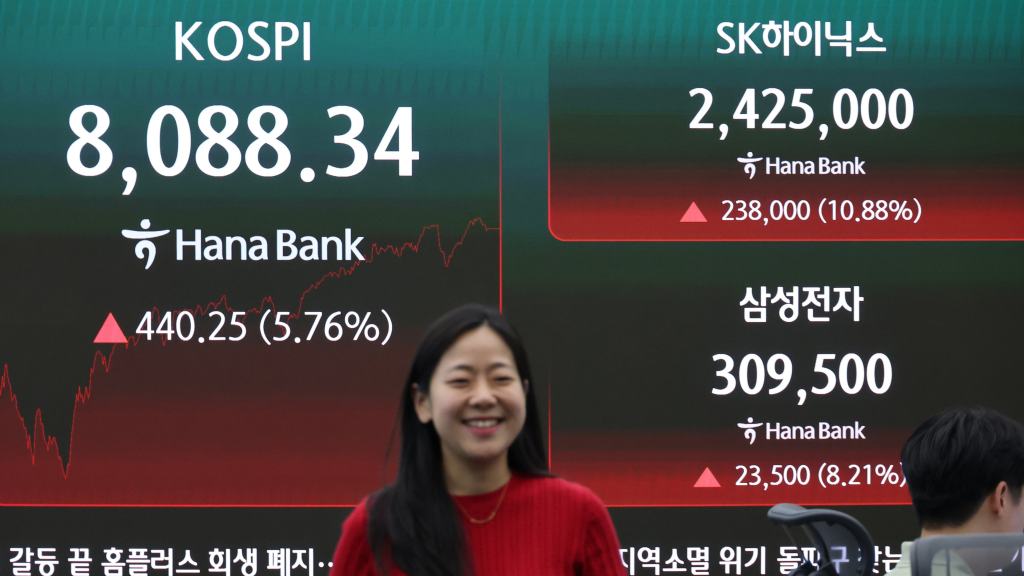
On the other hand, if Samsung Electronics and SK Hynix broaden their client base beyond major tech companies (M7), demand might grow even stronger. A notable example is their partnership with Anthropic. On June 2, foreign media reported that Anthropic, the developer of the AI model ‘Claude,’ was in talks with Samsung Electronics’ foundry to be a manufacturing partner for its own AI chips. As a result, Samsung Electronics’ stock price jumped 8.22% to 309,500 Korean won, while SK Hynix increased by 10.88% to 2.425 million Korean won on June 3. These two stocks, which had dropped the previous day due to concerns about ‘over-supply’ following news of Meta’s expansion into the cloud sector, saw a significant recovery after the announcement of collaboration with non-M7 entities. This helped mitigate potential conflicts with M7 through partnerships with companies outside of this group. Ultimately, the main factor will be how effectively they can expand their customer base in the future.
◇ SK Hynix’s stock market listing on Nasdaq: Is it beneficial or detrimental?
There is a split in opinions regarding whether SK Hynix’s ADR listing is beneficial or not. SK Hynix is set to make its debut on the Nasdaq with the ticker symbol ‘SKHY’ on the 10th. The price has not been finalized yet. The company will begin institutional demand forecasting (book-building) on the 6th, determine the public offering price based on the closing prices in South Korea on the 9th, and then list on the Nasdaq on the 10th.
As reported by international media, the price of the American Depositary Shares (ADS) that will be issued for SK Hynix’s listing on Nasdaq is anticipated to maintain a ratio of one-tenth compared to the price of domestic common shares. According to Reuters, SK Hynix plans to raise roughly 29.4 billion dollars, with each ADS expected to be priced around 166 dollars per share. This suggests that each domestically listed common share is valued at approximately 1,660 dollars (about 2.55 million Korean won based on local standards). Bank of America, Citigroup, Goldman Sachs, and JPMorgan are spearheading this offering, with Citibank acting as the depositary bank. The funds collected will be allocated towards facilities such as the Yongin Semiconductor Cluster and the Cheongju Advanced Packaging Plant. Bloomberg noted, “The underwriters for SK Hynix’s ADR offering are considering a commission rate of about 0.5%, which is lower than the 0.67% rate for SpaceX’s prior IPO and also below typical Wall Street standards.”
The foundation of the optimistic perspective lies in the availability for American investors. The market typically believes that Micron is valued higher than SK Hynix not due to better profits or technology, but simply because it is listed on the US stock market, which makes it more convenient to trade and included in indices. Indeed, SK Hynix’s 12-month forward price-to-earnings ratio (PER) is approximately 7 times, which is lower than Micron’s 8–10 times. A lower PER indicates that the company is valued at a lower price. However, with the ADR listing, direct comparison with Micron in the same market might result in a ‘re-rating’ (a reassessment of corporate value) that addresses the undervaluation. There are also predictions that the listing could draw in passive funds amounting to trillions of won.
On the contrary, the negative viewpoint holds importance as well. This is known as the “peak theory.” US investment channel Barchart stated, “In the memory sector, which is responsive to economic cycles, securing funding for extensive supply growth during a possible cycle peak is a common indicator of an impending decline.”





Leave a Reply