

Germany has faced three consecutive underwhelming World Cup performances. Specialists believe the causes are linked to football, but also to German society.
Philipp Lahmhas stated that the main issue with German football is the absence of a distinct identity.Toni Kroosthinks Germany lacks top-tier talent. Mats Hummels has mentioned problems within the system. There are many views and debates available regarding why Germany faced a third consecutive World Cup failure.
Frank Wormuth, a former athlete, German Football Association (DFB) coach instructor, coach in the top league of the Netherlands, and now a mental performance coach, feels that the team’s environment is significant.
“It’s not focused on the playing style. It’s about the standard of the players within that approach,” Wormuth stated.
“You need to consider it on its own—our top talents remain talented. (Florian) Wirtz had a below-average season in London. (Jamal)Musialawas sidelined for an extended period. (Leroy) Sane continues to be the perpetual talent. What do you anticipate now?
Right from the start, you have three key players on the field who are responsible for creativity, but they weren’t at their best. And that has nothing to do with (head coach Julian)Nagelsmann. It concerns personal style. (Kai)HavertzThat’s simply how he is. He occasionally scores goals, but he excels through assists. Then there’s Havertz, the player you’re confident will take penalties, who misses one. These are all minor details, and I’d argue that at this level, such small elements can determine everything. That’s why our attacking performance didn’t go as well as expected, even though that was supposed to be our strength.
Wormuth also cites the example of Nico Schlotterbeck, whose injury at the beginning of the tournament was viewed as aserious setback for Germany’s prospects.
“He is injured, and immediately everything falls apart because we are lacking a left-footed player who can initiate play with his passing. That’s a narrow perspective,” Wormuth said.
The question is, are we truly as strong on defense as we think? Just observe the other teams and how they use their physicality to challenge opponents. We no longer do that. I can clearly see that we have defensive issues in one-on-one scenarios.
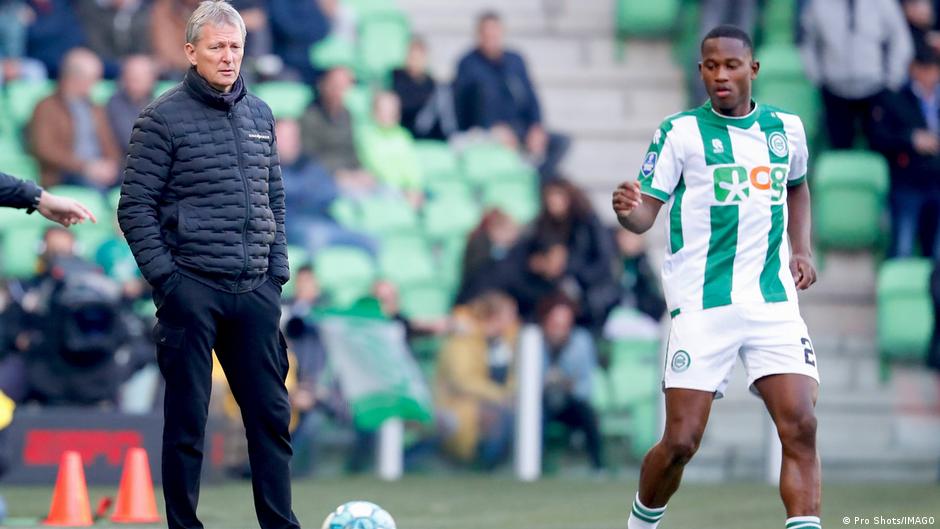
The German team has been influenced by the system’s structure and societal transformations.
With more recent modifications implemented toGermany’s youth system, it seems out of place to argue that youth football needs a total transformation. After all, the effects of the recent adjustments will take years to manifest. Nevertheless, considering that character has also come under scrutiny by those examining Germany’s most recent World Cup elimination, there are examples from other countries that could prompt reflection regarding thegrowth of young athletes in Germany.
Mark O’Sullivan, an associate professor of soccer at the School of Sports Science in Oslo, discusses Bodo/Glimt’s strategy. In a post on his blog, O’Sullivan outlines how the football team’s environment significantly influenced their success on the pitch. During the recent season, the club from a small city located north of the Arctic Circle advanced to the round of 16 in the Champions League.
“One of the main factors behind this achievement is the club’s focus on common values, culture, and the growth of its players,” O’Sullivan wrote.
The organization upholds values including trust, modesty, shared accountability, and ongoing enhancement. With head coach Kjetil Knutsen at the helm, Bodo/Glimt has cultivated a unique approach to gameplay defined by a robust commitment to team collaboration. Knutsen has fostered an atmosphere focused on learning, where athletes are motivated to assume responsibility, assist each other, and consistently strive for progress.
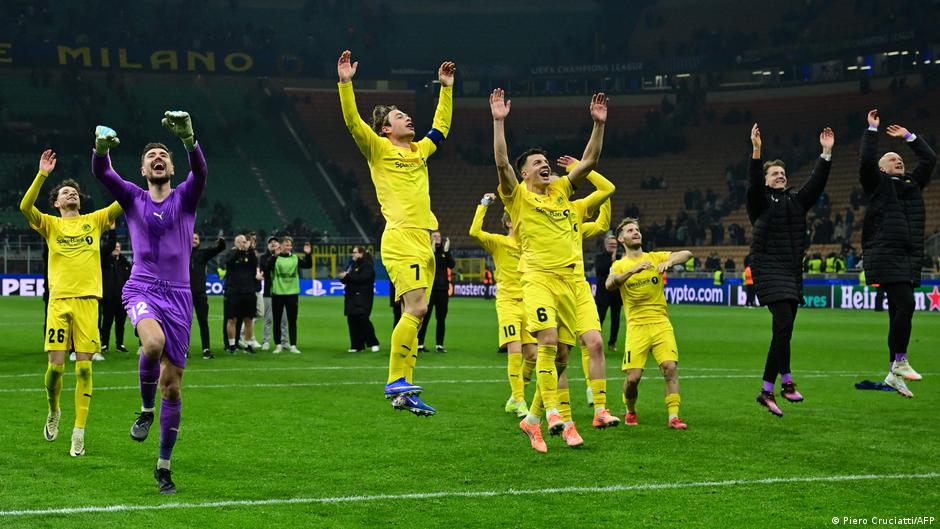
Has Germany gone soft?
“Ultimately, the reason Germany isn’t performing well boils down to culture, coaching, and youth development,” Wormuth stated.
The most crucial aspect by far is one’s mindset, and this has undergone a transformation. You may wonder, “How?” Let me explain: Society.School. Upbringing. Parents. Culture. Circumstances have evolved. And whenEcuador strongly targets Germany, although still quite, and we can’t stand on our own, then it’s a cultural issue. They have an entirely different survival culture than ours. That’s why I say that’s what we’re lacking. And it’s not about coach development or even academy training. No, it’s society. And you can’t change that overnight,” he explained.
We train every individual in the style of Spanish players, yet without adopting their mindset. It’s a cultural matter. Society often mirrors football, or the other way around. In recent years, we have become more delicate in various social contexts.
These evaluations are difficult to measure, but if softness is considered as a person, policy, or object that has lost its initial sharpness, strength, or structure, then it is reasonable to claim that German football currently appears to be an example of this.
Maybe Germany can draw ideas from a nearby nation. O’Sullivan thinks the significance of purpose in providing facilities has been crucial to Norway’s achievements in high-level sports.
A soccer field, gymnasium, park, or ski slope does not automatically encourage involvement just because it is present, and being near these facilities doesn’t always lead to participation. This can be referred to as the spatial fallacy. Regrettably, this is frequently a common assumption in planning, public health, and sports policy.
This year, the German government has committed to allocating €333 million ($380 million) for the renovation of 314 sports centers across the nation, aiming to upgrade them and enhance their sustainability. This is where O’Sullivan’s main argument lies. The improvement of these facilities should not be considered the sole action in fostering a genuine relationship with sports among Germany’s young people. It should merely be the starting point.
The same applies toJürgen Klopp’s expected appointmentas Germany’s new men’s national team coach. German football is at a critical turning point. The choices it makes moving forward will be recalled for many years.
Edited by: Chuck Penfold
Author: Jonathan Harding



 jasdooit
Leave a comment