
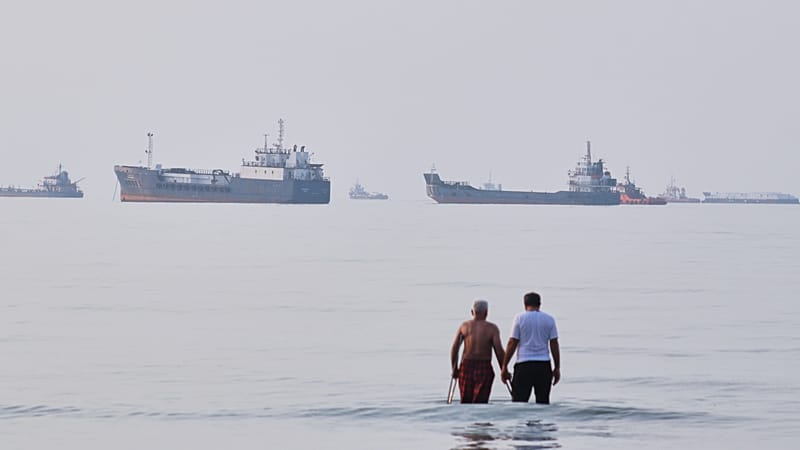
The Strait of Hormuz is once more the location of conflict, with Iran and the United States competing for dominance over the critical waterway and keeping up the exchange of gunfire during the early morning hours of Thursday.
On 28 February, when the US and Israel initiated hostilities against Iran, Tehran effectively restricted shipping passage through the strait.
That move sent oil prices, fertilizer, and many other goods rising sharplywell beyond the area and provided Iran significant influence in discussions.
So, how do the nations directly involved in the conflict—and the global community—understand what is occurring across this extensive area of water?
No one is overseeing the authority,describes Commodore Steve Prest, a former naval officer and Associate Fellow at the Royal United Services Institute (RUSI).
Both parties, he states, will be “tracking it using various methods, combining numerous information and data sources to form a clear understanding of activities within and near the Strait of Hormuz”
Prest mentions that the image is created using radar technology from warships, surveillance drones, maritime patrol aircraft, satellites, and shipping information.
There are commercial options available that enable you to examine, for instance, electronic signals emitted by vessels, Prest says.
So vessels are sending signals via radios, or they might be transmitting through maritime radar systems, or even just an infrared observation, which allows you to see the heat trail emerging from the ship’s chimney. These elements can be detected from space.
Back-and-forth strikes
The United States increased its attacks on Iran on Thursday, targeting areas further to the north and firing at a vessel the US claimed was attempting to bypass its naval embargo on the Islamic Republic.
Iran responded by firing missiles and drones at US allies in the area, and cautioned that its strikes could increase.
Prolonged strikes between the US and Iran in the Middle East have destroyed the temporary agreement aimed at ending the conflict in Iran.
So far, Iranian authorities claim that US attacks have resulted in the deaths of more than 35 individuals and injured over 300 people.
Each side has accused the other of causing the failure of discussions.
We made an agreement yesterday, or the day before, everything was settled, US President Donald Trump said on Monday. “Then they canceled the agreement right away upon discovering an element in the deal that they disliked.
The deputy foreign minister of Iran, Kazem Gharibabadi, refuted on the following day that his nation had ever abandoned the negotiation table.
As per Prest, surveillance will be crucial in achieving any type of peace.
There is currently very little trust between the United States of America and the Iranian government, he says. Thus, whatever occurs will have to be observed, and over time, a position of trust can be established.
The United States has warned of re-opening the strait through force, yet specialists suggest this would necessitate a significantly larger naval fleet, or possibly tens of thousands of land forces.





Leave a Reply