

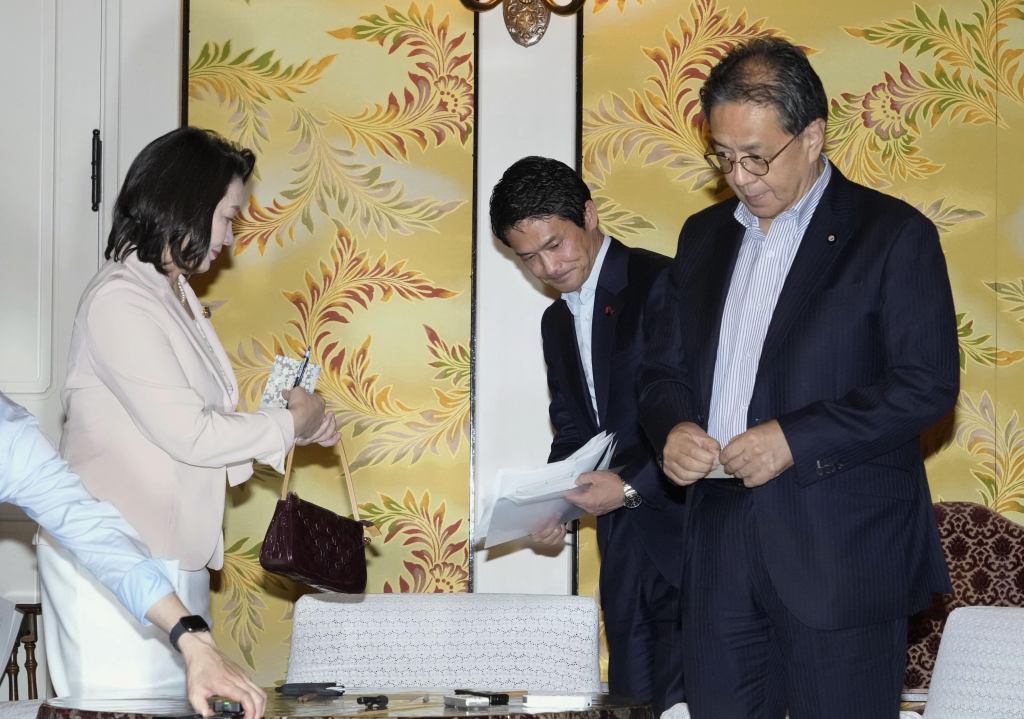
Last month, on June 22, the Ministry of Trade, Industry and Resources recognized two “virtuous gas stations.” Minister Kim Jung-kwan visited one of them to hand over a certificate. A community organization identifies gas stations that keep price increases to a minimum as “virtuous gas stations,” and those that are chosen five or more times are given the extra title “extraordinarily virtuous,” along with a message of appreciation from the minister.
It is reasonable for the government to be worried about rising inflation. Nevertheless, when the government designates certain prices as “virtuous,” businesses that do not meet these criteria are labeled as “bad gas stations.” Among the 10,646 gas stations across the country, only 415 (3.9%) are considered virtuous. The other 96.1% face social disapproval. Gas station owners express frustration, saying, “Even if we wish to become virtuous gas stations, it’s not possible.”
From late March through late June, the government imposed a ceiling on the maximum wholesale price of gasoline at 1,934 South Korean won per liter for a duration of three months. Throughout this time, the national average retail price remained approximately 2,006 South Korean won. After subtracting card fees, the average distribution margin per liter amounted to 42 South Korean won. The Korea Gas Station Association stated that this margin is inadequate to cover multiple expenses. Large and discount gas stations, which can buy fuel in large quantities, have the potential to reduce prices further within this framework, whereas small-scale stations find it difficult to do so.
On June 27, the government declared a reduction of 150 Korean won in the maximum price and promised to punish gas stations that delayed implementing the cut. Civic organizations and certain media have referred to stations that did not fully pass on the 150 Korean won reduction as “excessive-profit gas stations.” In the last month, retail gasoline prices dropped by 135.6 Korean won, which represents more than 90% of the government’s reduction. Nevertheless, expecting 10,000 gas stations—each with different purchasing schedules, stock levels, and turnover times—to immediately lower their prices by 150 Korean won is impractical in a free-market economy. Although refiners are compensated for their losses, local gas stations suffer from unrecouped losses. Almost 140 gas stations closed within four months of the price cap policy, a rate double that of before the policy was introduced.
More shutdowns reduce competition, making gas stations less available. This might result in increased fuel costs and difficult refueling situations. Instead of quickly pushing specific examples, the government should concentrate on rebuilding a working energy supply system and a basic market order that enables small gas stations to remain operational.


 jasdooit
Leave a comment