
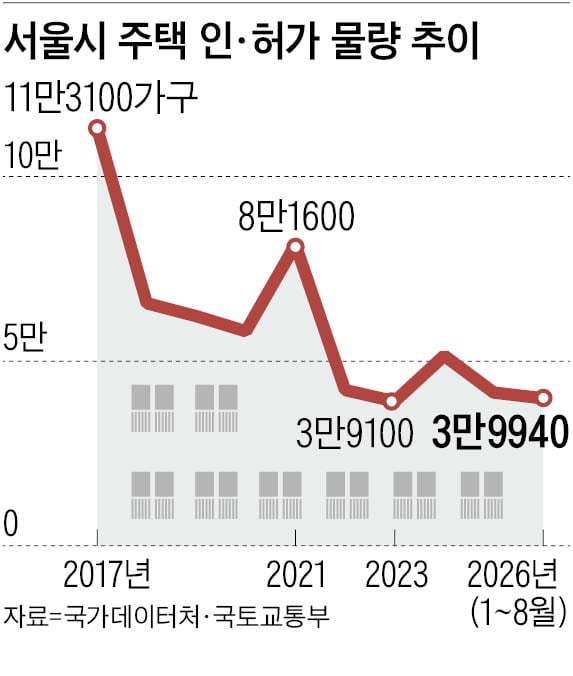
Seoul apartment prices have risen for 86 consecutive weeks, setting a record for the longest continuous increase. This is due to the materializing “supply cliff.” While Seoul’s annual appropriate housing supply is estimated at around 45,000 households, this year’s supply is projected to be 34,000 households, and next year’s 22,400 households—both below the required level.
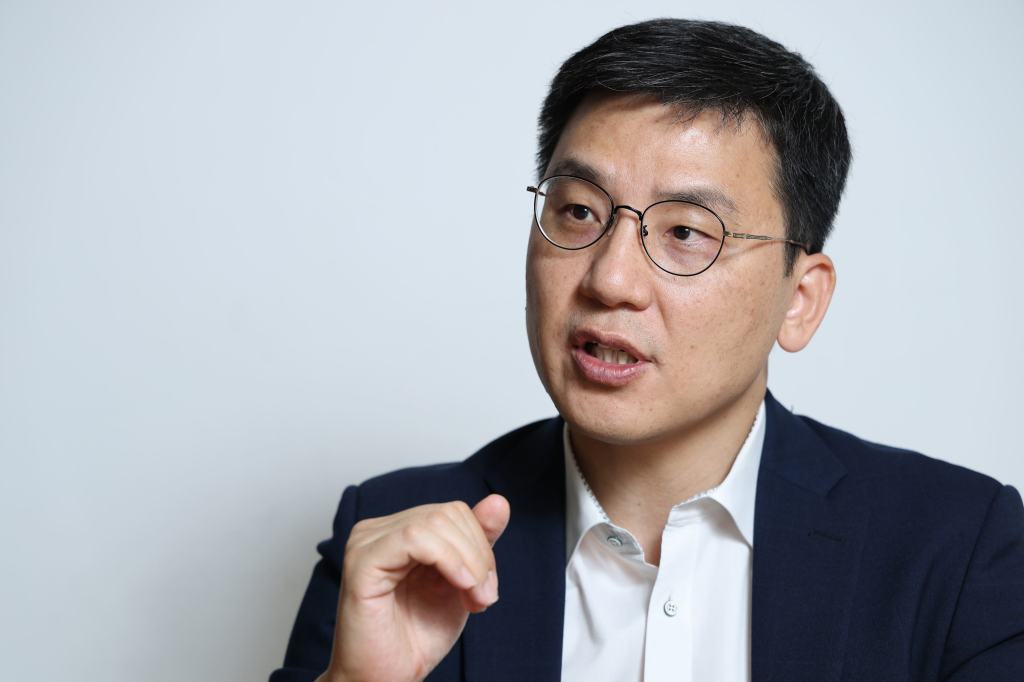
The government has been shouting “just supply” and rolling out measures one after another, but many on the ground evaluate them as “ineffective.” Regulations such as restrictions on transferring membership status and loan regulations for relocation expenses are hindering redevelopment and reconstruction projects, which account for most of Seoul’s housing supply. This newspaper met with Professor Kim Joon-hyung of Myongji University, former head of Seoul’s Housing and Real Estate Policy Office, to discuss the deepening supply crisis and solutions.
– Regarding responsibility for the supply crisis, President Lee Jae Myung claims that construction starts and permits in Seoul have decreased since 2022 under the Yoon Suk-yeol administration, while Seoul Mayor Oh Se-hoon argues it is due to the mass cancellation of urban renewal projects during former Mayor Park Won-soon’s tenure. Who is correct?
“Anyone who knows Seoul’s housing situation can easily answer this. 88% of Seoul’s new apartment supply comes from urban renewal projects like redevelopment and reconstruction. With limited land for new housing, Seoul cannot supply apartments without these projects. Urban renewal projects take over 20 years on average, from district designation to completion. However, during Park Won-soon’s tenure, regulations such as the 35-story limit, residential improvement index system, and direct cancellation of renewal zones were introduced, leading to the cancellation of 389 zones—equivalent to 430,000 households. The delayed impact of these cancellations is now reflected in reduced permits and construction starts.”
– Is this implying responsibility lies with Park Won-soon?
“There’s no denying it. The 35-story limit is a prime example. The Seongsu Strategic Renewal Zone, which planned high-rise buildings over 35 stories, halted after the regulation. The residential improvement index system replaced the previous criteria for zone designation with a scoring system including qualitative evaluations. No new redevelopment zones were designated for five years after its introduction. Seoul also directly canceled 111 zones—a regulation unseen in other municipalities.”
– Why were these regulations introduced?
“Because housing policy was approached ideologically, not based on reality. Urban renewal was seen as evicting original residents and enriching speculators. The belief was that destroying sound buildings for profit must be stopped. The focus shifted to preservation over development, without providing solutions to improve aging residential environments.”
– Some argue Seoul has no land for new housing and urban renewal has no supply effect.
“Lack of land makes urban renewal critical. Only 40% of Seoul’s housing is in good condition—excluding basements, rooftop rooms, and substandard facilities. The remaining 60% is improved through urban renewal without government funding. The claim that redevelopment and reconstruction don’t increase household numbers is outdated. Under the Rapid Integrated Planning program, even low-density residential zones can increase floor-area ratios, leading to a 44% increase in households for reconstruction and 27% for redevelopment over the past three years.”
– Mayor Oh Se-hoon announced plans to start construction on 310,000 households by 2031, but the effect seems limited.
“This targets zones recanceled after Park’s tenure. The average project duration was reduced from 21 to 12 years by shortening the designation process from five to two years. However, the October 15, 2023 measures, which designated Seoul as a speculative overheating zone, caused problems.”
– What issues arose?
“Only 30% of original members retain their status until project completion. Frequent ownership changes occur during projects. However, in speculative overheating zones, transferring membership is prohibited after certain stages. Buyers cannot obtain membership rights, halting transactions. Members unable to pay shares face direct impacts.”
– How did the membership transfer ban affect projects?
“It severely delayed projects. Exceptions allow transfers if permits or construction starts are delayed. Members awaiting transfers stall projects to meet these conditions. Delays compound at each stage—designation, permitting, construction—making project timelines unpredictable. A Seoul survey found 55 out of 117 sites (47%) facing such issues.”
– How did relocation loan regulations hinder projects?
“Members need loans for temporary housing or tenant deposits. The government’s June 27 mortgage regulations and October 15 measures imposed a 600 million Korean won limit and reduced LTV from 70% to 40%. This made it harder for cash-strapped members to secure housing or repay deposits. A Seoul survey found 39 out of 43 relocation-bound sites struggling with these regulations.”
– Were relocation loan regulations eased?
“After June elections, the government adjusted LTV calculations to post-project housing values and introduced loan guarantee products. However, the membership transfer ban remains. This reflects a negative view of urban renewal, treating mid-project buyers as speculators and transfer gains as unearned income.”
– The government proposes greenbelt releases and Yongsan as alternatives.
“These are not short-term solutions. Third-phase new towns took 8–10 years for initial occupancy. Yongsan’s former military site requires at least five years for contamination cleanup. Expanding Yongsan’s 6,000-household target to 10,000 ignores traffic solutions. The Ministry of Land, Infrastructure and Transport is breaking its own greenbelt release principles. Instead of leveraging ready-to-build urban renewal projects, the government pursues impractical options.”
– Doesn’t the Ministry understand this?
“The Ministry established greenbelt and Yongsan development principles. Yet, Cheong Wa Dae now leads real estate policy, pressuring the Ministry to produce supply numbers. While shouting ‘just supply,’ the government creates contradictory regulations—pressing the brake and accelerator simultaneously. It’s questionable if the government truly intends to stabilize housing prices.”
– How to resolve policy misalignment?
“Decentralize housing policy. Seoul City, not the Ministry in Sejong, understands Seoul’s needs best. The mayor legally controls urban planning. The central government should support local projects by expanding the Housing and Urban Fund’s usage. The focus should shift to stabilizing housing for ordinary citizens, not Gangnam price declines.”
The goal of housing policy should be stabilizing housing for ordinary citizens, not lowering Gangnam housing prices
President Lee Jae Myung described the trend of falling Gangnam prices and rising northern Seoul prices as a “leveling process.” Professor Kim criticized the policy goal of targeting Gangnam prices.
– How do you view this “leveling”?
“This term reflects the government’s perspective. Price stabilization usually means downward stabilization, but this is high-price leveling. Northern Seoul’s price rise isn’t due to improved residential value but displaced demand from Gangnam’s 600 million Korean won loan regulations and soaring jeonse prices. This is a regulatory side effect. ‘Leveling’ is out of touch with ordinary citizens struggling to find jeonse or buy homes.”
– Has homeownership become harder for ordinary citizens?
“Yes. Loan regulations to curb Gangnam pushed up northern prices, while residency requirements reduced jeonse supply. The government touting ‘leveling’ as an achievement shows its focus is on lowering Gangnam prices.”
– Is the policy goal misguided?
“The government aims to suppress price increases. Foreign scholars find this surprising. Rising prices reflect increased value and higher property tax revenue. The government should identify who suffers from price hikes and provide tailored solutions. Stabilizing housing for ordinary citizens must be the goal. Price suppression and housing stability are separate—pursuing both is impossible. Policies must work in reality, not ideology.”
☞Urban Renewal Projects
Projects to improve residential environments and restore urban functions in areas with aging or substandard buildings. These include redevelopment, reconstruction, and residential environment improvement projects, divided into four stages: district designation, association establishment, project approval, and construction/completion.
☞Rapid Integrated Planning
A program where Seoul City collaborates with associations from the early stages of urban renewal to shorten permitting processes and accelerate projects. The goal is to reduce the average project duration from 21 to 12 years.



Leave a comment