
They call for America to engage with carmakers and battery manufacturers ‘strategically’, saying protectionism is ‘an act of self-harm’
The United States should engage with Chinese carmakers and battery manufacturers “strategically”, using targeted safeguards instead of the current “wholesale restrictions”, which could lead US carmakers to lose global market share, according to experts.
“We need to consider strategic partnerships,” said John Helveston, an associate professor at George Washington University, during a discussion on Tuesday.
“So not just wholesale restrictions, but look at some of the best opportunities and let automakers pursue things like licensing agreements and other agreements with some targeted safeguards,” he added.
Do you have questions about the biggest topics and trends from around the world? Get the answers with SCMP Knowledge, our new platform of curated content with explainers, FAQs, analyses and infographics brought to you by our award-winning team.
Sourabh Gupta, resident senior fellow at the Institute for China-America Studies, described the practice of protectionism in a globally scaled and competitive market as “an act of severe self-harm”.
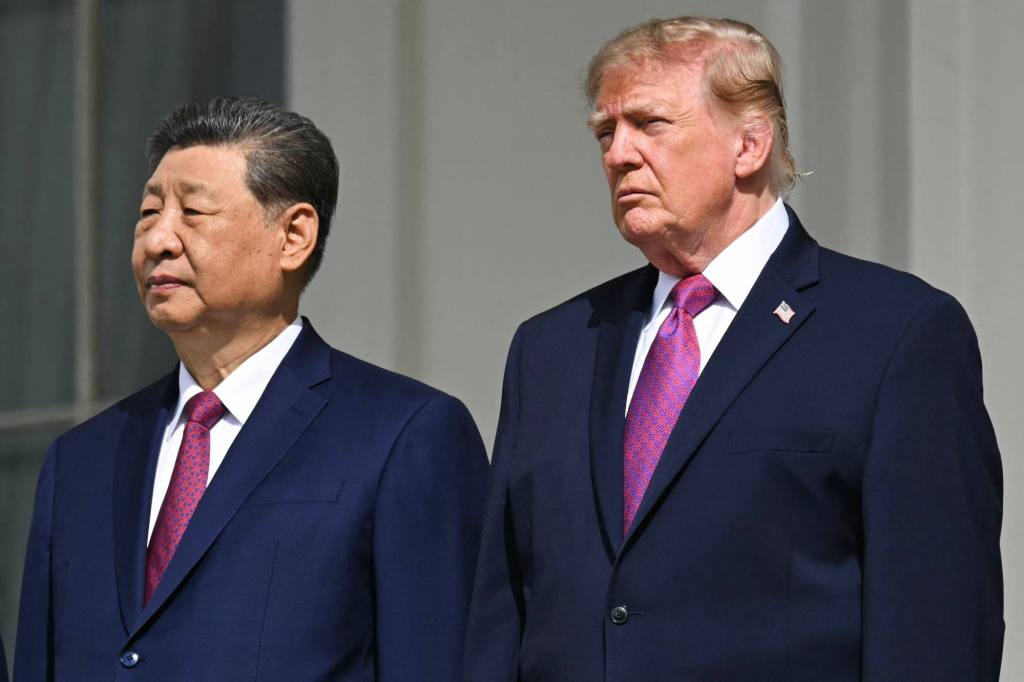
The comments came days after efforts to explore possible Chinese investments stalled during President Xi Jinping’s state visit to Washington, amid growing opposition from members of Congress and US carmakers.
The South China Morning Post earlier reported that differences between Washington and Beijing over potential investment announcements played a key role in blocking Chinese businesses from joining Xi’s delegation, despite a small group of Chinese executives being in the US capital.
A person familiar with the issue said the group was expected to include representatives from Chinese electric-vehicle companies, which had expressed particularly strong interest in investing in the US.
The two countries also remained divided over the Board of Investment, one of the outcomes from Xi and Trump’s summit in Beijing in May.
Another source said the two sides had explored potential deals ahead of Xi’s visit, including one involving Chinese batteries, but the talks failed to produce an agreement.
The official accounts after the summit showed that the plan had made no progress. The US fact sheet repeated its May reference to the investment board, while the Chinese readout did not mention it.
Currently, Chinese carmakers face tariffs of more than 120 per cent, as well as restrictions on China-linked software and hardware under a connected vehicle rule designed to address data security risks posed by foreign technology.
Congress has also moved to tighten restrictions, with bipartisan lawmakers introducing several House and Senate bills targeting China-linked electric vehicles in the US market.
Despite opposition from car manufacturers and lawmakers, Trump has repeatedly floated the idea of allowing Chinese companies to set up shop in the US.
“If China wanted to come in and open a plant to build their cars here, I’d be OK with it,” he told Fox News last month.
China dominates EV sales globally. “Europe has 4 million cars sold last year, but China is on a different scale. China sold more EVs last year than the US sold of all vehicles,” Helveston said during the discussion.
“The advantages today are structural, not from unfair advantages from the government. The narrative of China dumping subsidies into the industry is overblown and misses a lot of other important things,” he added.
Gupta of the Institute for China-America Studies argued that Chinese carmakers “operate at a competitive level that has no peer”.
“Fundamentally, the strength of China’s automakers derives from the excellence of their end-to-end integrated and intelligent manufacturing ecosystem back home as well as the creative remodelling of car interiors,” he said.
Helveston cited a Rhodium Group report from February: the BYD Seal’s per-car cost advantage over the Tesla Model 3 from direct government grants is only US$304 – just about 5 per cent of the total gap in their cost structures.
The bigger differences came from things like vertical integration. BYD makes nearly everything on the car in-house, down to the windscreen wipers, so it does not pay suppliers for those parts – saving US$2,369 per car. It also has much lower overheads thanks to local R&D, which adds another US$1,766 per car.
“People think about lower-cost labour in China and imagine line workers in the manufacturing plant. That’s not really the difference,” Helveston said.
“Because Tesla also has Chinese workers in its plants over there. The difference is that they have Chinese engineers, who are much less expensive to pay than a Silicon Valley engineer,” he said.
“The US is kind of excluding Chinese companies right now. Reasons include protecting local automakers and security threats.
“Banning Chinese EVs does not buy you the security that you think it does because every connected car is a nightmare, not just Chinese ones,” Helveston said, pointing to growing cybersecurity risks associated with connected cars in the US.
He used Tesla as an example showing how companies could enter another country.
“Even China – highly concerned about national security – didn’t ban Tesla outright. Instead, it set targeted rules: Tesla had to store data in China, use Baidu Maps instead of Google Maps, and avoid sensitive areas like military bases.”
Tesla complied and built its Shanghai Gigafactory. The lesson: clear rules can protect security while still allowing market access, which is more reasonable than a blanket ban.
If the US continued on its current path, Helveston feared American carmakers would shrink from being global players to a US-only market – maybe not even including Mexico and Canada – and fall behind on EVs.
He suggested keeping North America integrated; not imposing tariffs on Canada and Mexico; and using real security standards, not just bans based on country of origin.
He also called for an end to the policy back-and-forth, urging bipartisan support for recognising EVs as the future of the auto industry, rather than simply as an environmental technology, and incentivising them until they reach maturity.
More Articles from SCMP
Abby Choi gave HK$2m for waffle shop to ‘bootlicker’ ex-brother-in-law, trial told
Meet Stephanie Seymour’s daughter, Lily Brant, who made her runway debut at Paris Fashion Week
China’s thorium-229 nuclear clock beats Vienna’s on stability, studies show
Can ‘neutral’ Malaysia stay above the fray in the US-China tech rivalry?
This article originally appeared on the South China Morning Post (www.scmp.com), the leading news media reporting on China and Asia.
Copyright (c) 2026. South China Morning Post Publishers Ltd. All rights reserved.



Leave a comment