
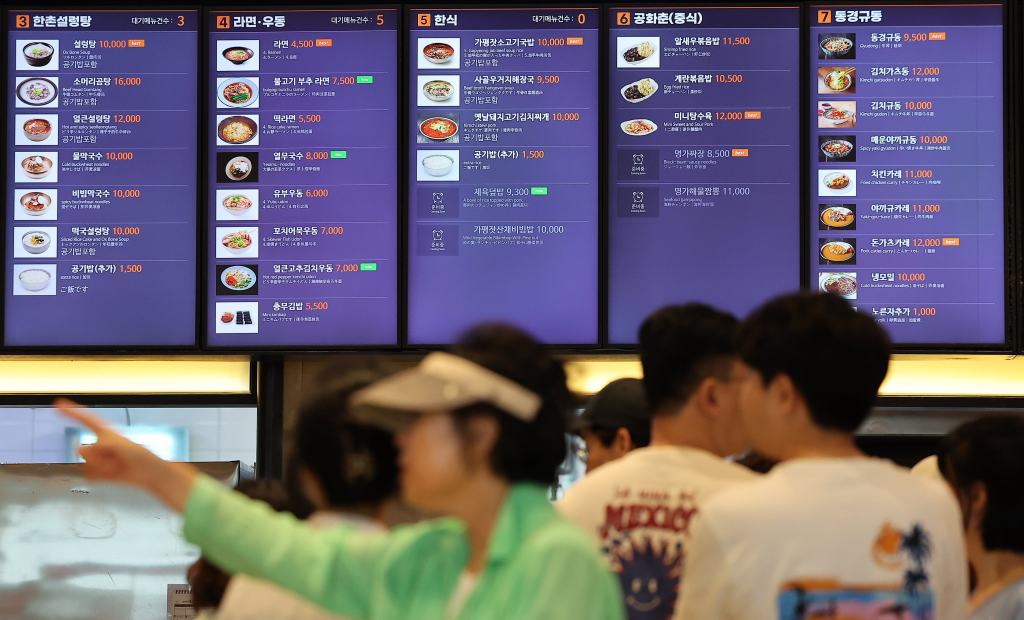
The 4,000 Korean won EX ramen, dubbed a “cost-effective product” at highway rest areas, is promoted by Korea Expressway Corporation as affordable yet high-quality food. However, tenant companies selling it have raised concerns over a “loss-making structure” due to high commission fees.
According to data submitted by the road corporation to the office of Democratic Party of Korea Representative Lee Yongseon, part of the National Assembly’s Land, Infrastructure, and Transport Committee, the average commission rate for EX ramen sold by tenant companies (excluding direct operations) at 23 rest areas was approximately 45%. The highest was at Manghyang Service Area in Cheonan, South Chungcheong Province, where 51.6% of the 4,000 Korean won sales price—2,064 Korean won—is paid as commission to the operator.
A simple estimate by the lawmaker’s office shows that after deducting the operator’s commission (2,064 Korean won), VAT (364 Korean won), ingredient cost (960 Korean won), and flakes cost (252 Korean won) from the 4,000 Korean won price, the tenant company’s profit amounts to only 360 Korean won. This calculation is based on 2020 ingredient costs and does not account for current inflation, labor costs, or gas expenses. The office noted, “It’s effectively a loss-making structure.”
Moreover, EX ramen cannot be considered a general product sold autonomously by tenants. Its sales performance is factored into the operator’s service evaluation, which affects recontracting. The road corporation only began a review of “appropriate pricing through cost analysis of cost-effective food at rest areas” in September.
Representative Lee Yongseon stated, “The success of policy products should not come at the expense of small tenant businesses. The commission and cost-sharing structures for EX ramen and other cost-effective products must be immediately reevaluated.”




Leave a comment