
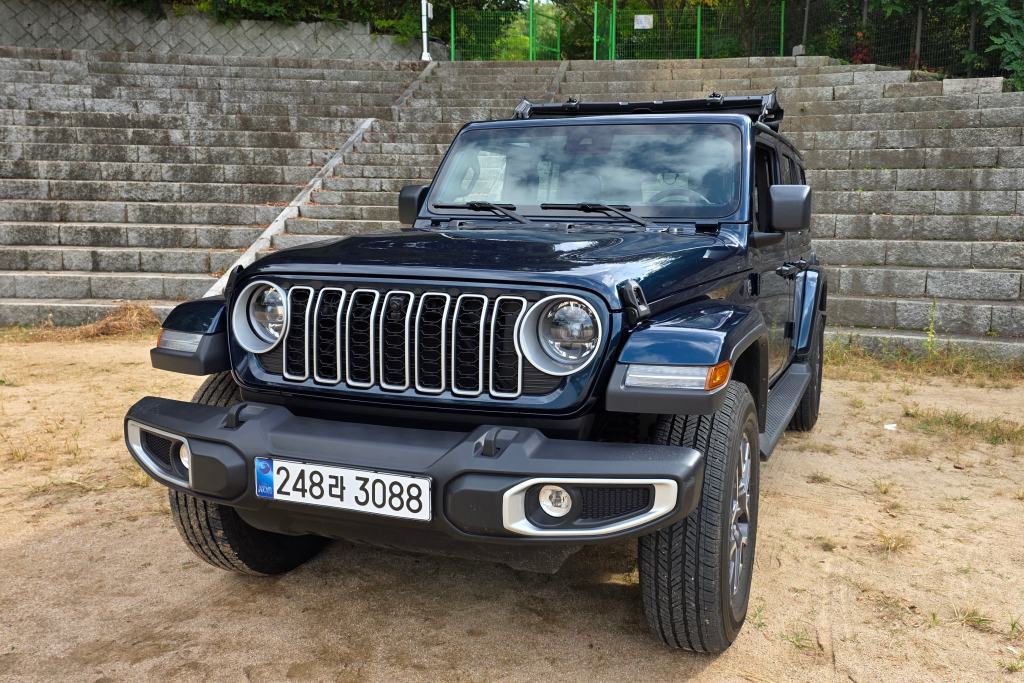
Not only triathletes wear ultra-watches. Not everyone who wears a 1 million Korean won-priced padding climbs the Himalayas. Perhaps it’s about glancing at your wrist occasionally and brushing your clothes to soothe your longing for the outdoors. In the era of electric vehicles, driving a Jeep in the city is no different.
I test-drove the Jeep Wrangler Sahara in downtown Seoul for a week. The Wrangler is divided into the off-road-focused ‘Rubicon’ and the city-oriented ‘Sahara.’ The Sahara targets those who are tied to urban life but yearn for Jeep’s unique sensibility.
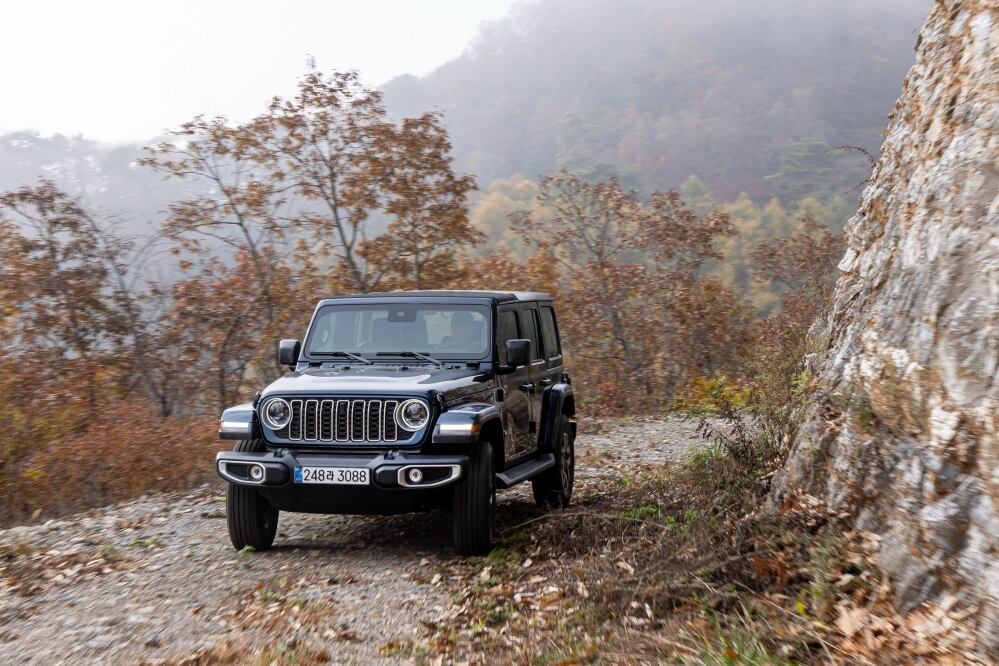
The test vehicle was the limited-edition ‘Fathom Blue Edition’ in deep navy. ‘Fathom’ is a unit for measuring ocean depth and also means ‘to gauge.’ It expresses the deep, calm sea. It complements Jeep’s signature round headlights and the seven vertical-slot grille, the ‘Seven Slot.’ It features a 2.0L gasoline turbo engine paired with an 8-speed automatic transmission, producing 272 horsepower.
◇Jeep’s Sensibility Felt Through the Body
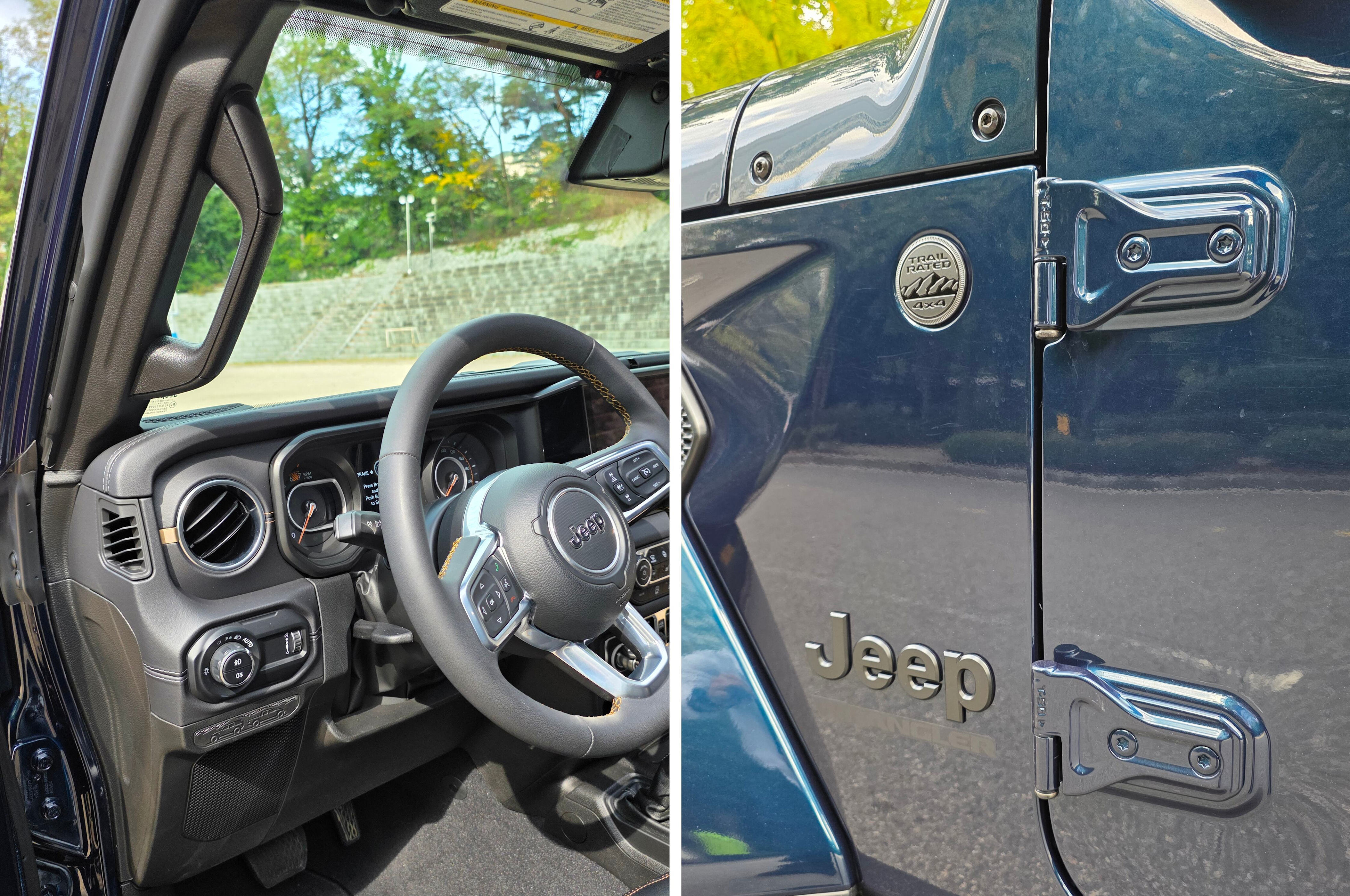
Jeep’s sensibility begins the moment you step into the car. The phrase ‘climb into’ suits it better than ‘get in.’ The high ground clearance requires grabbing the pillar handle next to the windshield to hoist yourself in—a process that oddly brings joy. Driving while overlooking the road from a high vantage point is also a unique pleasure. The crisp yet dull metallic clang when opening and closing the doors reminds you that you’re driving a Jeep.
The interior is true to its off-road roots. Physical buttons are densely packed but intuitively arranged, and the dial’s rim has gear-shaped grooves. The window controls are on the central dashboard, not the doors—a design allowing easy door removal. Features like power-folding side mirrors are absent.
Yet, convenience features are not lacking. The 12.3-inch touchscreen supports both Android Auto and Apple CarPlay, with built-in Tmap navigation. The driver and passenger seats are power-adjustable, and the steering wheel has heating functionality.
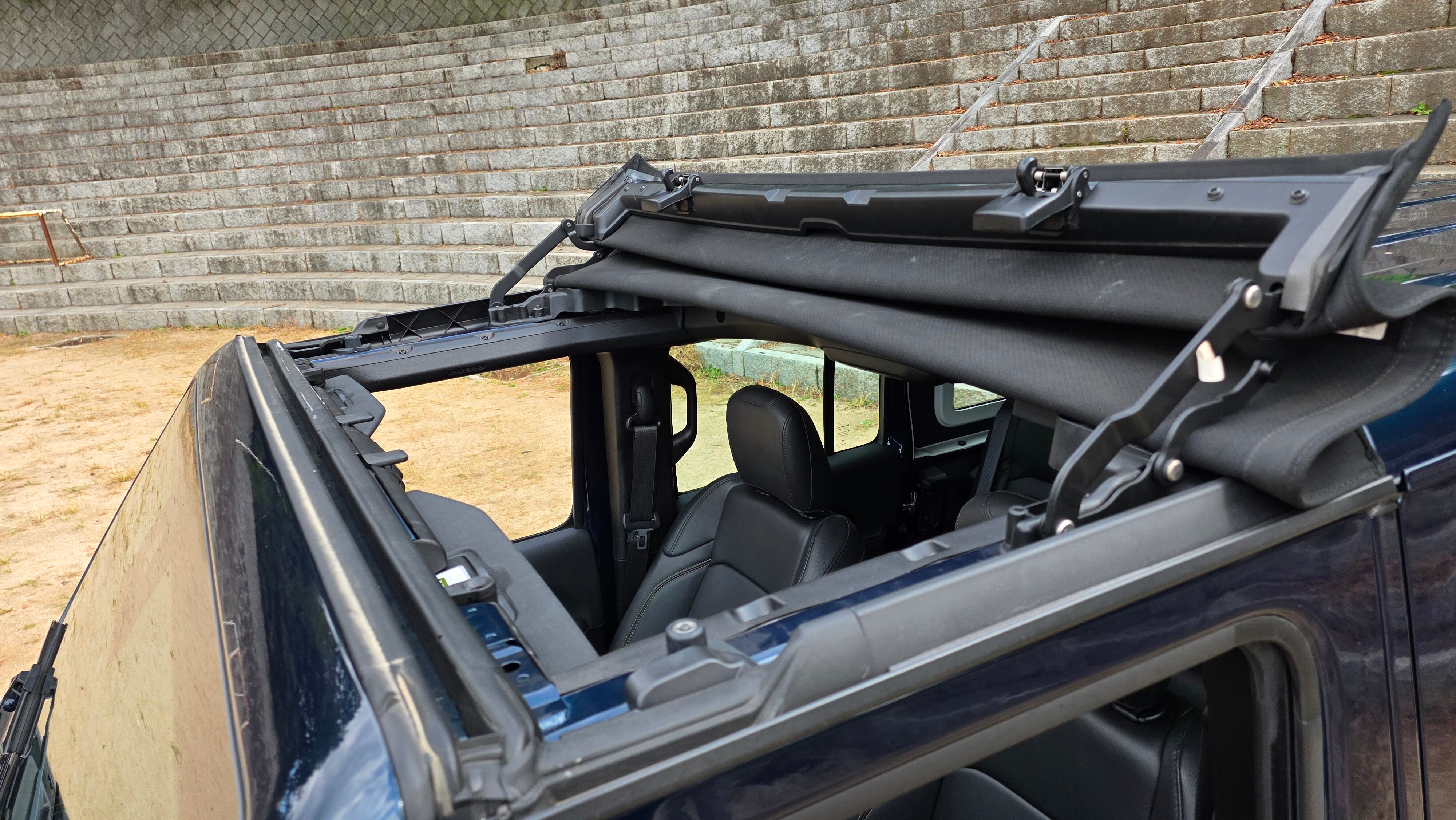
No discussion of the Wrangler is complete without mentioning ‘open-air driving.’ The test vehicle had a soft-top ‘Flip Top’ made of waterproof fabric on the first-row ceiling. Simply releasing the latch from inside allows the roof to be folded back effortlessly, creating an open-car experience. The high body ensures minimal privacy concerns, as few cars can peer into the cabin even with the roof down.
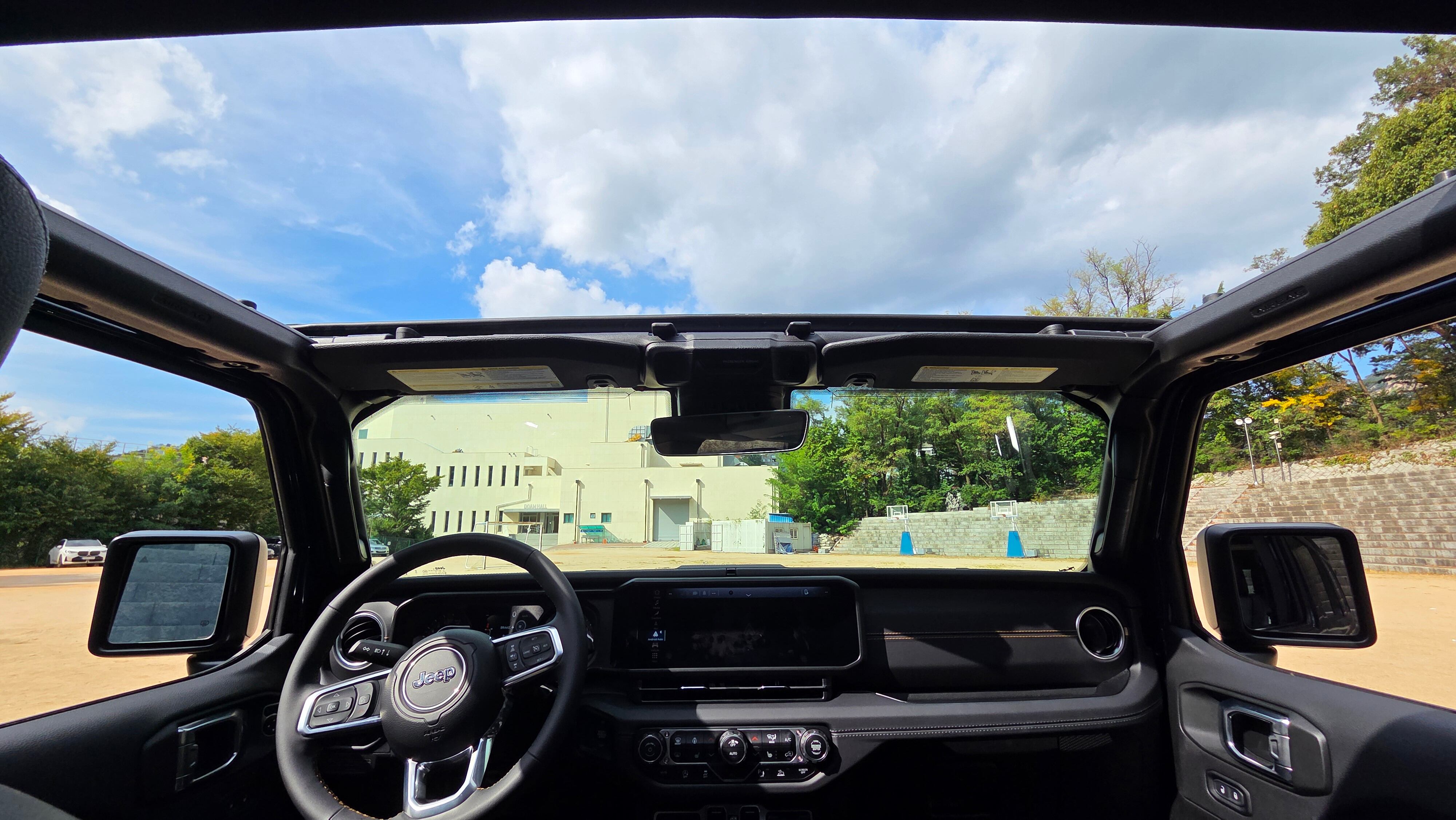
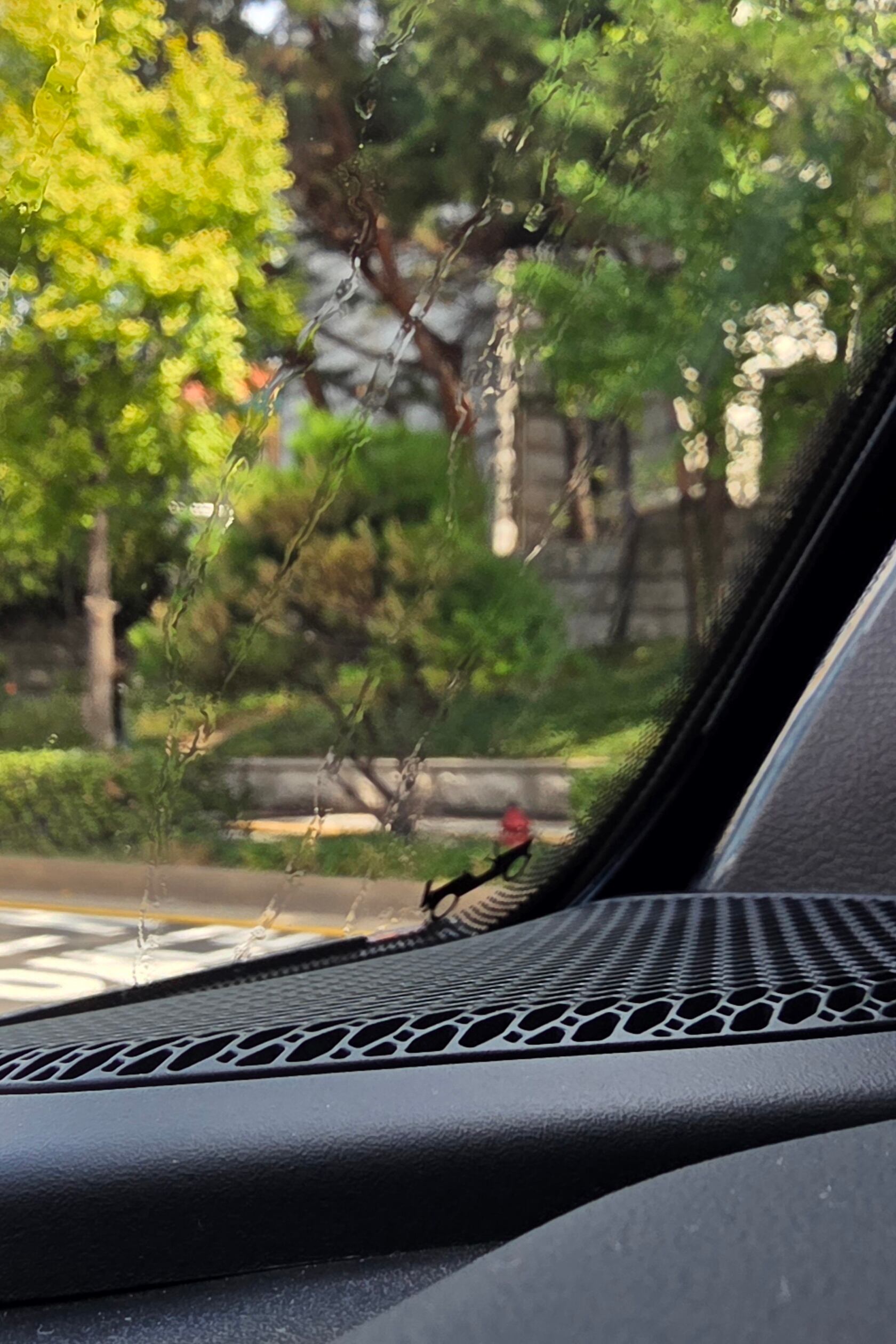
The hardest aspect to gauge was ‘Jeep as a family car.’ Ultimately, my kindergarten-aged daughter loved it the most. She joyfully climbed in via the side steps and jumped out, embracing the Jeep with her whole body. Personally, I appreciated the small Jeep logo hidden in the windshield corner and the Jeep animation crossing the instrument cluster when the engine starts.
◇Ride Comfort and Interior Space Must Be Experienced
Jeep is a car more often heard about than driven. Common perceptions are that ‘the ride comfort is poor, and it guzzles fuel like a tank.’
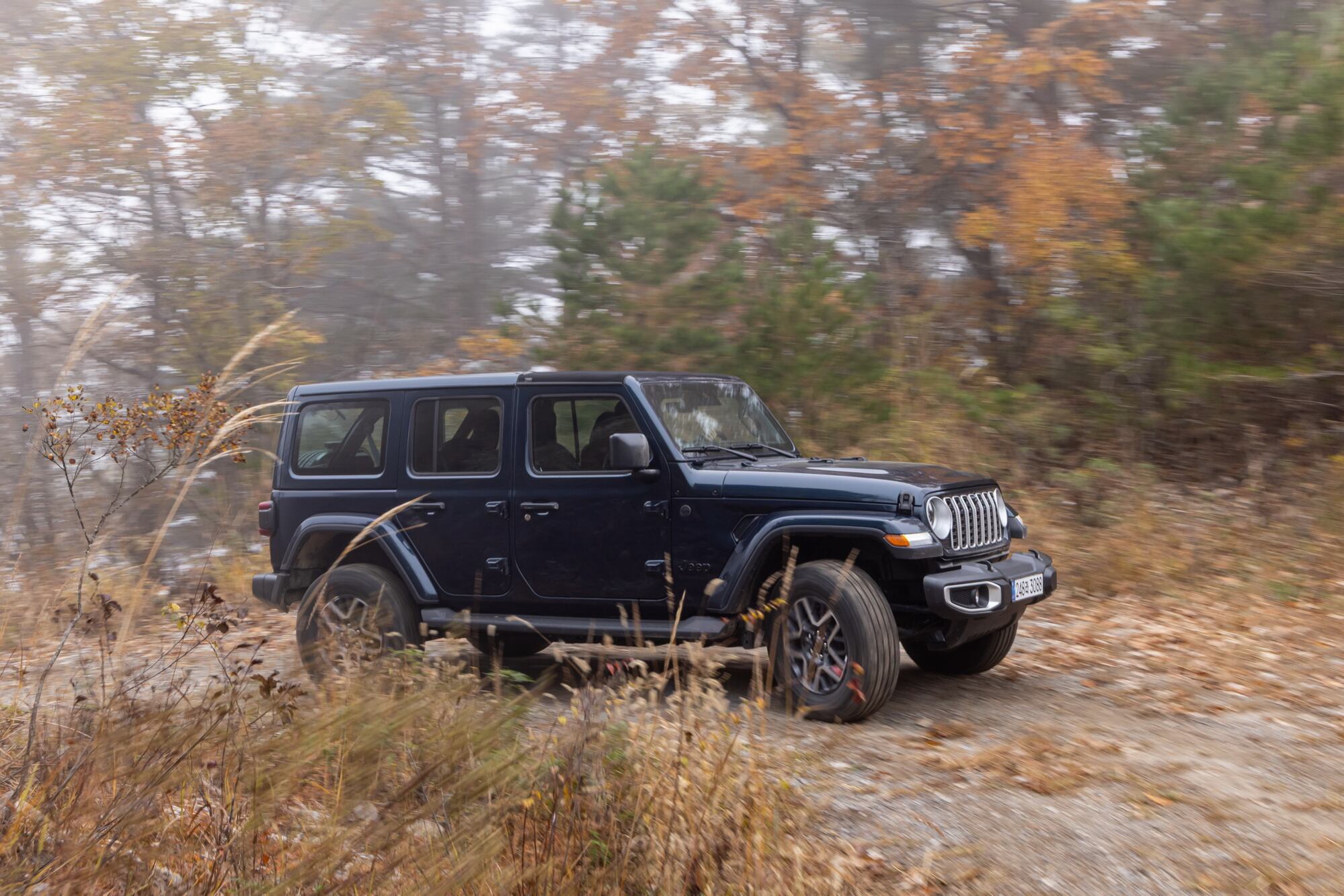
The actual ride is rugged. The body sways more laterally, and shocks from uneven roads are transmitted throughout the vehicle. However, after three days, I adapted to it. A Jeep representative’s words—‘Jeep’s ride isn’t bad; it’s structurally different, and you adapt quickly’—were not wrong.
The Wrangler uses a solid axle structure, unlike regular passenger cars. The axles connect both wheels with a long steel rod, so when one wheel steps on a rock, the axle tilts like a seesaw, pressing the opposite wheel firmly to the ground. This ensures excellent traction on rough terrain but transmits even minor shocks on paved roads. Drivers may adapt, but passengers might feel differently.
The size is not as large as it seems. Parking felt spacious despite initial worries. The Wrangler’s length (4,780 mm) is shorter than the Hyundai Santa Fe (4,830 mm) and Palisade (5,060 mm), and its width (1,895 mm) is similar to the Santa Fe (1,900 mm). It appears larger due to its height. The base ground clearance (1,855 mm) reaches nearly 2,000 mm with the power top, surpassing the Santa Fe (1,720 mm) and Palisade (1,805 mm).
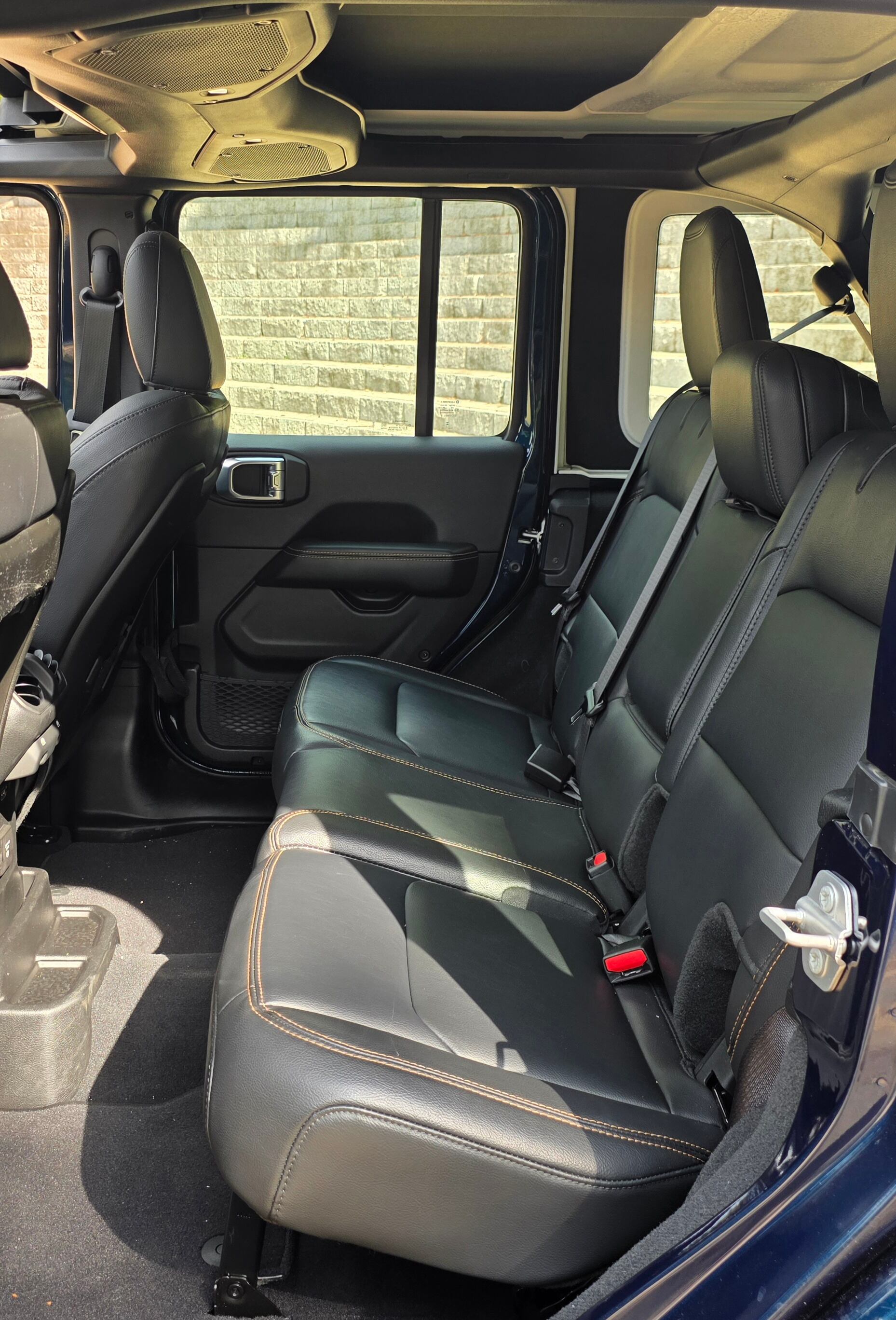
The wheelbase (3,010 mm) is longer than the Palisade’s (2,970 mm), a structural trait to secure approach and departure angles for off-roading. However, the large engine bay and protruding overfenders limit interior space to mid-size or compact SUV levels. While imposing externally, the cabin isn’t exceptionally spacious.
Fuel efficiency was better than expected. Driving 270 km in the city for a week yielded an average of 7.4 km/L, matching the official city rating. The combined fuel efficiency is 8.0 km/L.
It’s not ideal for long family trips. Though built for vast American landscapes, its unique ride comfort may fatigue passengers. The rear seats are upright. While it has Adaptive Cruise Control (ACC) to maintain distance from the car ahead, the lack of lane-keeping assist is a drawback.
◇Between Sensibility and Reality
Few cars leave as strong an impression as Jeep. On a breezy autumn evening, driving with the roof down offers unmatched freedom—no off-road adventure needed. It shines brightly in the city.
However, the gap between sensibility and reality is wide. The Wrangler Sahara (4-door) costs 84.4 million Korean won for the hardtop and 87.4 million Korean won for the power top. With official discounts, it drops to 75.4–78.4 million Korean won—a competitive yet challenging price. Still, for those seeking a definitive escape from daily monotony, the Jeep Wrangler Sahara remains an irresistible option.






Leave a comment