
Children of soldiers and police officers who died in the Korean War (6·25) have been found to receive monthly allowances that differ by more than twice the amount depending on factors such as when their mothers died. Critics argue that the fairness of the veterans’ support system must be improved, as adult children of military personnel who died or were killed in missions outside the Korean War receive no separate child allowance at all.
According to data submitted by the Ministry of Patriots and Veterans Affairs to Kim Hyun-jung, a Democratic Party of Korea member of the National Policy Committee, the 2026 monthly allowances for children of 6·25 war casualties are as follows: 1.779 million Korean won for deceased children, 1.513 million Korean won for successor children, and 657,000 Korean won for newly designated successor children. Even comparing only successor children and newly designated successor children, the monthly difference amounts to 856,000 Korean won, with payments diverging by over twofold.
The number of recipients is 5,553 deceased children, 10,953 successor children, and 12,084 newly designated successor children. Deceased children receive an additional monthly condolence surcharge of 80,000 Korean won, while newly designated successor children facing financial hardship receive an extra 114,000 Korean won.
One key criterion distinguishing successor children from newly designated successor children is whether the recipient’s mother died before January 1, 1998. The government cites the longer period during which newly designated successor children’s mothers received compensation as justification for the differential payments.
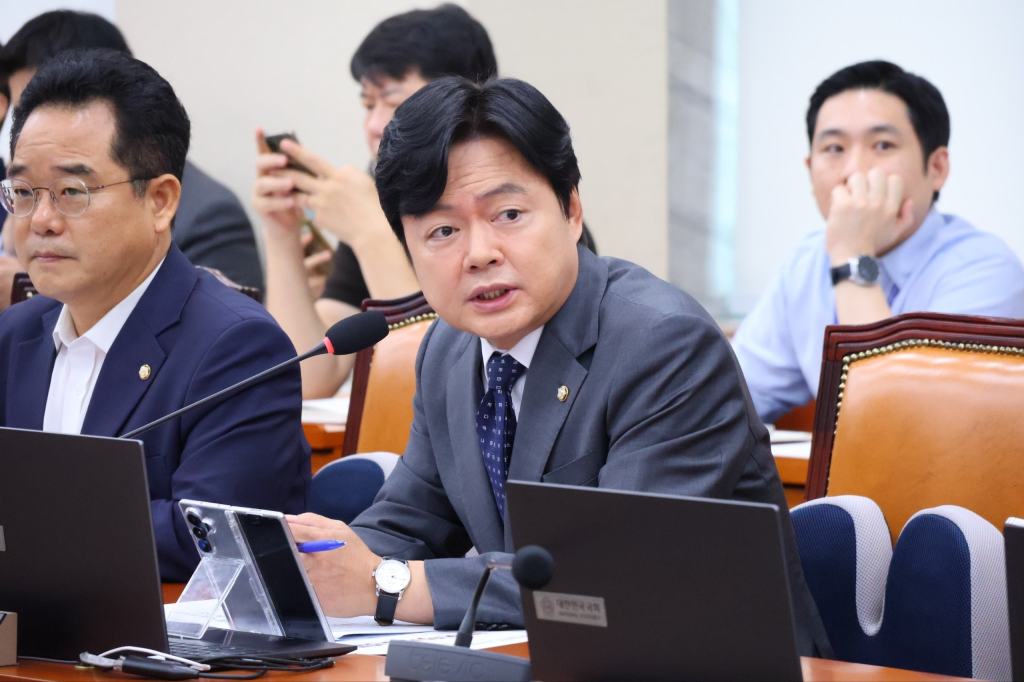
However, the Constitutional Court raised concerns in a 2019 separate opinion, noting the possibility that cumulative benefits received by the two groups could reverse. Kim Hyun-jung stated, “Despite the Constitutional Court warning seven years ago about the potential reversal of cumulative veterans’ benefits, the ministry has not even properly managed whether such a reversal has occurred. It must analyze cumulative benefits per recipient and devise measures to eliminate disparities.”
A support gap for adult children of military personnel who died or were killed in missions outside the Korean War has also been highlighted. Under the current system, if the spouse dies, adult children aged 25 or older receive no separate child allowance.
As of August 2026, there are 24,326 adult children aged 25 or older of deceased or killed military personnel, with 10,434 of them being the sole surviving family members. If a new child allowance were introduced for these individuals at the same level as newly designated successor children of 6·25 war casualties, the estimated annual additional cost would be approximately 43 billion Korean won.
Kim Hyun-jung emphasized, “A nation’s dignity is reflected in its veterans’ support system. The children of those who sacrificed their lives in service to the country should not be discriminated against based on which war their parents died in.” She added, “The government must actively consider establishing a child allowance for adult children of non-6·25 war casualties.”
Kwon Oh-eul, Minister of Patriots and Veterans Affairs, responded during a parliamentary audit on October 6 that the differential payment system for 6·25 war casualties’ children is “unreasonable” and pledged to review it. He also stated that the lack of allowances for adult children of non-6·25 war casualties would undergo a comprehensive reevaluation.


Leave a comment