
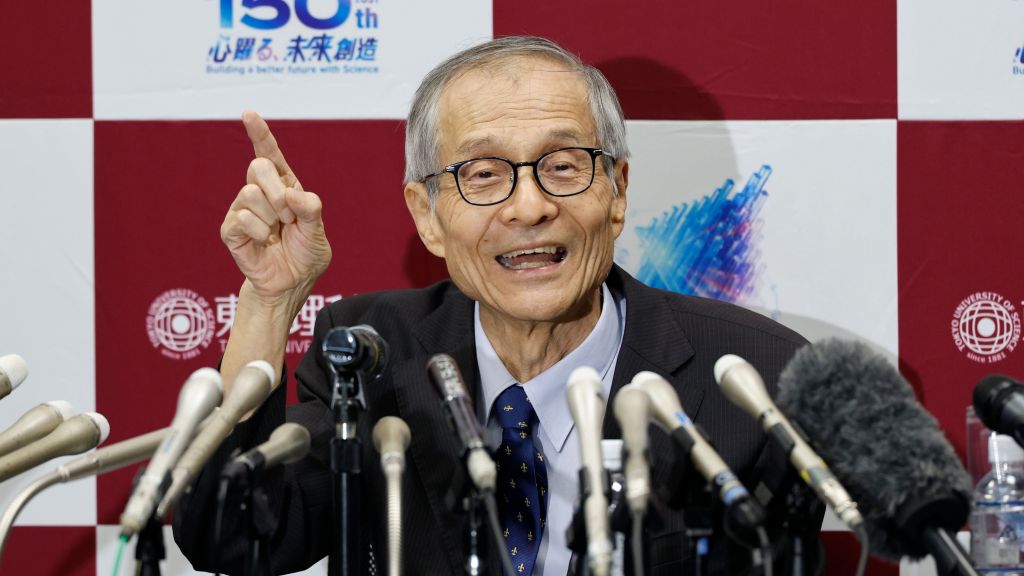
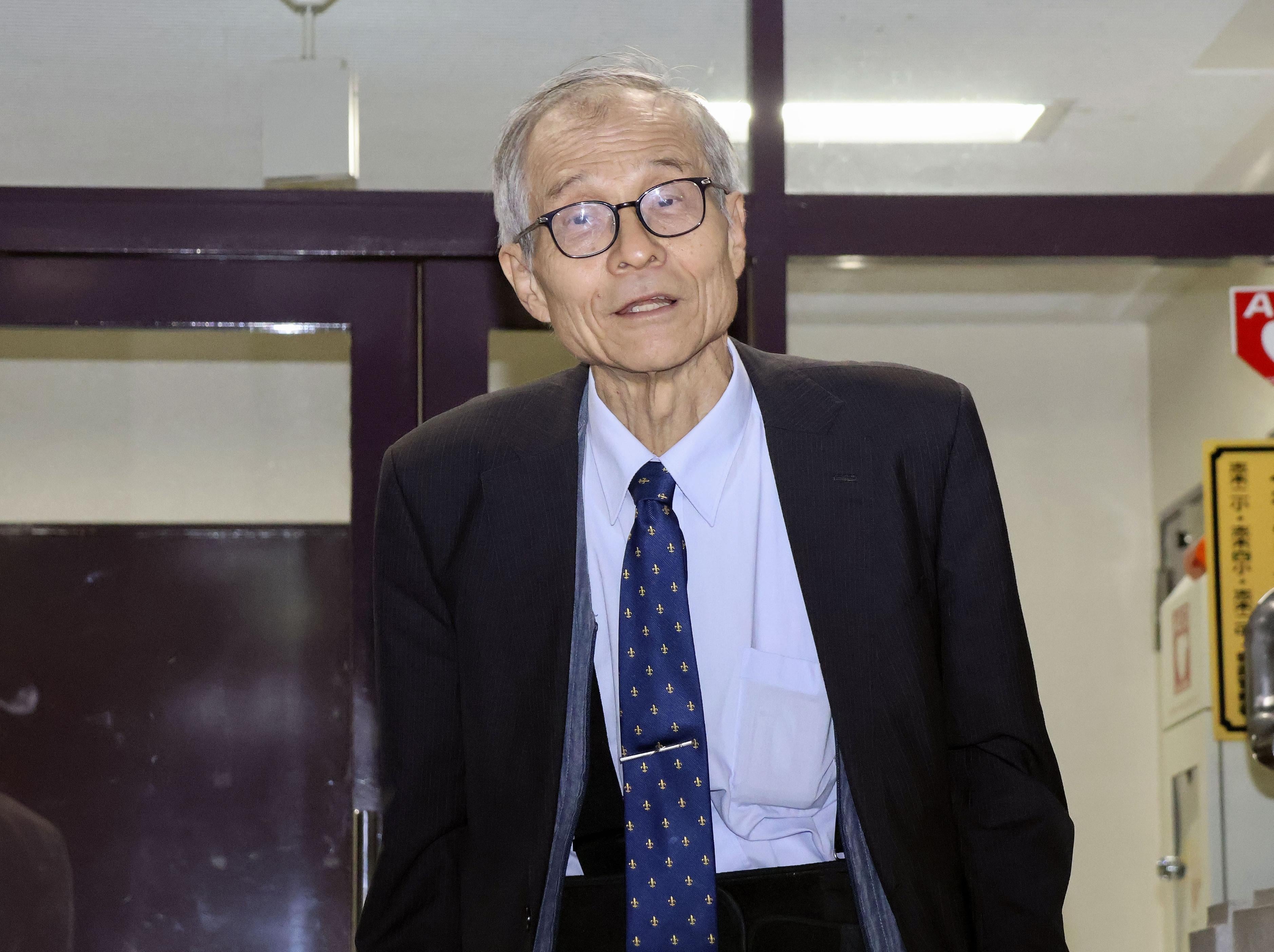
Soai Kensho, 76, a professor emeritus at Tokyo University of Science who won the Nobel Prize in Chemistry on October 7, said, “Today is the most exciting day of my life,” sharing his thoughts on the award. When asked by Japanese reporters who visited his home in Saitama Prefecture that night, Soai said, “I’m truly delighted to have received this honor alongside my respected colleague Henri Kagan.” When asked where he was when he heard the news, he replied, “I was out shopping nearby.” Soai and Henri Kagan, a professor at Paris-Sud University, were selected as laureates for their discovery of asymmetric autocatalysis and nonlinear effects in organic synthesis.
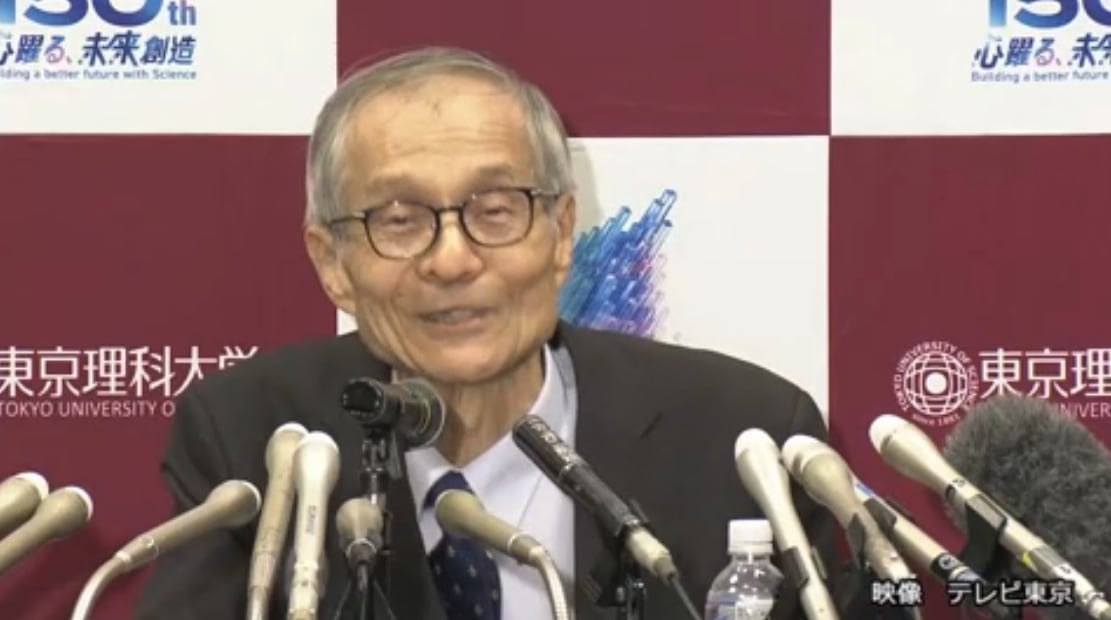
Tokyo University of Science held a press conference at around 10 p.m. that night to commemorate Soai’s award. At the event, Soai stated, “I’m pleased that my research on the origins of life has been recognized.” When asked if the award was unexpected, he smiled and said, “Well, I might be overstepping by saying this, but I didn’t think my winning would be completely unreasonable.”
He added, “However, there are so many excellent studies in other fields. I can’t know the criteria for selection. Still, as I’ve repeated, this is about the origins of life. I’m glad that the importance of research on the fundamental foundations of life sciences is gaining more recognition.”
When asked about enjoyable or challenging moments during his research, Soai said, “I can’t say there were no difficulties, but honestly, I don’t remember them. I didn’t pay much attention. Others might have seen continuous hardships, but I didn’t think of them that way. Discovering new experimental facts was always enjoyable.” He continued, “This joy is a bit different from simply laughing and having fun with others. There are moments when I look at experimental results and feel, ‘This is truly remarkable.’”
Kawasaki Tsuneomi, a professor at Tokyo University of Science who served as Soai’s teaching assistant and collaborated with him for over 20 years, described Soai’s character as “someone utterly devoted to research.” Kawasaki noted that Soai’s achievements were already renowned when he joined the lab in 2004. In an interview with the Nikkei Shimbun, he said, “I’ve been eagerly waiting every year to see if he’d win the Nobel. I’m honestly overjoyed.” He added, “Whenever I faced difficulties in my research, Professor Soai always encouraged me.”
Japanese Prime Minister Sanae Takaichi called Soai to say, “I’m proud as a Japanese citizen,” and expressed her intention to expand government investment in basic science.
The “asymmetric autocatalytic reaction” Soai announced in 1995 addresses the origin of protein molecules. Molecules, like human hands, have two forms that mirror each other but cannot overlap. However, amino acids that form proteins are almost entirely left-handed. Why life chose one over a 50:50 split has been a long-standing mystery.
Soai discovered that generated molecules act as catalysts, creating more molecules of the same orientation. Even if left- and right-handed forms initially differ by 51:49, repeated self-amplification can widen the gap significantly. This was proven experimentally and is now called the “Soai reaction” in academia.
Soai is the 10th Japanese person to win the Nobel Prize in Chemistry. Japan’s Nobel laureates began with Hideki Yukawa of Kyoto University, who won the Physics Prize in 1949, and now include 31 individuals and one organization.



Leave a comment