
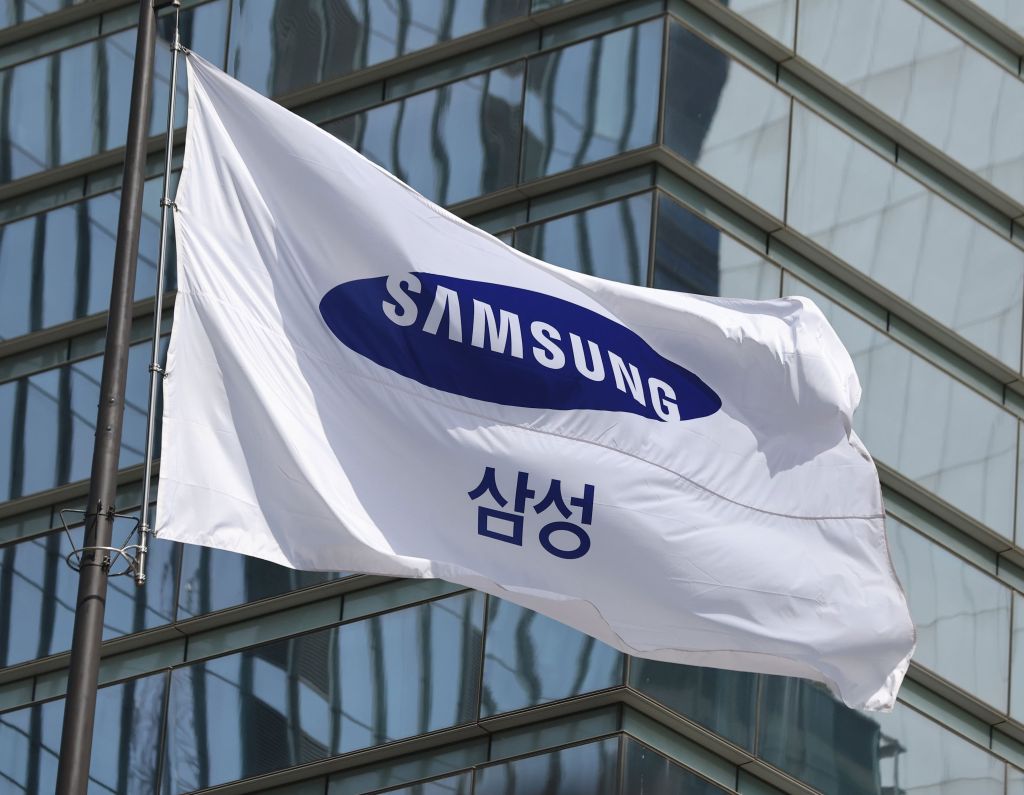
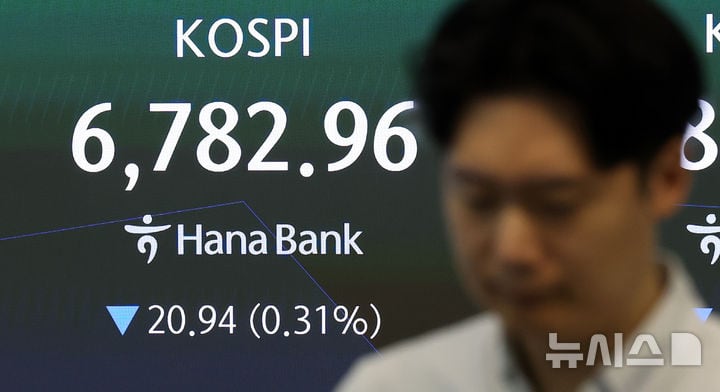
On the 8th, despite Samsung Electronics becoming the first global tech company to achieve quarterly operating profits of 10 trillion won, its stock price opened just 0.19% higher at 269,000 Korean won. This has led to the rise of the neologism “PGR” (Price to Gamdong Ratio) in Yeouido’s financial district. A parody of the price-to-earnings ratio (PER), PGR humorously suggests dividing market capitalization by earnings per share (EPS) multiplied by “gamdong” (감동, or “moving”/“impressing”). It reflects the meme-like phrase investors often use: “There’s no gamdong.” Even if companies announce “record-high” or “earnings surprises,” stocks fail to rise if they don’t “move” investors. That day, Samsung’s stock briefly fell 0.56% to 267,000 won during trading. SK Hynix opened 0.35% higher at 1.729 million won. With the sluggish performance of the Kospi’s two giants, the index itself started 0.05% up at 6,807.64.
◇Did It Deliver the “Gamdong”?
This phenomenon has repeatedly occurred in Korean and U.S. markets this year. In July, SK Hynix reported a 557.2% year-on-year increase in second-quarter operating profit to 60.5426 trillion won—a record for the company. Yet, its stock fell 9.61% that day. Earlier, Samsung Electronics also announced a global tech industry-leading quarterly operating profit of 89.4 trillion won but saw its stock drop 6.92% on the same day.
Similar trends emerged in the U.S. Micron, which recorded its highest-ever quarterly and annual results due to AI-driven memory demand, saw its stock fall roughly 2% intraday the following day after announcing results on September 30. Though it rebounded to close 3% higher, it dropped over 2% again the next day. Broadcom, which exceeded market expectations in September, also saw its stock fall over 2% in after-hours trading post-earnings.
Han Ji-young, a researcher at Kiwoom Securities, analyzed, “Even though Micron’s strong performance has limited upward momentum in its stock price, and despite positive news like the semiconductor export surprise in September, domestic semiconductor stocks like Samsung and SK Hynix have also shown weak momentum.”
◇Samsung’s Volatility Grows… SK Hynix ADRs Face Lock-Up Expiration Risk
Goldman Sachs warned on the 8th, Samsung’s earnings announcement day, that stock volatility could expand. According to a report by Heather O, a Goldman Sachs researcher on the 6th, three supply-demand variables overlap for Samsung that day: adjustments to semiconductor ETF holdings, options expiration, and the end of its share buyback program. First, seven semiconductor ETFs with combined assets of approximately 19 trillion won will adjust their portfolios. Samsung’s weighting in these ETFs is near the limit, raising the possibility of mechanical sell-offs. Funds exiting Samsung could flow into other semiconductor stocks like SK Hynix, SK Square, Isu Petasys, Wonik IPS, and Hanmi Semiconductor. Additionally, Samsung’s 15 trillion won share buyback—previously supporting its stock price—is nearing completion. As of the 6th, 97% of the buyback had been executed.
SK Hynix also faces supply-demand variables. According to Bloomberg, the lock-up period for SK Hynix’s American Depositary Receipts (ADRs) will expire on the 8th. Lock-up periods restrict stock sales for a set time, and their expiration could increase market supply. Notably, SK Hynix’s ADRs have traded at a premium over domestic shares, raising concerns about potential sell-offs post-expiration. Gary Tan, a portfolio manager at Allspring Global Investments, noted, “How the ADR premium changes after the lock-up expiration will be a key indicator of future investment demand.”





Leave a comment