
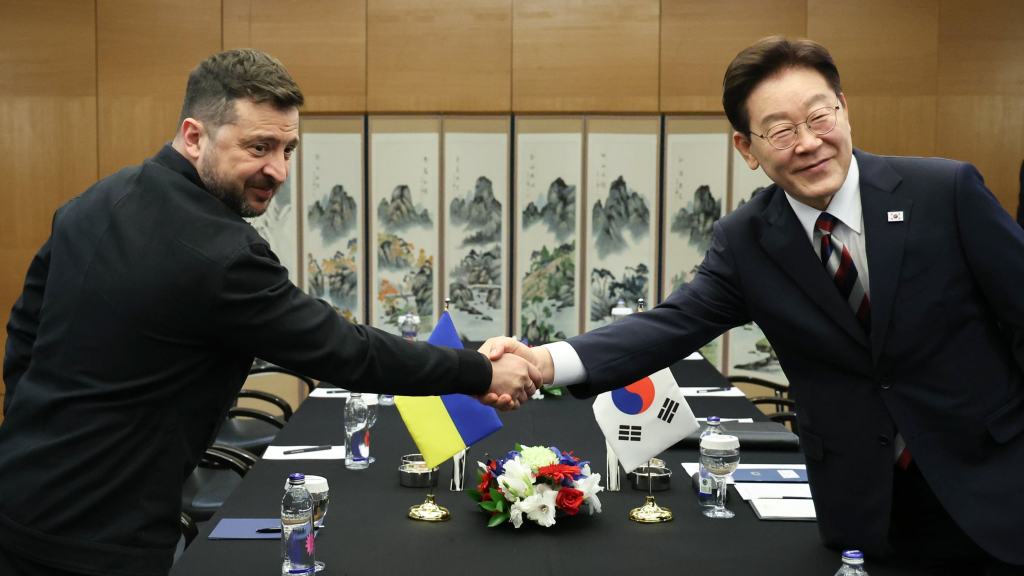
Cheong Wa Dae on the 7th refuted claims by a Ukrainian government official, who cited a foreign media report that South Korea supplied petroleum products to Russia, stating that such allegations were “inconsistent with facts and inappropriate.”
Earlier, the British daily *The Guardian* reported on the 6th (local time) that, based on port records and ship-tracking data analysis, seven oil tankers transported over 176,000 tons of petroleum products from multiple South Korean ports, including Ulsan and Yeosu, to Russia’s Far East regions such as Vladivostok in 14 separate shipments between July and August. The *Guardian* analyzed that most of the transported petroleum products were diesel, which faced the most severe supply shortages in the Russian market due to Ukraine’s offensive.
In response, Vladyslav Vlasiuk, an advisor to the Ukrainian presidential office responsible for sanctions, posted on his social media, “This starkly contrasts with South Korea’s sanctions policy against Russia,” adding, “Imports from South Korea have effectively helped offset the impact of Russia’s loss of domestic refining capabilities.” The criticism came as South Korea’s supply of petroleum products was seen as inconsistent with the Western alliance’s pressure on Russia, given Ukraine’s intensified attacks targeting Russian oil facilities to strangle war funding.
In response, Cheong Wa Dae issued a written briefing on the afternoon of the 7th through Kang Yu-jung, Senior Spokesperson, stating that the South Korean government has consistently implemented sanctions and export controls against Russia since the outbreak of the Russo-Ukrainian war. It added, “The government is currently verifying the facts and export control-related matters through relevant agencies and will take necessary measures if any issues are confirmed.” It further urged, “We hope Ukraine refrains from making public statements that could distort South Korea’s policies or undermine international trust without sufficient fact-checking.”
The government revealed that after the war began, it completely banned exports of strategic goods to Russia and imposed export controls on 1,402 items that could be used for military purposes, resulting in a decline in exports to Russia from 10 billion dollars in 2021 to 4 billion dollars in 2025. Cheong Wa Dae maintains that it must also verify whether South Korean diesel was actually exported to Russia. However, a Cheong Wa Dae National Security Office official stated, “Refined oil, such as diesel or aviation fuel, is not included in the export-controlled items.”
Concerns are growing in political circles that the conflict between the two countries, triggered by Ukrainian President Volodymyr Zelenskyy’s public disclosure of the repatriation of North Korean prisoners to South Korea, is spreading to other areas such as the economy. A Cheong Wa Dae official commented, “Ukraine violated a ‘non-public agreement’ on prisoner repatriation and continues to make distorted claims, linking other issues unnecessarily. This is a matter of South Korea’s national dignity and diplomatic trust, so we have no choice but to respond on principle and demand an apology.”


Leave a comment