
A U.S. Marine stationed in Okinawa, Japan, has been arrested on charges of robbery and murder, sparking widespread resentment toward U.S. forces. The Okinawa-based U.S. military announced on the night of the 6th that it would suspend operations for 48 hours starting at noon the following day and impose a 30-day curfew for personnel (from midnight to 5 a.m.). In a statement, Benjamin Watson, the top U.S. military official in Okinawa, said, “Damage to the trust of the local community affects the strength of the alliance and regional security,” adding, “This is to reflect on discipline and responsibility.”
Earlier, on October 3, Okinawa police arrested Devin Jacob Ballard, 20, a U.S. Marine Corps private first class stationed at Futenma Air Station, on suspicion of robbery and murder in connection with the death of a 39-year-old woman found at a hotel in Naha City. Police identified Ballard through tattoos on both arms captured on the hotel’s CCTV footage while he was walking in a red-light district in Okinawa City.
Okinawa has repeatedly seen heinous crimes committed by U.S. personnel. In 1995, three U.S. service members kidnapped and gang-raped a 12-year-old elementary school student, prompting a massive protest attended by 80,000 people. In 2016, a former Marine employee at Kadena Base attacked and killed a 20-year-old woman in a sexual assault attempt, sparking public outrage. In 2023, a U.S. soldier kidnapped and sexually assaulted a minor, followed by eight cases of violent crimes by U.S. personnel in 2024, including Marines committing robbery at a convenience store.
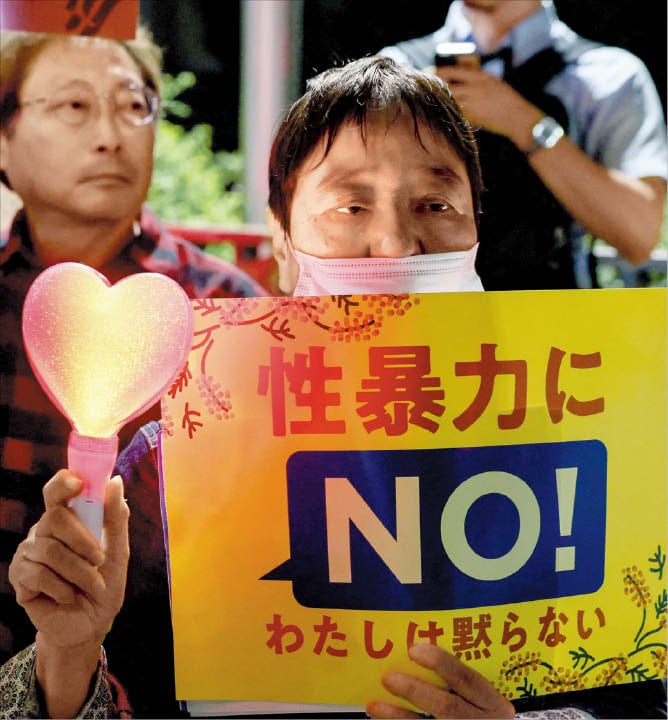
Despite the U.S. military’s repeated measures to enforce discipline, the latest murder has intensified local backlash. On October 4, civic groups held an emergency protest in front of the Okinawa Prefectural Government office in Naha City. Social media posts expressed outrage, with comments like, “We can’t tolerate this anymore” and “Women and children in Okinawa feel unsafe everywhere,” alongside calls for the return of U.S. bases.
The Japanese government is also concerned as Okinawa, a key strategic hub for defense and home to the largest concentration of U.S. bases, continues to face recurring U.S. military crimes. Japan is advancing the “Nansei Shift,” relocating its defense focus from Hokkaido to the Nansei Islands, including Okinawa, to counterbalance China. This requires cooperation and support from Okinawa’s residents. Recent expectations for momentum in military projects, such as relocating Futenma Air Station, grew after a conservative young governor was elected for the first time in 12 years.
The Japanese government has taken a hardline stance. On October 4, Foreign Minister Toshimitsu Motegi summoned George Glass, the U.S. ambassador to Japan, to protest. Prime Minister Sanae Takaichi also addressed the incident in a speech on October 5, stating, “This is deeply regrettable. We have strongly protested to the U.S. side and demanded full cooperation in the investigation, strict discipline within U.S. forces, and measures to prevent recurrence.”




Leave a comment