
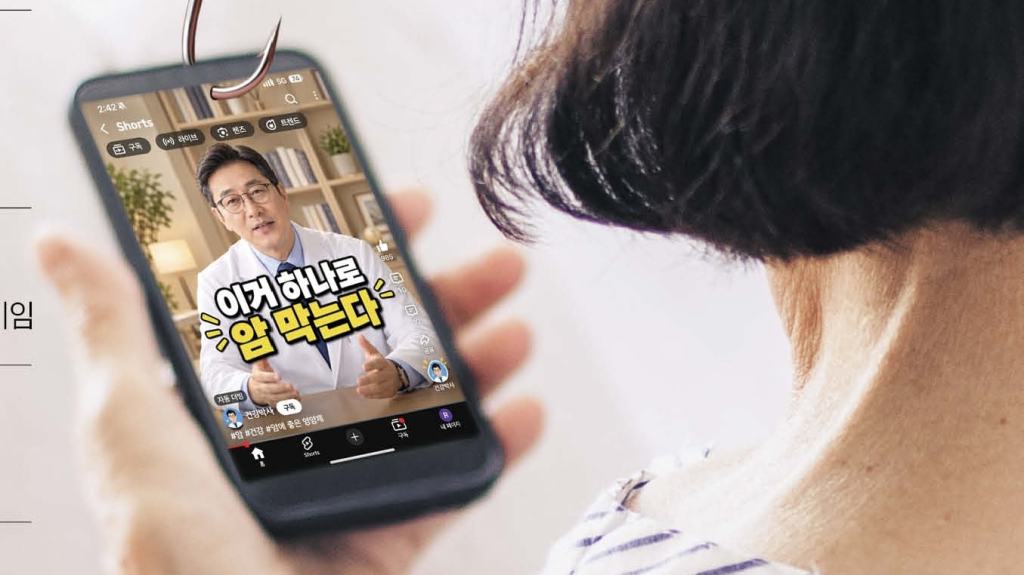
“If you have a heart attack, repeatedly coughing hard can make your heart beat again.”
A doctor appears on the YouTube screen, introducing himself as a “20-year veteran cardiologist.” He claims to share survival tips for heart attacks, advising viewers to cough forcefully and take 500mg of aspirin. Though the white-coated doctor seems credible, he is an AI-generated virtual figure—and the advice is baseless.
Recently, Seoul National University Bundang Hospital showed this AI doctor’s YouTube video to a cardiology specialist for verification. Professor Jeon Ki-hyun, who reviewed the video, pointed out, “During a real heart attack, a person loses consciousness within three seconds, making it impossible to cough intentionally.”
The hypothesis that coughing can act as CPR was briefly studied in the 1970s but was never proven effective and is no longer used. More dangerously, aspirin can worsen conditions like brain hemorrhage or aortic dissection if taken without proper diagnosis.
Fake and distorted medical information is now rampant on YouTube. Among medical professionals, it’s even said that “YouTube is the most dangerous source for health management.” People often search YouTube to resolve health queries. Typing phrases like “ways to lower cholesterol,” “foods good for cancer,” or “do I have to take blood pressure medication for life” yields dozens or hundreds of videos—many containing unverified claims. A study analyzing 22,300 YouTube health videos found misinformation across nearly all medical fields, including vaccines, medications, chronic diseases like cancer and diabetes, diets, and treatments. Additionally, there was no positive correlation between view counts, likes, and information quality—meaning popular videos are not necessarily reliable.
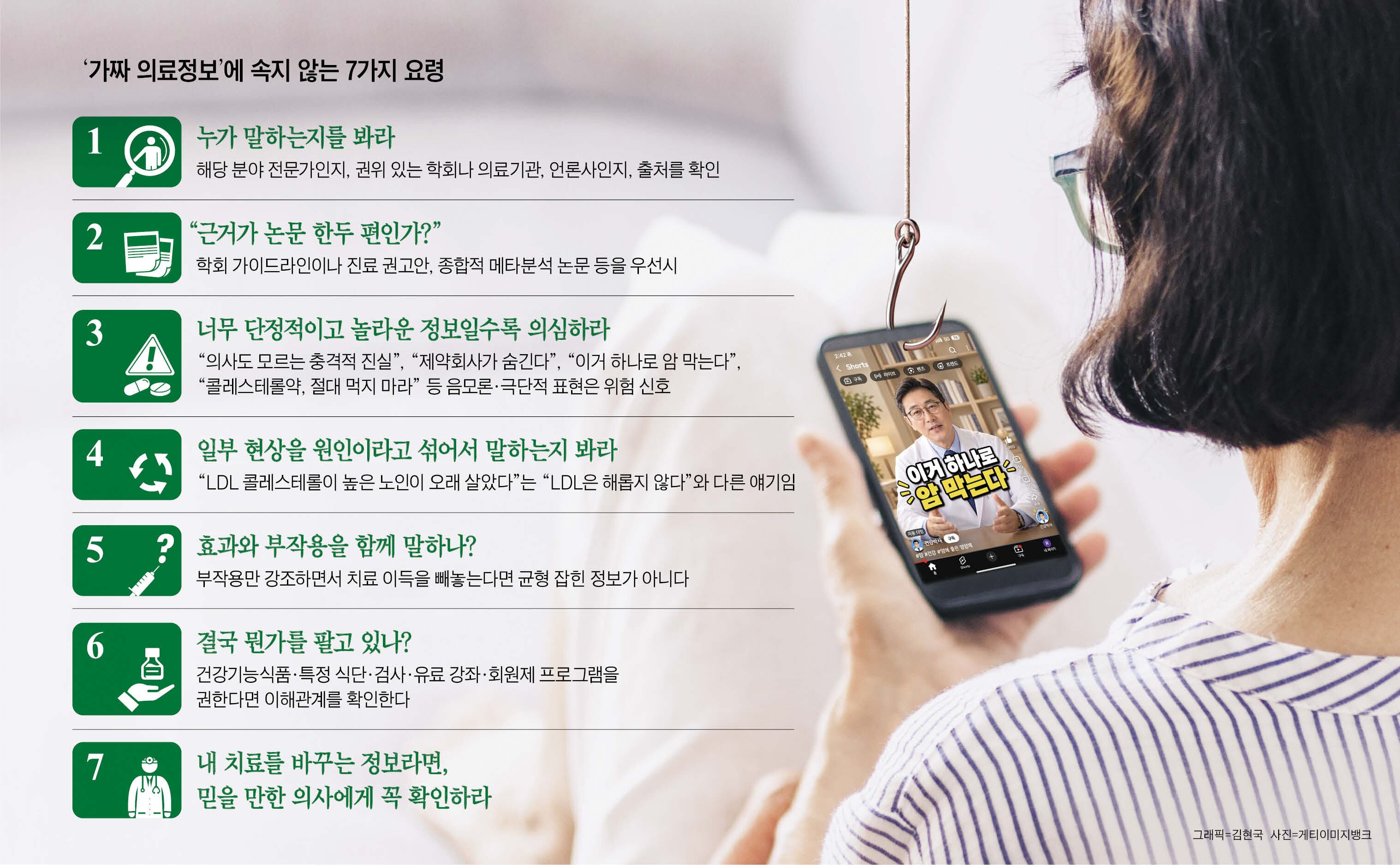
Now, “medical information literacy” is as crucial as managing blood pressure or blood sugar. Start by changing how you use YouTube. When searching, prioritize “disease name + academic society.” For example, instead of searching “diabetes cure,” which brings up folk remedies and health food ads, try “Diabetes Association treatment,” “Hypertension Association blood pressure,” or “Lipid Association LDL.” Research shows videos from government agencies, academic societies, university hospitals, and reputable media outlets are more trustworthy.
Focus on “who created the content” rather than view counts. A video with “3 million views and 100,000 likes” might seem credible, but popularity does not guarantee accuracy. Algorithms often recommend similar content, creating the illusion of consensus. Verify the creator’s expertise: a mere “doctor” label is insufficient. If discussing heart disease, ensure the speaker is a cardiologist; for cancer, confirm they specialize in the relevant field.
Be skeptical of sensational claims. Titles like “Stop immediately” or “100% cure” should prompt further verification. Science is inherently cautious—unlikely to make bold claims. If considering changing medication or treatment based on YouTube, consult a doctor first. Understanding health basics is different from making personal medical decisions.
Professor Jeon Ki-hyun emphasized, “Just as you exercise, check blood pressure, and get health screenings, the ability to discern credible medical information is part of health management.” He added, “Fake videos mix a few truths with falsehoods to appear plausible. Don’t rely on isolated success stories; develop the habit of checking evidence-based, verified information.”





Leave a comment